




The Unseen Pollution Below Ground
While out of sight, the air in underground train stations is a significant health concern. Studies have shown that concentrations of fine particulate matter (PM2.5) — particles so small they can penetrate deep into the lungs and enter the bloodstream
— can be many times higher than accepted safety standards. This pollution isn't just exhaust fumes. It’s a toxic mix of metallic particles from the friction of wheels on rails, brake dust, and resuspended dirt. Chronic exposure to this cocktail of pollutants is linked to respiratory inflammation and cardiovascular problems.
A Breath of Fresh Air: The Living Wall Solution
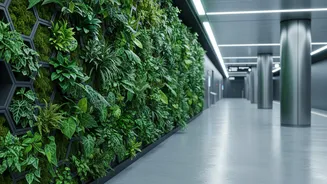
Enter the living green wall, a form of botanical biofiltration. These are not just decorative vertical gardens. They are engineered ecosystems designed to actively clean the air. Unlike preserved moss walls, which offer aesthetic and acoustic benefits but have minimal impact on air quality, these are active, living systems. Cities like London, Berlin, and Paris have begun installing specialised units, sometimes called 'CityTrees', in transport hubs and pollution hotspots to tackle this issue head-on. These structures combine specific types of plants, usually mosses, with technology to create a powerful, natural air filter.
How Nature's Technology Cleans the Air
The secret lies in the unique biology of mosses and the design of the filtration unit. Mosses don't have roots like other plants; they absorb water and nutrients directly from the air through their large leaf surface area. This structure makes them incredibly effective at trapping airborne pollutants, including fine dust and nitrogen oxides. The particles stick to the moist surface of the moss, where microbial communities living on the plants then break down some of the captured pollutants into harmless biomass. To maximize this effect, many green wall systems are 'active', meaning they use fans to pull large volumes of polluted air through the moss and its growing substrate, significantly boosting filtration efficiency compared to passive walls.
Putting Green Filters to the Test
The results from various pilot projects are promising. Research and field tests have shown that these active botanical biofilters can effectively remove pollutants. Depending on the system and conditions, studies have recorded significant removal efficiencies for pollutants like nitrogen dioxide and particulate matter. For example, a single 'CityTree' unit, which is a specific brand of moss wall, claims to have the air-cleaning power of 275 conventional trees while taking up 99% less space. These systems are often equipped with IoT sensors to monitor air quality, humidity, and the health of the plants, allowing for automated irrigation and optimised performance.
More Than Just Clean Air
The advantages of living green walls extend beyond filtration. They introduce much-needed nature into sterile urban environments, which has been shown to reduce stress and improve the mental well-being of commuters and staff. The process of evapotranspiration from the plants also provides a natural cooling effect, helping to combat the high temperatures often found in underground stations. Furthermore, the dense vegetation is an excellent sound absorbent, reducing the ambient noise of a busy station.
Challenges and the Road Ahead
Despite their potential, living walls are not a magic bullet. The initial installation can be expensive, and they require ongoing maintenance to ensure the plants remain healthy and the irrigation systems function correctly. The effectiveness can also vary depending on factors like airflow and humidity. However, proponents argue the long-term health benefits and operational advantages, such as not needing to replace filters in the traditional sense, outweigh the costs. These systems are best seen as one component of a broader strategy for creating healthier public transit, working alongside improved ventilation and efforts to reduce pollution at the source.