







The High Cost of a Toxic Tide
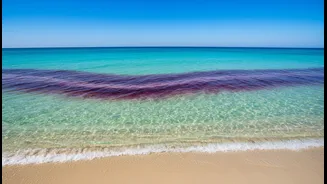
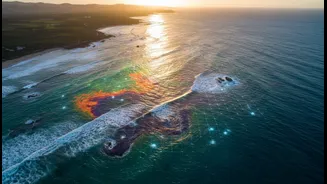
Harmful algal blooms, often called red or green tides, are dense buildups of microscopic algae that can produce potent toxins. In India, they are a growing menace, with nine major hotspots identified along the coasts, including popular areas like Goa,
Mangaluru, and Kochi. These events are not just an ecological problem; they are an economic catastrophe. When a bloom occurs, toxins accumulate in shellfish, making them unsafe to eat and forcing the closure of commercial fisheries. The impact on tourism is just as severe. Unpleasant odours, discoloured water, and the risk of skin irritation or respiratory issues from airborne toxins can clear beaches instantly, devastating hotels, restaurants, and local businesses that depend on a pristine coastline. The financial toll can run into millions of dollars from a single extended bloom, threatening livelihoods and regional economies.
The Old Way: Chasing the Bloom by Boat
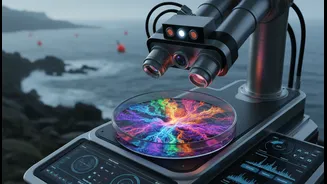
For decades, the primary method for detecting and confirming a toxic bloom has been a slow, laborious process. It involved sending scientists out in boats to physically collect water samples from various locations. These samples would then be taken back to a laboratory for analysis under a microscope, a procedure that could take a day or more to confirm the presence and concentration of toxic algae. This approach is fundamentally reactive. By the time a bloom is confirmed, it has often already spread, fish may have already died, and the toxins could be present on public beaches. This method is also geographically limited; authorities can't be everywhere at once, meaning smaller or initial outbreaks could be missed entirely until they become a major problem.
A New Eye in the Sky: AI and Satellite Fusion
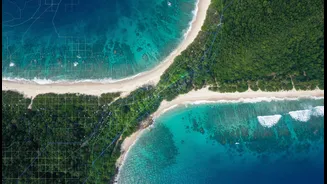
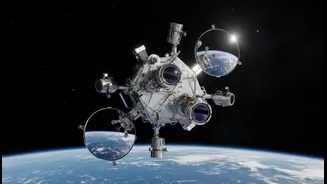
The game is changing thanks to a powerful combination of satellite technology and artificial intelligence. Drawing on lessons learned from severe blooms that have occurred globally, scientists at agencies like NASA have developed a new way to see these threats coming. Instead of relying on a single satellite, they have created AI systems that can fuse data from multiple orbiting instruments. This self-supervised machine learning is trained on vast archives of satellite imagery from past blooms. The AI learns to recognize the subtle signatures of specific algae species—their unique colour, their effect on water temperature, and even the faint glow some species emit. It can distinguish between a harmless bloom and a potentially toxic one like Karenia brevis or Pseudo-nitzschia, even in complex coastal waters.
From Reactive to Proactive Planning
This new technology represents a monumental shift from a reactive to a proactive stance. The goal is not to replace on-site water testing, but to make it vastly more efficient. The AI-powered satellite system can scan hundreds of kilometres of coastline daily, identifying potential hotspots before they are visible to the naked eye. This serves as an early warning, allowing authorities to dispatch sampling boats to precise locations to confirm the threat. For fisheries managers, beach planners, and tourism boards, this advance notice is invaluable. It provides the crucial time needed to make informed decisions—such as issuing public health advisories, temporarily closing specific shellfish beds while allowing others to remain open, or advising tourism operators of a potential, localized issue. This prevents widespread panic and allows for targeted, effective management.
What This Means for India's Coastline
For a nation with over 7,500 kilometres of coastline and a burgeoning blue economy, this technology is particularly relevant. India's own scientific bodies, like the Indian National Centre for Ocean Information Services (INCOIS), are already working on bloom detection and have developed services like the Algal Bloom Information Service (ABIS). There is even an India-specific dashboard, “CyanoKhoj,” that uses satellite data to monitor inland water bodies. The advancements made by global agencies can serve as a powerful supplement to these national efforts. By integrating these sophisticated AI models and multi-satellite data streams, India can enhance its own monitoring capabilities, providing better, faster, and more accurate warnings for its nine identified coastal hotspots and beyond. This offers a new layer of defence for the millions who depend on the sea for their livelihood and recreation.