





The Dream That Started It All
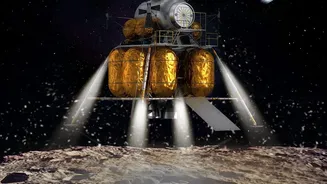
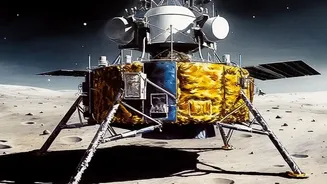
Long before a private Indian lunar mission seemed viable, there was TeamIndus. Born from the ambition to win the Google Lunar XPRIZE, this Bengaluru-based startup was a trailblazer. Incorporated as Axiom Research Labs, the team of engineers and scientists
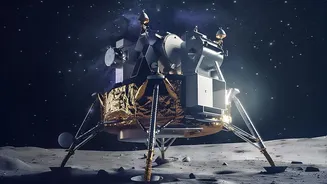
set out to do what only superpowers had done: land a craft on the Moon. They successfully designed and built a lander and a 10kg micro-rover prototype, even securing a launch contract with ISRO’s commercial arm in 2016. Backed by prominent Indian investors, TeamIndus came agonizingly close to making history as the world’s first private lunar mission. However, the immense challenge of securing continuous funding for such a long-gestation, high-cost venture ultimately proved insurmountable, and the competition ended in 2018 without a winner. Though the mission did not launch, TeamIndus ignited a powerful idea: that deep space exploration was no longer the sole domain of government agencies.
A New Era for Private Spaceflight
The landscape today is vastly different from the one TeamIndus navigated. The Indian government’s landmark 2020 decision to open the space sector to private participation has been a game-changer. This policy shift led to the creation of the Indian National Space Promotion and Authorization Centre (IN-SPACe), an agency designed specifically to promote, regulate, and support private companies. Furthermore, ISRO itself has transitioned from being the sole operator to an enabler, actively handholding startups by providing technical expertise, testing facilities, and even transferring the manufacturing of its proven rockets like the PSLV to private consortia. This strategic pivot allows ISRO to focus on advanced research and development while empowering a vibrant ecosystem of over 400 space-tech startups to build commercial solutions.
Building the Highway to the Moon
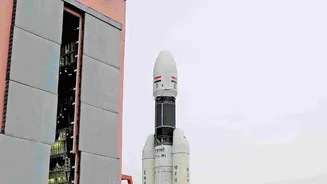
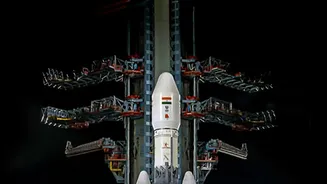
Before a rover can explore lunar dust, it first needs a ride. This is where today’s leading Indian space startups come in. Companies like Skyroot Aerospace and Agnikul Cosmos are not building rovers themselves, but are focused on the critical first step: creating low-cost, reliable launch vehicles. Skyroot made history in July 2026 as the first private Indian company to place a payload in orbit with its Vikram-1 rocket. Agnikul has pioneered the development of the world’s first single-piece, 3D-printed rocket engine, a technology that drastically cuts manufacturing time and costs. Their primary business is to make access to space simple and affordable, creating the essential transportation infrastructure that will eventually carry payloads, including rovers, for scientific institutions and other businesses to the Moon and beyond.
The Frugal Engineering Advantage
The promise of 'low-cost' payloads is not just a marketing slogan; it's embedded in India’s space DNA. ISRO has a global reputation for 'frugal engineering,' executing complex interplanetary missions like the Mars Orbiter Mission (Mangalyaan) and the Chandrayaan-3 lunar landing at a fraction of the cost of their international counterparts. Private startups are inheriting and advancing this ethos. By leveraging modern manufacturing techniques like 3D printing, using off-the-shelf components where possible, and maintaining lean operational structures, these companies are fundamentally lowering the financial barrier to space. This cost efficiency is their key competitive advantage in a burgeoning global space economy, making the prospect of affordable lunar payload delivery a realistic goal.
The Next Generation of Lunar Specialists
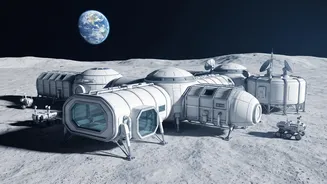
With the launch sector maturing, a new wave of specialized startups is beginning to emerge. Kepler Aerospace, a Bengaluru-based startup, is a prime example of this trend. While its current focus is on building satellites for defence applications, its founders bring valuable experience from ISRO. Notably, one of its co-founders was involved in a lunar nano-rover project during their time at Delft University of Technology, signaling that crucial expertise in lunar mobility resides within this new generation of entrepreneurs. As opportunities created by NASA's invitation for ISRO to join its Moon Base program materialize, these latent capabilities will be critical. The path is being cleared for these specialized firms to build on the foundational work of the launch providers and fulfill the original dream of putting private Indian wheels on the Moon.