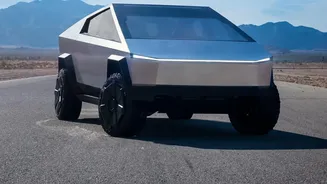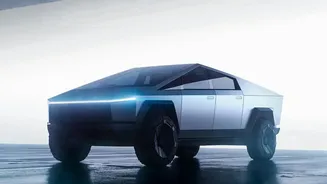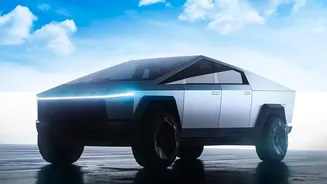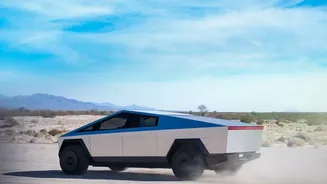





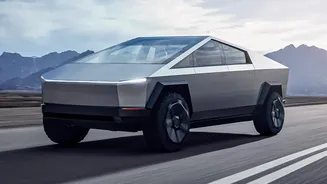
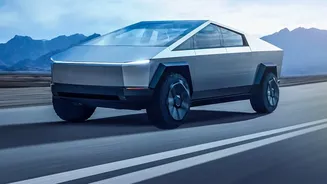
The Tesla Cybertruck saga has a new chapter. CEO Elon Musk announced production will now run through summer 2027, a slight extension to clear a massive order backlog before the controversial electric pickup is discontinued.
What Musk's New Update Means
In a post on his social media
platform X, Elon Musk confirmed the updated timeline. 'In order to work through more of the Cybertruck order backlog, production will be extended through the end of summer 2027,' he stated. This decision provides a few extra months of manufacturing, pushing back a previously announced plan to wind down production around the middle of the year. The move appears to be a direct response to the immense number of orders that Tesla is struggling to fulfill. Musk admitted the decision was not a 'profit-maximizing' one, but was driven by 'sentimentality' and a desire to deliver trucks to more waiting customers. Even with this extension, Musk had previously warned that Tesla would have to return deposits to many people because the company simply cannot build trucks fast enough to satisfy the entire order book before the line is shut down.
A Troubled Production History
The Cybertruck's journey from its shocking 2019 reveal—complete with the infamous shattered 'armor glass' demonstration—to customer driveways has been turbulent. Originally slated for a 2021 release, the truck faced years of delays attributed to its radical design and manufacturing complexity. The stainless-steel exoskeleton, a signature feature, proved exceptionally difficult to fabricate at scale. Deliveries finally began in late 2023, four years after its debut. Since then, the vehicle has been plagued by a series of high-profile recalls for issues ranging from faulty accelerator pedals and detaching trim panels to failing windshield wiper motors. Sales have also reportedly fallen short of Musk's ambitious initial projections of 250,000 units per year.
The Pivot to Cybercab
The primary reason for ending Cybertruck production is a strategic pivot toward another futuristic vehicle: the Cybercab. Tesla plans to repurpose the factory space and engineering talent currently dedicated to the Cybertruck to ramp up production of its autonomous robotaxi. Musk has framed this as a necessary trade-off, stating that the 'opportunity cost of the complexity of Cybertruck is vastly outweighed by the value of incremental Cybercab production'. He has argued that the company has a limited number of top engineers, and their focus is required for the Cybercab, a vehicle he believes will 'profoundly transform the world of terrestrial transport'. This move signals a significant shift in Tesla's priorities, moving away from niche consumer vehicles and toward a transportation-as-a-service model.
Impact on Customers and the Market
For the legion of reservation holders, this latest news is a mixed bag. The extension offers a slightly better chance of receiving their vehicle, but the writing is on the wall: many long-waiting customers will ultimately have their orders cancelled and deposits returned. To manage the final production run, Tesla has already simplified its offerings, discontinuing some lower-priced trims and focusing on the most expensive 'Cyberbeast' model. This has created a last-call rush, but it has also frustrated buyers who had orders for the more affordable versions. Meanwhile, competitors like Ford, Rivian, and others in the electric truck market will likely see an opportunity as Tesla winds down its headline-grabbing but low-volume pickup. The Cybertruck's exit from the market will leave a notable, if eccentric, void.