





The Instinct for Altitude
Your cuddly housecat is a descendant of wild predators who were also prey. For their ancestors, height meant safety and advantage. From a high vantage point, a cat can survey its environment for potential threats and opportunities (like a mouse, or in your
home, a stray toy). This instinct is hardwired into their DNA. When a cat climbs, it's not just exploring; it's satisfying a deep-seated need to feel secure and dominant over its domain. Denying them vertical space is like asking a bird not to fly. In a domestic setting, especially in apartments or multi-cat households, this vertical territory becomes even more crucial for establishing hierarchy and avoiding conflict.
The Benefits of Going Up
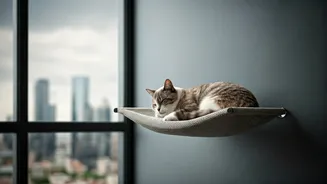
Providing vertical territory does more than just satisfy an instinct. It has profound benefits for your cat’s mental and physical health. A confident cat is a happy cat, and having high perches to retreat to can dramatically reduce stress and anxiety, especially in timid cats. In homes with more than one cat, vertical spaces act as a social release valve. Instead of competing for floor space, cats can use different levels to signal status and avoid face-to-face confrontations. This 'time-sharing' of territory reduces fights and tension. Physically, climbing provides excellent exercise, helping to keep your cat lean, agile, and engaged, preventing the boredom that can lead to destructive behaviours like scratching furniture.
What Are Cat Climbing Walks?
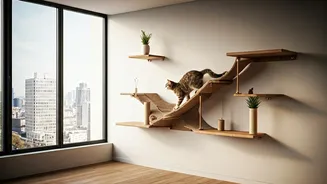
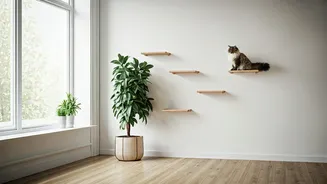
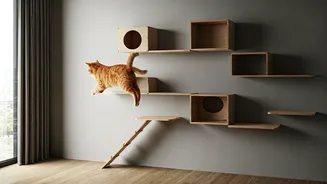
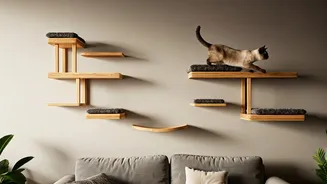
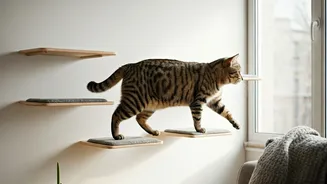
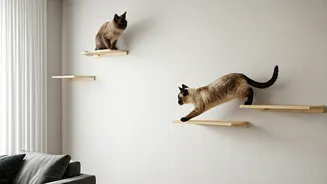
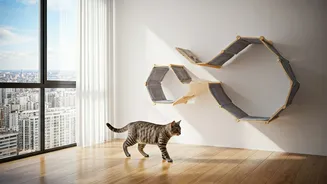
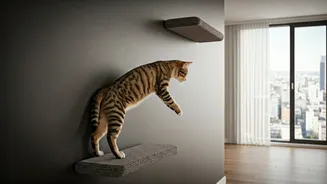
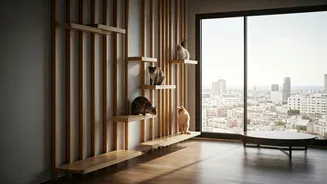
Forget the single, carpeted cat tree in the corner. Structural cat climbing walks, or 'catios' built indoors, are a more integrated and enriching solution. Think of a network of shelves, planks, and perches securely mounted to the walls, creating a 'superhighway' for your cat near the ceiling. This allows them to navigate a room without ever touching the floor. These can range from a few simple, staggered shelves in a single room to an elaborate network that connects multiple rooms through custom-cut doorways or passages. The goal is to create a functional and stimulating environment that integrates into your home, allowing your cat to truly own its space from a new perspective.
Key Principles of Feline Design
You don't need to be an architect to design a great cat walk. Just think like a cat. First, ensure there are multiple entry and exit points. A single-entry perch can lead to a cat feeling trapped if another pet blocks the way. Create loops and circuits, not dead ends. Second, consider the texture. Cats need a secure grip. Covering shelves with a low-pile carpet, sisal rope, or a non-slip material will make them feel more secure. Third, think about flow. The shelves should be spaced appropriately for your cat’s jumping ability—not too far apart, but challenging enough to be engaging. Finally, placement is key. Cats love to watch the action, so position perches with a view of a window, a doorway, or the main living area.
Safety is Non-Negotiable
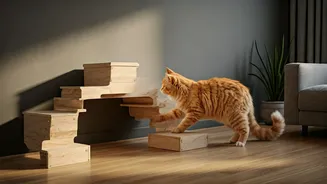
Before you start drilling, prioritise safety. The entire structure must be rock-solid. Use high-quality brackets and ensure they are screwed directly into wall studs, not just the plasterboard. A falling shelf can seriously injure your pet and destroy their confidence in the space. Test every shelf with a weight significantly heavier than your cat before letting them explore. Ensure all materials are pet-safe and non-toxic. Avoid treated woods with harsh chemicals or paints that could be harmful if chewed. For older or less agile cats, consider adding ramps or shorter distances between shelves to ensure they can use the space safely and comfortably throughout their lives.