



A Sudden Burst of Light
In late 2019, astronomers at the Zwicky Transient Facility in California noticed something unusual. A previously unremarkable galaxy in the Virgo constellation, known as SDSS1335+0728, suddenly started to shine brighter than ever before. This wasn't a fleeting
flicker; the galaxy’s core has continued to increase in luminosity over the past four years, a change unlike anything scientists have observed in real time. Data shows the galaxy is now radiating significantly more light across ultraviolet, optical, and infrared wavelengths. By February 2024, it even began emitting X-rays, signaling a massive and ongoing transformation.
The Sleeping Giants of the Universe
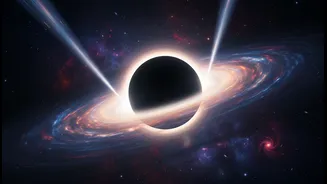
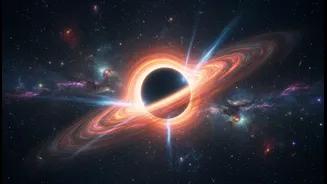
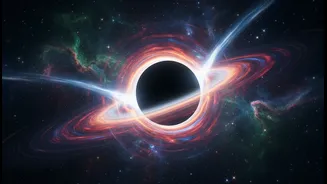
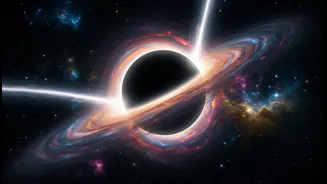
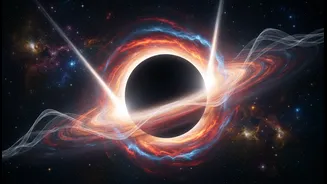
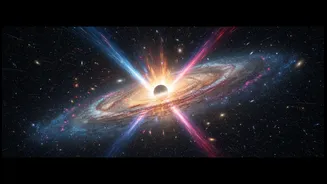
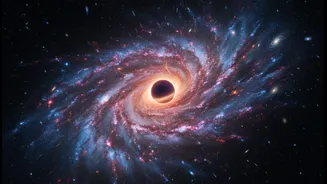
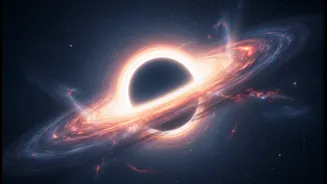
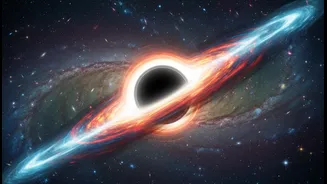
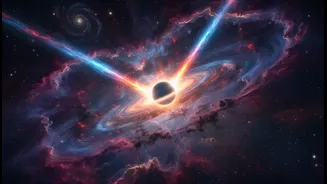
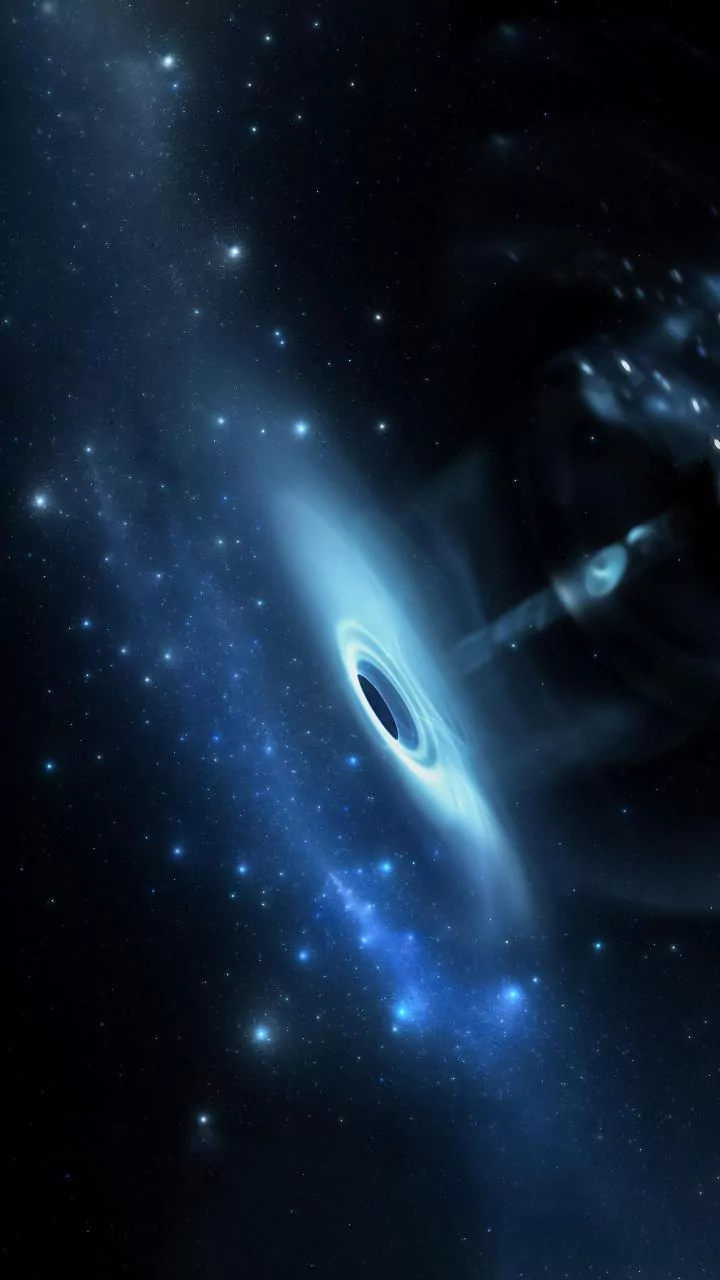
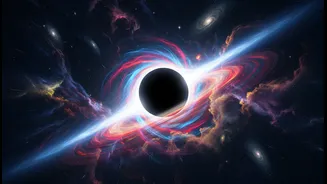
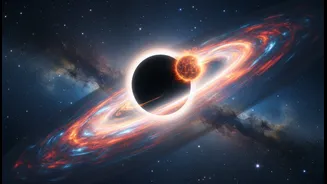
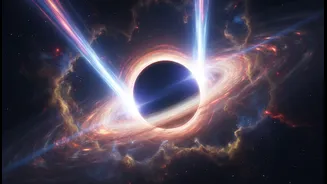
At the heart of most large galaxies, including our own Milky Way, lies a supermassive black hole—an object with a mass hundreds of thousands to billions of times that of our sun. Despite their monstrous reputation, most of these black holes are 'sleeping' or quiescent. They are not actively devouring huge amounts of matter, so they don't produce the brilliant light that characterizes an 'active galactic nucleus' (AGN). The light we see from an active black hole doesn't come from the black hole itself, but from the immense friction and heat generated by gas and dust swirling into it, forming a glowing accretion disk. For decades, the black hole in SDSS1335+0728 was one of these dormant giants.
An Unprecedented Awakening
What makes the events in SDSS1335+0728 so startling is its unprecedented nature. Astronomers have seen galaxies flare up before, but these events are typically short-lived. A supernova explosion, for instance, fades within a few hundred days. A tidal disruption event (TDE), where a black hole tears a star apart, also has a relatively brief, predictable lifespan. The brightening of SDSS1335+0728, however, has lasted for more than four years and is still ongoing, which rules out these more common explanations. This is the first time scientists have been able to observe the awakening of a massive black hole—the process of it 'turning on'—in real time. It’s a transition from a quiet state to a fully active one that has never been witnessed as it happened.
Challenging Cosmic Theories
This unexpected activation forces scientists to reconsider their models of how and why black holes become active. The current theories suggest these transitions happen over much longer timescales, not in a matter of months. The sudden and sustained brightening of SDSS1335+0728 suggests that the process can be far more dynamic and unpredictable. Researchers are now scrambling to understand the trigger. Is the black hole feasting on an unusually large and long-lasting stream of gas, or is this a completely new type of cosmic phenomenon? This event provides a unique, real-time laboratory for studying the physics of black hole accretion and the evolution of active galaxies. As one scientist noted, it’s one of the most extreme examples yet of a black hole taking us by surprise.