





Decoding the SPF Number
First, let's break down what SPF actually means. SPF, or Sun Protection Factor, primarily measures a sunscreen's ability to block UVB rays, the type of ultraviolet radiation responsible for causing sunburn. The number itself indicates how much longer
it would theoretically take for your skin to burn compared to wearing no sunscreen at all. However, the difference in protection between higher SPFs is surprisingly small. For example, SPF 30 filters out about 97% of UVB rays, while SPF 50 filters about 98%, and SPF 100 blocks around 99%. As you can see, the jump from SPF 50 to SPF 100 only provides a marginal 1% increase in protection. This can create a false sense of security, leading people to reapply less often. For most situations, dermatologists recommend using an SPF of at least 30.
The Underestimated Threat: UVA Rays
While SPF numbers focus on UVB (burning) rays, they don't tell the whole story. The sun also emits UVA rays, which have a longer wavelength and penetrate deeper into the skin. These are often called the 'aging' rays because they are a primary cause of premature wrinkles, fine lines, and skin aging. UVA rays also contribute significantly to the development of skin cancer. Unlike UVB rays, which are strongest in the summer, UVA rays are present with consistent intensity all year round and can even pass through clouds and window glass. This means your skin is exposed to their damaging effects even on overcast days or while you're indoors near a window.
The Magic Words: 'Broad-Spectrum'
This is where the most crucial part of your sunscreen label comes in: the term 'broad-spectrum'. A sunscreen labeled as broad-spectrum has been tested and proven to protect you from both harmful UVA and UVB rays. If a sunscreen bottle only lists an SPF number without this designation, it primarily protects against UVB rays, leaving you vulnerable to UVA damage. The U.S. Food and Drug Administration (FDA) has regulations in place ensuring that products labeled 'broad-spectrum' offer proportional protection against both types of UV radiation. Therefore, choosing a broad-spectrum sunscreen with an SPF of 30 or higher is one of the most important steps you can take for complete sun protection.
Application is Everything
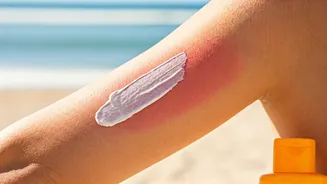
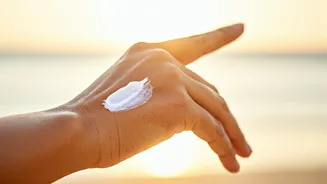
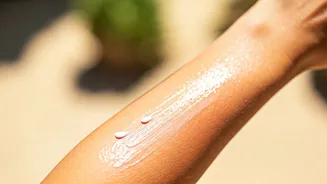
Even the best sunscreen in the world is ineffective if not applied correctly. This is where most people fall short. To get the full protection advertised on the bottle, you need to apply a liberal amount. The general rule is to use about one ounce—enough to fill a shot glass—for your entire body. For the face alone, a common guideline is the 'two-finger rule': squeeze sunscreen along the length of your index and middle fingers. Just as important as the amount is reapplication. No matter the SPF, sunscreen's effectiveness wanes over time. You should reapply at least every two hours, and more frequently if you've been swimming, sweating, or towel drying.
Beyond the Bottle: A Complete Strategy
Finally, remember that sunscreen is just one component of a comprehensive sun safety strategy. For truly effective protection, it's best to layer your methods. This includes seeking shade during peak sun hours (typically 10 a.m. to 4 p.m.), when UV rays are strongest. Wearing sun-protective clothing is also incredibly effective. Look for garments with an Ultraviolet Protection Factor (UPF) rating. A UPF 50+ fabric, for example, blocks over 98% of both UVA and UVB rays. Unlike sunscreen, you don't have to worry about reapplying clothing. A wide-brimmed hat and UV-blocking sunglasses are also essential accessories for protecting your face, neck, and eyes.