





The Ancient Foundations
Long before Portugal was a kingdom, the Romans laid the groundwork for its future arteries. They built extensive road networks to connect their provinces, a practical foundation that influenced Portuguese paving techniques for centuries to come. Following
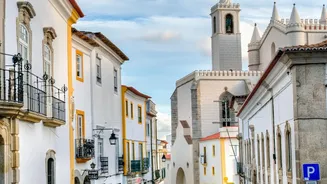
the fall of the Roman Empire, the Moors arrived in the 8th century, ruling for over 500 years and leaving an indelible mark. Their influence is felt not just in grand castles, but in the very layout of older towns, particularly in the south. The narrow, winding streets of many historic villages in regions like the Algarve and Alentejo are a direct legacy of Moorish urban design, built for shade and defence. They also brought with them a sophisticated knowledge of engineering and aesthetics, introducing new crops and irrigation that reshaped the landscape surrounding these villages.
Medieval Walls and Defensive Lines
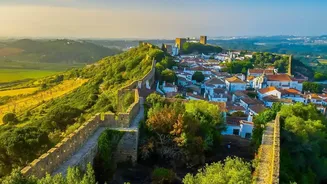
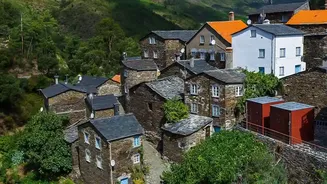
As Portugal forged its identity during the Christian Reconquista, its rural streets took on a new strategic importance. Many villages, especially those near the Spanish border, were fortified. The 'Aldeias Históricas de Portugal' (Historic Villages of Portugal) are a network of twelve such settlements, primarily located in the country's mountainous interior. Villages like Sortelha, Marialva, and Almeida were built on high ground, their streets designed to be part of a larger defensive system of walls and castles. Walking through the granite-paved lanes of Castelo Rodrigo or the star-shaped fortress of Almeida, you can feel their history as the kingdom's first line of defence against invaders. These streets were not just for passage but for protection, shaping communities that were both resilient and isolated.
The Artistry of Calçada Portuguesa
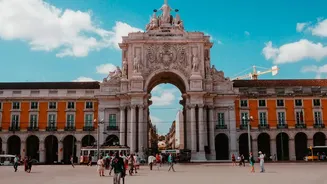
Perhaps the most iconic feature of Portuguese streets is the 'calçada portuguesa', the traditional mosaic-like pavement made from small, irregular cubes of black basalt and white limestone. While its origins have roots in Roman mosaics, the art form as we know it flourished in Lisbon in the mid-19th century. Following the devastating 1755 earthquake, the city's rebuilding efforts eventually led to a new decorative approach to public spaces. In 1848, the paving of Lisbon's Rossio Square with a mesmerising wave pattern, known as 'Mar Largo' (Wide Sea), became a landmark achievement. This intricate design, crafted by skilled artisans called 'calceteiros', was a nod to Portugal's maritime heritage and its Age of Discoveries. The practice quickly spread across the country and to its colonies, turning simple sidewalks into works of public art telling stories of the sea, nature, and local emblems.
From Rural Exodus to Cultural Revival
The 20th century brought profound changes to the Portuguese countryside. A massive rural exodus, which began in earnest in the 1960s, led to significant depopulation in the interior regions. Many historic villages saw their populations shrink as younger generations moved to cities in search of work. The quiet streets, once bustling with agricultural life, fell silent. However, in recent decades, there has been a growing appreciation for this heritage. Government programmes, like the one that established the Aldeias Históricas network in the 1990s, aimed to restore and promote these unique villages. Today, rural tourism is breathing new life into these historic centres. Travellers seeking authenticity are drawn to the tranquil, story-filled streets, helping to support local economies and ensure that the legacy carved in stone endures.