




1. The Classic Concentric Circle
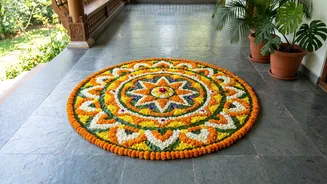
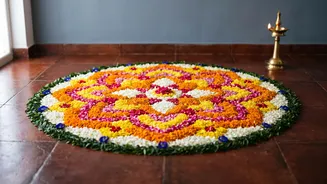
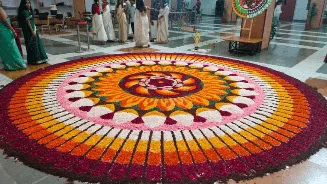
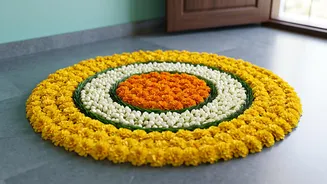
This is perhaps the most traditional and simplest pookalam, making it perfect for first-timers. The design involves creating a series of concentric circles, each filled with petals of a different colour. Start with a small circle in the middle and build
outwards. For a low-cost approach, use readily available and affordable flowers like bright yellow and orange marigolds (genda) for contrasting rings. You can finish the centre with fragrant white jasmine or tuberose. The beauty of this design is its simplicity; even if the circles are not perfect, the vibrant colours create a stunning effect.
2. A Simple Flower Shape
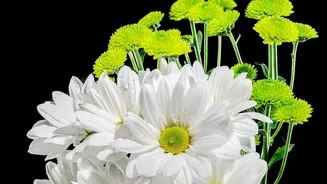
Instead of abstract circles, why not create a flower out of flowers? This design is intuitive and visually appealing. Start by drawing a simple five or six-petal flower outline with chalk. Fill the centre with one colour, such as yellow marigold petals, and then use a contrasting colour, like white daisy or chrysanthemum petals, for the surrounding larger petals. To keep costs down, you can use green leaves to form the outline of the petals, reducing the number of flowers needed while adding a natural touch.
3. The Minimalist Spiral
Modern, elegant, and surprisingly easy, the spiral design requires minimal planning. Starting from a central point, simply arrange a line of petals that spirals outwards. To make it visually striking, you can create a gradient effect by starting with a dark colour like red rose petals at the centre and gradually transitioning to lighter shades of orange and yellow marigolds towards the outside. This design is ideal for smaller spaces or if you're short on time, as it doesn't require complex sections or perfect symmetry. It’s a chic take on the traditional pookalam.
4. Geometric Patterns for a Modern Touch
If you prefer clean lines, a geometric pookalam is an excellent choice. Instead of circles, you can create a design based on squares, triangles, or a checkerboard pattern. An easy way to start is by drawing a large square and dividing it into smaller squares or triangles with chalk. Then, fill each shape with alternating colours. Using just two or three contrasting flower types, such as orange marigolds and white chrysanthemums, can create a bold and contemporary look that appears more intricate than it actually is. This structured approach is often easier for beginners who appreciate symmetry.
5. The Central Diya or Uruli
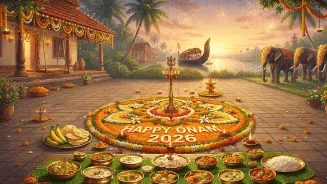
This design makes a traditional element the star of the show. Place a brass 'diya' (lamp) or a small 'uruli' (a decorative bowl filled with water and floating flowers) at the very centre of your chosen spot. From there, you only need to create a few simple rings of flower petals around it. The lamp or uruli provides an immediate, beautiful focal point, meaning the floral part of the design can be smaller and less complex while still looking complete and festive. A couple of marigold and rose petal rings are all you need to frame the centerpiece beautifully.
6. A Leafy Border Design
Flowers can be expensive, but leaves are often free. To make your pookalam more budget-friendly, incorporate a thick border of fresh green leaves, such as mango leaves. This not only adds a lovely, authentic touch but also significantly reduces the area you need to fill with petals. Inside the leafy frame, you can create a simple circular or star-shaped pattern using just one or two flower varieties. The contrast between the vibrant petals and the rich green leaves makes the colours pop, creating an earthy and traditional feel.
7. The Single-Flower Focus
Who says you need a rainbow of colours? A monochromatic pookalam can be incredibly elegant and is very easy for beginners. Choose just one type of flower that is affordable and available in abundance, like bright orange marigolds, and use its petals to create your entire design. You can make simple circles, a basic star shape, or even fill a heart outline. By focusing on the texture and shape of a single flower, you create a sophisticated and unified look without the stress of coordinating multiple colours and types.