






The Irresistible Allure of Ziro
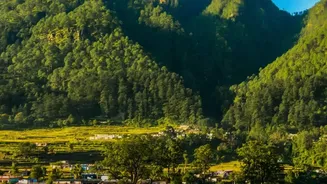
Every September, the Ziro Festival of Music transforms the tranquil Ziro Valley into a vibrant hub of culture and sound. Started in 2012, the festival is renowned for its eco-friendly ethos—featuring stages handmade from bamboo by local artisans—and a diverse
lineup of independent, folk, and international artists. But the appeal goes beyond the music. Hosted by the Apatani community, the festival offers a unique cultural immersion. Attendees camp under the stars, explore Apatani villages, and experience a deep connection to the land and its people, making it more than just a concert; it's a holistic experience that draws travelers, artists, and increasingly, remote professionals seeking inspiration beyond a typical office.
The Great Connectivity Challenge
The romance of working from a remote paradise quickly meets its greatest obstacle: infrastructure. Ziro Valley, for all its beauty, is a challenging environment for anyone dependent on a stable internet connection. Connectivity can be unreliable, and power supply is often irregular. While improvements like BharatNet and new 4G towers have brought better access to parts of Arunachal Pradesh, the network in Ziro can still be patchy, especially with the influx of thousands of festival-goers straining the system. This is the central problem every digital nomad must solve. Success isn't accidental; it requires meticulous planning and a toolkit designed for digital survival in the wild.
The Modern Nomad's Survival Kit
So, how do they do it? The answer lies in preparation and a specific set of tools. Most seasoned nomads arrive with multiple prepaid SIM cards from different providers (like Airtel and BSNL) to switch between networks. A reliable dongle or mobile hotspot is non-negotiable. Just as crucial are power banks—several of them, fully charged—to counter unpredictable electricity. But technology is only half the battle. The real strategy is workflow management. This involves downloading all essential files, documents, and offline versions of apps before arriving. Communication with clients and teams is key, setting expectations that responses might be asynchronous and that real-time video calls are a luxury, not a guarantee.
Redefining the Nine-to-Five
The concept of a standard workday dissolves in Ziro. Nomads adopt a fractured schedule, built around the festival's rhythm and the availability of a signal. Mornings are often dedicated to deep work, finding a quiet corner of a homestay or a cafe with a reported Wi-Fi connection to clear urgent tasks. The afternoons are for soaking in the festival's daytime performances and exploring the valley. Evenings bring the headline acts, a time to disconnect from work entirely. The 'office' might reopen late at night, powered by a power bank and a burst of productivity under the stars, sending off the day's deliverables before heading to a bonfire jam session. It's a routine that demands discipline and flexibility in equal measure.
More Than a Work-Party Balance
For the digital nomads who make the journey, the Ziro experience is not simply about proving they can work from anywhere. It's about a deliberate lifestyle choice that prioritizes unique experiences over convenience. The challenges are part of the appeal, a test of resourcefulness that makes the reward—witnessing incredible music in a UNESCO World Heritage-nominated landscape—even sweeter. It's an opportunity to connect with a community of like-minded people who believe work should fund a life of adventure, not confine it. The conversations around a campfire with fellow travelers and local Apatani hosts often prove just as enriching as the festival's official lineup.