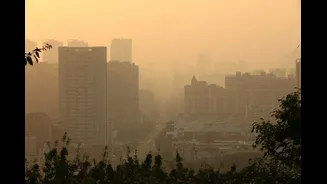






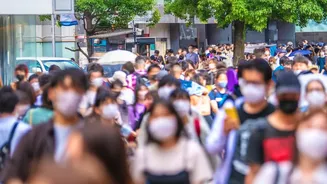
A bright, sunny day can feel like the perfect invitation for a run or an outdoor workout. But that same sunshine can cook up an invisible threat in the air we breathe, one that poses a specific risk to fitness enthusiasts. Here's what you need to know.
The Good, The Bad, and The Smoggy
First, it's important to know that not all ozone is created equal. You’ve likely heard of the 'good' ozone layer, located high up in the stratosphere. This natural shield protects us by absorbing the sun's harmful ultraviolet (UV) radiation. But the ozone we need to worry about is ground-level ozone, a harmful air pollutant and the main ingredient in smog. Unlike the protective layer above, this 'bad' ozone forms near the Earth's surface when pollutants react in the presence of sunlight. It is a major air quality concern in many parts of India and can cause significant health issues. This is the ozone that can turn a beautiful day into a health hazard, especially when you're breathing heavily during exercise.
Sunlight: The Unseen Catalyst
Ground-level ozone isn't emitted directly from a car's tailpipe or a factory smokestack. Instead, it’s a secondary pollutant, created by a chemical reaction in the atmosphere. The main ingredients are two types of precursor pollutants: oxides of nitrogen (NOx) and volatile organic compounds (VOCs). NOx gases are primarily released from burning fuel in cars, power plants, and industrial boilers. VOCs escape from sources like gasoline vapours, chemical solvents, paints, and even household cleaning products. When these pollutants are present in the air, sunlight—specifically UV radiation—acts like an engine, driving a chemical reaction that 'bakes' them together to form ozone. This is why ozone levels are typically highest on hot, sunny, and stagnant days, as the heat and light provide the perfect conditions for this polluting recipe.
Why Outdoor Exercise Magnifies the Risk
When you exercise, your breathing rate and volume increase dramatically. You might take 15 breaths a minute at rest, but that can jump to 40-60 breaths during strenuous activity. This means you are inhaling a much larger volume of air—and any pollutants within it. The increased breathing rate draws harmful ozone deeper into your lungs, where it can cause the most damage. Exposure to ozone can irritate your respiratory system, leading to coughing, a sore throat, and chest pain. For many, it feels like a 'sunburn on the lungs'. It can also reduce your lung function, making it harder to breathe deeply, and can trigger asthma attacks or worsen other chronic lung diseases. This is why even healthy, active people are considered a sensitive group when it comes to ozone exposure.
Time Your Workouts to Breathe Easier
Since sunlight is the key driver of ozone formation, there’s a predictable daily pattern to its concentration. Ozone levels are typically at their lowest in the early morning. As the sun climbs higher and temperatures rise, the chemical reactions accelerate, and ozone levels begin to build. They generally peak in the mid to late afternoon, often between noon and 7 p.m., before starting to decline after sunset. For fitness enthusiasts, this pattern offers a clear strategy: schedule your outdoor workouts for the early morning or later in the evening to avoid the worst of the pollution. On days forecast to have high ozone levels, shifting a run from 4 p.m. to 7 a.m. can make a significant difference in your exposure.
Check the Air Before You Lace Up
The most effective way to protect yourself is to stay informed. Before heading out, check the daily Air Quality Index (AQI) for your area. In India, the System of Air Quality and Weather Forecasting and Research (SAFAR) provides realtime data and forecasts for major cities. Many weather apps and websites also report the AQI. Pay close attention not just to the overall score but to the primary pollutant. On hot , sunny days , ozone may be the main concern even if particulate matter levels are low . If the AQI is in the 'Moderate' range , unusually sensitive people should consider reducing exertion . If it reaches 'Unhealthy for Sensitive Groups' or higher , it’s wise for everyone to limit intense outdoor activity , reschedule for a cleaner time , or move the workout indoors .