







The Unseen Aftermath
For many, the environmental impact of fireworks brings to mind the immediate haze of smoke and the litter of spent casings. While the effects on air quality are well-documented, with bursts of particulate matter and harmful gases, a growing body of scientific
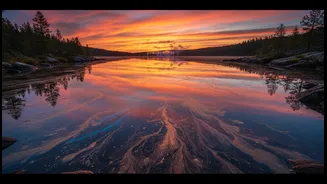
work is tracing the journey of firework chemicals into our water systems. Recent studies published by the American Chemical Society have confirmed that the fallout from these brilliant displays contains a cocktail of compounds that can disrupt aquatic ecosystems long after the celebrations end. This pollution isn't just from large, organised shows; personal fireworks used during festivals like Diwali contribute significantly, with residue washing from streets and rooftops into storm drains and, eventually, into rivers and lakes.
What The New Science Reveals
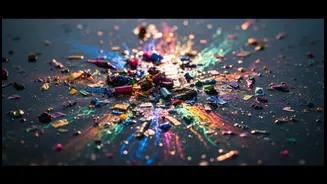
Recent laboratory studies have taken a closer look at what happens when firework debris meets water. One study found that when residue from spent firecrackers—containing partly burned fuel, metal salts, and charred packaging—is introduced to lake and river water, it releases substantial amounts of metal ions like potassium and manganese. It also leaches dissolved organic compounds, such as phenols, into the water. Interestingly, the research also showed a two-way chemical exchange. While the firework debris released certain pollutants, its solid remnants simultaneously absorbed other complex organic compounds already present in the water, fundamentally altering its natural chemistry. Scientists say these changes have the potential to disturb crucial microbial activity and harm aquatic life, especially after intensive or recurring festive events.
A Cocktail of Contaminants
The vibrant colours of fireworks are produced by burning various metal salts: strontium for reds, copper for blues, and barium for greens. These heavy metals, along with others like lead and chromium in some cases, don't simply vanish. They fall to the ground and can be washed into water sources, where they can be toxic to fish and other organisms, affecting their growth and reproduction. Perhaps the most-studied pollutant is perchlorate, a chemical compound widely used as an oxidizer to help propel the firework. Perchlorate is highly soluble in water, allowing it to travel easily into groundwater and surface water. In high concentrations, it is known to interfere with thyroid function in both wildlife and humans, which is crucial for normal development and metabolism.
The Indian Context
In a country like India, where festivals such as Diwali are celebrated with an immense volume of fireworks, the potential for water contamination is significant. The toxic haze that envelops cities after the festival is a visible reminder of air pollution, but the impact on water bodies is a more silent crisis. Studies have previously noted the presence of perchlorate in soil and water samples in India following firework-heavy celebrations. Given that many Indian cities are already grappling with stressed and polluted rivers and lakes, the additional chemical load from festive periods can exacerbate an already dire situation, posing risks to biodiversity and potentially entering the human water supply.
Seeking Cleaner Celebrations
The growing awareness of this issue is prompting a search for solutions. The most immediate and effective step, according to researchers, is the proper cleanup and disposal of all firework debris to prevent it from being washed into waterways. However, the long-term answer may lie in innovation. The concept of “green fireworks,” which use formulations with fewer toxic metals and nitrogen-based components to reduce smoke, is gaining traction. But even these are not entirely pollution-free. As scientific understanding of the environmental toll grows, some communities are exploring high-tech alternatives like drone light shows and laser displays, which offer the spectacle without the chemical hangover. These options provide a path to preserving festive traditions while also safeguarding precious natural resources for the future.