



The Invisible Disruption Above
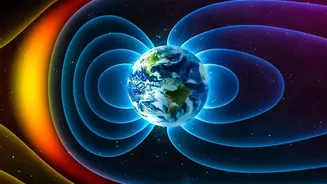
Our planet is constantly bathed in a stream of charged particles from the Sun, a phenomenon known as the solar wind. Usually, Earth's magnetic field protects us. But when the Sun unleashes a powerful solar flare or a coronal mass ejection (CME), it can
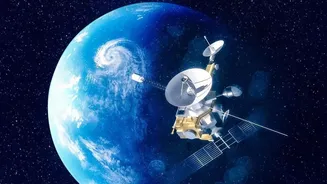
cause significant disturbances in our upper atmosphere, an area called the ionosphere. This 'space weather' can scramble the radio signals that travel between satellites and the ground. One of the key effects is called 'ionospheric scintillation,' which is a bit like the twinkling of stars. Just as turbulence in our atmosphere makes starlight appear to flicker, disturbances in the ionosphere can make satellite signals rapidly fluctuate in strength and phase, leading to errors or complete signal loss. These disruptions are a major headache for any technology that relies on a clear connection to space.
Our Growing Reliance on Stable Signals
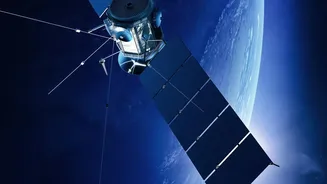
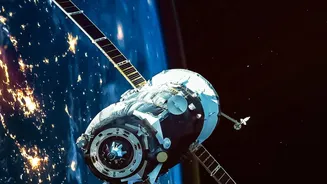
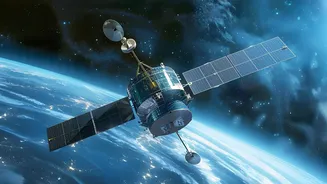
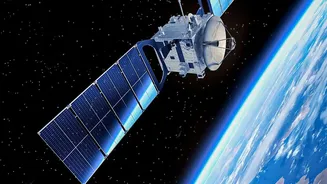
Decades ago, a solar storm might have only affected long-range radio operators. Today, the stakes are much higher. Our modern world is woven together by satellite signals. Global Navigation Satellite Systems (GNSS), including GPS, are essential for aviation, shipping, precision agriculture, and even financial transactions that require precise timing. A major geomagnetic storm can introduce positioning errors, which proved costly for farmers in North America who reported malfunctioning GPS-guided tractors during events in 2024. Furthermore, the boom in Low Earth Orbit (LEO) satellite constellations for internet services, from providers like Starlink and OneWeb, means more of our daily connectivity depends on these signals. With the number of active satellites expected to jump from a few thousand to potentially 50,000 within the decade, our vulnerability to space weather is only increasing.
Forecasting with Artificial Intelligence
Predicting space weather has been a monumental challenge. Traditional models, while based on physics, often struggle to provide accurate, timely warnings. This is where new forecasting methods, powered by artificial intelligence (AI) and machine learning (ML), come in. Scientists are now training AI models on vast archives of data from solar observatories, ground-based receivers, and satellites. By recognizing complex patterns in solar activity, the Earth's magnetic field, and ionospheric conditions, these AI systems can predict disruptive events with greater accuracy and longer lead times. For example, research teams are using AI to automatically detect and classify solar filaments, which are key precursors to CMEs. These models are getting better at forecasting the intensity of geomagnetic storms and the probability of scintillation in specific regions, sometimes up to 24 hours in advance.
From Prediction to Practical Protection
An improved forecast doesn't stop a solar storm, but it provides a critical window to prepare for its impact. With a reliable warning, satellite operators can put their spacecraft into a 'safe mode,' shutting down sensitive electronics to prevent damage from radiation. Power grid operators can take steps to protect transformers from geomagnetically induced currents that can cause widespread blackouts. For communication and navigation services, advanced warnings allow systems to reroute data through unaffected satellites or switch to ground-based backup systems seamlessly. This proactive approach turns a potentially catastrophic failure into a managed, temporary disruption. For end-users, it means a more resilient and dependable service, whether you are navigating a new city, flying on a plane, or connecting to the internet from a remote location.
Why This Matters for India's Digital Future
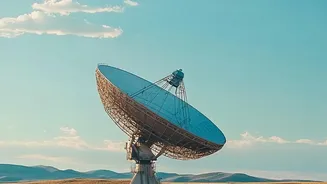
These advancements are particularly relevant for India. With the 'Digital India' mission aiming to connect every corner of the nation, satellites are crucial for providing broadband to remote and rural areas where terrestrial infrastructure is lacking. The country's reliance on GNSS for disaster management, transportation, and national security is also growing rapidly. As India's own space sector, including private ventures, continues to expand, protecting these valuable assets in orbit becomes a top priority. By leveraging these next-generation AI-powered forecasting tools, India can better safeguard its critical infrastructure, ensure the success of its digital initiatives, and solidify its position as a major space-faring nation in an era of increasingly turbulent space weather.