






First, Analyze Your Work Style
Before you can choose the right chair, you need to understand your own habits. For a day, pay attention to how you work. Are you locked into video calls for hours, requiring stable support? Or are you a natural fidgeter, constantly shifting your weight,
crossing and uncrossing your legs, and leaning in and out? Perhaps you frequently get up to grab files, collaborate with colleagues, or simply stretch. Your daily movement profile is the most important piece of data you have. Someone who remains mostly still for long periods has vastly different needs than someone who works in short, energetic bursts or is constantly changing tasks.
For the Static Sitter: The Traditional Ergonomic Chair
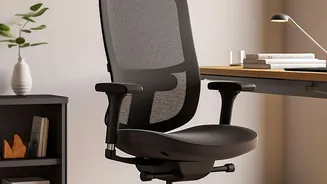
If your job requires long stretches of focused, stationary work—like coding, writing, or data entry—your best bet is likely a traditional ergonomic task chair. These chairs are engineered for support during long hours of sitting. Their primary goal is to fit your body, not force your body to adapt to the chair. Key features to look for include adjustable seat height, seat depth, and robust lumbar support that reinforces the natural curve of your lower spine. Also crucial are adjustable armrests, which help reduce strain on your neck and shoulders. Research confirms that chairs supporting dynamic sitting, which allows for small movements and reclining, are better than locking the backrest into a single position. Look for high-quality materials like breathable mesh to prevent heat buildup or dense foam that provides lasting comfort.
For the Active Sitter: Chairs that Encourage Movement
If you're someone who feels constrained by a traditional chair, you might be an 'active sitter'. Active seating is designed to encourage micro-movements, engage your core, and improve posture. This category includes a variety of options. Kneeling chairs, for example, open up the angle of your hips and shift some weight to your shins, which can encourage better posture for those who tend to slump. Saddle chairs or stools, popular in clinical settings, place you in a position similar to riding a horse, opening the hips and making it easier to maintain an upright spine while leaning forward for precision tasks. Wobble stools and balance balls are the most dynamic, constantly requiring your core muscles to work to keep you stable. While these chairs can boost focus and energy, they often lack back and arm support, so they may not be ideal for all-day use without an adjustment period.
The Best of Both Worlds: Hybrid Solutions
You don't always have to choose between a fully static and a fully active chair. Many modern ergonomic chairs incorporate features that promote subtle movement. Look for a 'synchro-tilt' or 'dynamic recline' mechanism, which allows the backrest and seat to move with your body in a coordinated way, encouraging posture changes without sacrificing support. Some people find success by using two different types of chairs throughout the day. For example, you could use a traditional ergonomic chair for long meetings or focused tasks, then switch to a kneeling chair or wobble stool for an hour or two to change your posture and engage different muscles. This strategy can prevent the fatigue that comes from holding any single position for too long.
What to Check Before You Buy
Regardless of the style you lean toward, a few ergonomic checkpoints are non-negotiable. First, ensure the seat height is adjustable so your feet can rest flat on the floor with your knees at or slightly below a 90-degree angle. Second, check the seat depth; you should have a small gap of 2-4 inches between the front edge of the seat and the back of your knees. Third, test the lumbar support to see if it comfortably fits the curve of your lower back. Finally, make sure the chair has a stable five-point base to prevent tipping. Whenever possible, try a chair in person before committing. What looks good on paper might not feel right for your body.