





The Downhill Dilemma for Your Knees
Running uphill is a cardiovascular challenge, but running downhill is what truly tests your knees. With every downhill stride, your quadriceps muscles work overtime to act as brakes, controlling your descent and absorbing immense force. This braking action
happens while the muscle is lengthening—a movement known as an eccentric contraction. This specific type of loading places significant stress directly on the patellar tendon, the strong band of tissue connecting your kneecap to your shinbone. Over time, and with repetitive impact, this can lead to micro-tears, irritation, and the all-too-common runner's ailment known as patellar tendinopathy, or 'runner's knee'.
What Are Eccentric Exercises?
To understand the solution, you first need to grasp the concept of muscle contractions. A concentric contraction is when a muscle shortens, like when you lift a dumbbell in a bicep curl. An eccentric contraction is the opposite: the muscle lengthens while under tension, like when you slowly lower that same dumbbell. Think of the slow, controlled lowering phase of any movement. This lengthening-under-load phase is where the magic happens for tendon health. It's more demanding on the muscle and tendon, but when performed correctly in a controlled setting, it's precisely this stress that stimulates healing and builds resilience.
Strengthening Tendons From the Inside Out
Chronic tendon pain often stems from disorganized, weak collagen fibres within the tendon. Eccentric exercises are a cornerstone of rehabilitation because they provide the ideal mechanical load to address this. The slow, controlled tension stimulates the tendon cells to produce new, healthy collagen and encourages these fibres to align correctly. This process effectively remodels the tendon, making it stronger, more durable, and better equipped to handle the high-impact forces of downhill running. Essentially, you are training your tendons to be more robust, reducing the likelihood of future irritation and injury.
How to Perform an Eccentric Squat
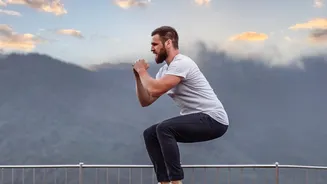
The key to an eccentric squat is to focus entirely on the 'down' phase. You can perform this on a flat surface or a small step for a greater range of motion. Stand with your feet shoulder-width apart. Begin to lower yourself into a squat, but do so very slowly, taking a full 3 to 5 seconds to reach the bottom of the movement. Your hips should go back as if sitting in a chair. Once at the bottom, don't bounce. Either push back up to the starting position at a normal speed or, for a more targeted approach, use your 'good' leg to help push yourself back up, saving all the eccentric work for the affected leg. Start with 3 sets of 10-15 repetitions.
Mastering the Eccentric Lunge
The eccentric lunge, or split squat, is another powerful tool. Stand with one foot forward and the other back, as you would for a regular lunge. Keeping your torso upright, slowly lower your body down over a count of 3 to 5 seconds, until your back knee is just above the floor. Your front knee should be bent at roughly a 90-degree angle. Once at the bottom, drive through your front foot to return to the starting position at a normal pace. Perform all repetitions on one side before switching to the other. This unilateral exercise is fantastic for runners as it mimics the single-leg demands of the sport and helps correct imbalances.
Integrating Into Your Running Routine
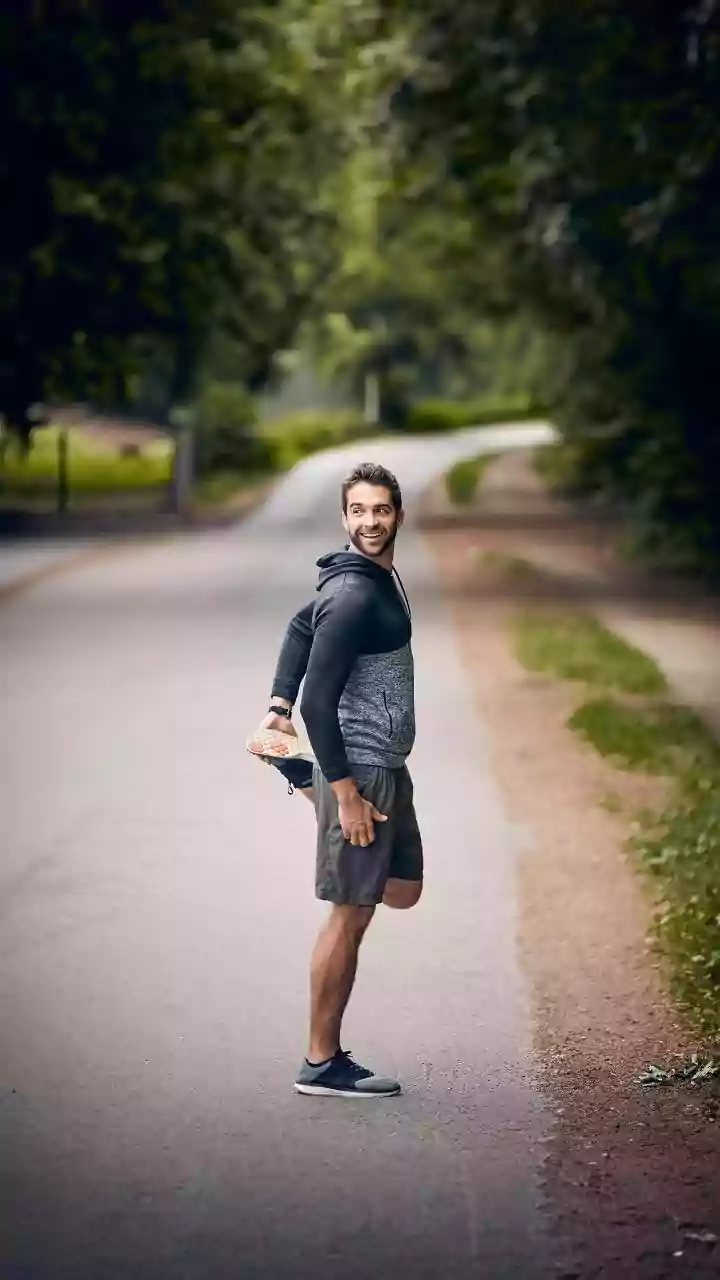
These exercises should be treated as strength training, not a warm-up. Perform them on non-running days or after an easy run. Because eccentric work can cause more muscle soreness (DOMS), it's wise to allow at least 48 hours of recovery for the muscle group before another intense session. Start with just your body weight, focusing on perfect, slow, and controlled form. As you get stronger, you can add weight by holding dumbbells or kettlebells. Consistency is key. A few sessions a week can make a significant difference in your knee health and your confidence on the hills.