






The Concrete Jungle's Water Problem
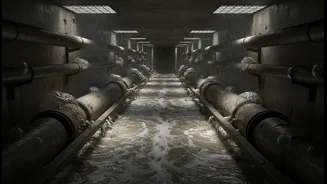
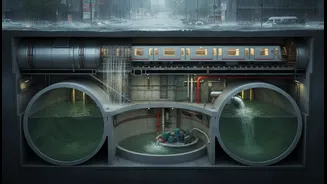
Urban flooding is a familiar crisis. Heavy rainfall overwhelms decades-old drainage systems, turning roads into rivers and bringing cities to a standstill. A primary cause is the sheer amount of impervious surfaces like concrete and asphalt. Water that
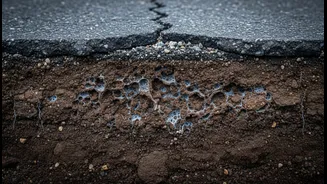
once soaked naturally into the ground now has nowhere to go, forcing it to run off in massive volumes. Even our green spaces, like parks and road medians, struggle to absorb this deluge. Over time, urban soil becomes heavily compacted from foot traffic, construction, and the constant pressure of city life. This compressed earth acts more like pavement than a sponge, preventing rainwater from infiltrating the ground. The result is increased surface runoff, which leads to more frequent and severe flooding.
Unlocking the Ground with Air
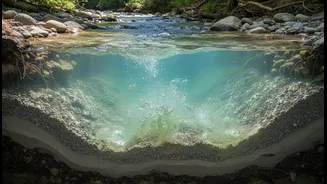
The core idea is surprisingly simple and analogous to tending a garden. The space beneath the land surface, known as the vadose zone, is a porous mix of soil, rock, water, and air. For soil to be healthy and absorb water effectively, it needs pore spaces for both air and water to move freely. Urban soil compaction squeezes these pores shut, drastically reducing the soil's ability to let water in. The concept of improving stormwater systems with airflow is based on soil aeration—the process of reintroducing air into this compacted ground. By creating channels and pathways, aeration breaks up dense soil, allowing oxygen to penetrate and, crucially, creating space for water to follow.
How Airflow Boosts Water Infiltration
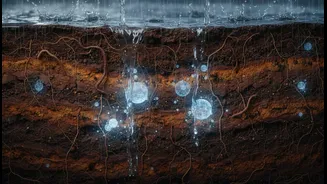
Think of compacted soil as a blocked drain. When rain falls, the water simply pools on top. Aeration effectively unblocks this drain. Methods can range from mechanical processes that pull out plugs of soil to more advanced techniques. Deep tillage, for instance, uses rippers to fracture compacted layers deep below the surface without destroying the topsoil. Another approach involves amending the soil by mixing in organic matter like compost, which naturally improves structure and aeration. When these channels are opened, the soil's infiltration rate—the speed at which it can absorb water—increases significantly. Instead of running off into already overburdened stormwater drains, rainwater can percolate down into the soil, recharging groundwater supplies and reducing the immediate flood risk on the surface.
Designing Smarter, Spongier Cities
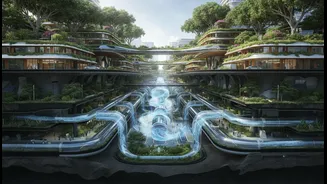
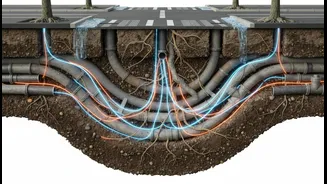
This principle is already being applied in modern green infrastructure projects known as bioretention systems or rain gardens. These are specially designed landscaped areas that collect runoff from roads and parking lots. They use a specific mix of soil, sand, and mulch that is engineered to maximize filtration and infiltration. By keeping the soil loose and aerated, these systems can absorb, filter, and slowly release large amounts of stormwater. They can be integrated into parking lot islands, residential common areas, and roadside green strips. Studies have shown that well-designed bioretention areas can infiltrate up to 90% of annual rainfall, drastically reducing runoff volume and filtering out pollutants like metals and oils in the process.
The Path from Concept to Reality
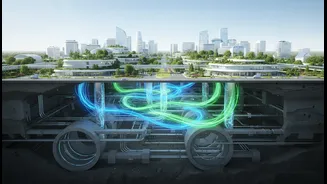
While the science is sound, implementing soil aeration strategies on a city-wide scale presents challenges. It requires a shift in urban planning, moving away from simply channeling water away to actively managing it where it falls. Many promising solutions are found in combining techniques. For example, using permeable pavements alongside tree pits with structural soils can enhance water capture. Furthermore, research is ongoing to understand the long-term effectiveness and maintenance needs of these systems, especially regarding how they handle pollutants that get filtered into the soil. However, the potential benefits are clear: reduced flooding, improved water quality, replenished groundwater, and greener, more resilient urban environments.