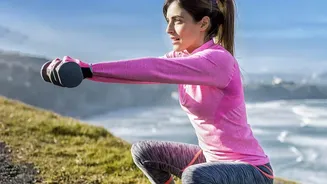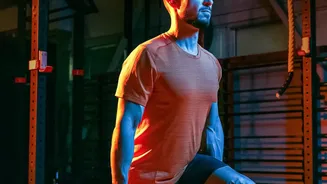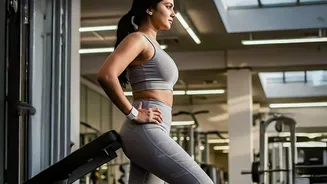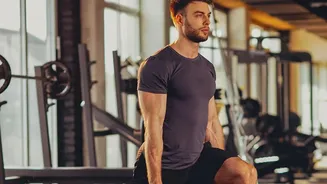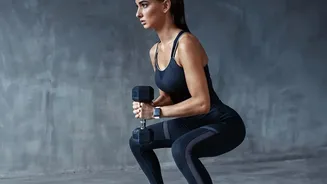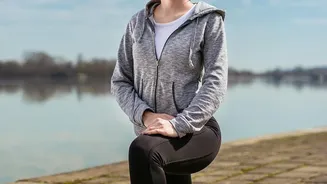





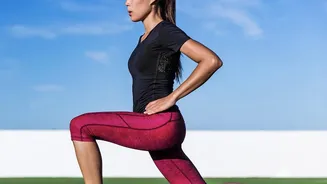

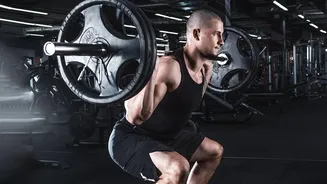
When actor Sonam Bajwa shares glimpses of her 'humbling' leg day, fans take note. A key part of her routine for building lower-body strength is the lunge. But what makes this classic exercise so effective and how can you perfect it yourself?
The Celebrity-Approved Power Move
Sonam Bajwa's
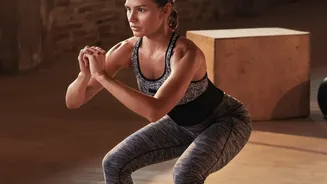
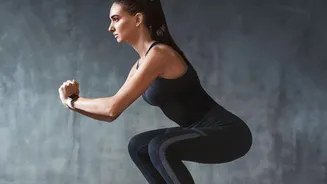
dedication to fitness is no secret, and her workout videos often reveal a challenging mix of squats, weight training, and lunges. This isn't just about aesthetics; these exercises are fundamental for building a strong, functional lower body. Experts note that strengthening the muscles around your hips, knees, and ankles is crucial for overall stability, balance, and even long-term bone health. The lunge, in particular, is a powerhouse move favoured by trainers and celebrities alike because it’s a unilateral exercise, meaning it works one leg at a time. This helps to identify and correct muscle imbalances that can be hidden by bilateral exercises like squats, ensuring both sides of your body are equally strong.
Why Lunges Deserve a Spot in Your Routine
The benefits of lunges go far beyond simply targeting your legs. As a compound exercise, they engage multiple muscle groups simultaneously, making your workout highly efficient. Primarily, lunges strengthen the quadriceps (front of the thigh), hamstrings (back of the thigh), and glutes. But the work doesn't stop there. To stay upright during a lunge, your core muscles must engage to stabilize your torso, improving your posture and balance. This movement also enhances hip flexibility by stretching the hip flexors, which often become tight from prolonged sitting. This combination of strengthening and stretching makes lunges a functional exercise that mimics everyday movements like climbing stairs or picking something up, making daily activities easier and reducing injury risk.
How to Perform the Perfect Forward Lunge
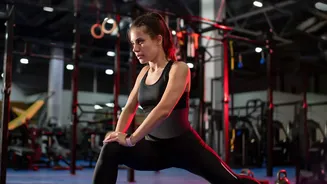
Mastering the form is crucial to reap the benefits and avoid injury. Follow these steps for a classic forward lunge: 1. Start by standing tall with your feet hip-width apart and your core engaged. Keep your chest up and your gaze forward. 2. Take a controlled, large step forward with your right leg, planting your heel on the ground first. 3. Lower your body until both knees are bent at approximately a 90-degree angle. Your front thigh should be parallel to the floor, with your front knee directly above your ankle. Your back knee should hover just above the ground without touching it. 4. Hold for a moment, ensuring your weight is distributed evenly and you feel stable. 5. Push off firmly with your front foot, driving through the heel, to return to the starting position. 6. Repeat the movement on your left leg. Aim for an equal number of repetitions on both sides.
Common Mistakes and How to Fix Them
Even a simple move like the lunge can go wrong. Watch out for these common errors:- Leaning the torso too far forward: This often happens due to a weak core or trying to use momentum. It shifts stress to your lower back. Fix this by keeping your chest lifted and your eyes looking straight ahead, not at the floor.- Front knee caving inward: If your front knee drifts toward the centre, it's often a sign of weak glute muscles. This puts unnecessary strain on the knee joint. To correct this, consciously focus on keeping your knee aligned with your second toe.- Taking a step that's too short or too long: A step that's too short can cause your front knee to travel far past your toes and your heel to lift, straining the knee. A step that is too long can stress the hips. Aim for that 90-degree bend in both knees at the bottom of the movement.- Not keeping your feet hip_width apart: Stepping your front foot directly in front of your back foot (like on a tightrope) compromises your balance. Maintain a hip_width stance for a stable base.
Easy Variations to Challenge Your Muscles
Once you've mastered the forward lunge, you can introduce variations to keep your workouts interesting and target muscles in new ways.- Reverse Lunge: Instead of stepping forward, you step backward. This variation can feel more stable for many people and places a greater emphasis on the glutes and hamstrings.- Lateral (Side) Lunge: Step directly out to one side, keeping your other leg straight. This move is excellent for targeting the inner and outer thighs (adductors and abductors), muscles that are often neglected in standard forward-'and'-back movements.- Walking Lunge: This dynamic version involves stepping forward from one lunge directly into the next, alternating legs as you move across the floor. It builds endurance and adds a cardiovascular challenge.- Curtsy Lunge: Step one leg diagonally behind the other, as if doing a curtsy. This variation challenges your stability and specifically targets the gluteus medius (the side of your hip), which is crucial for hip stability.