
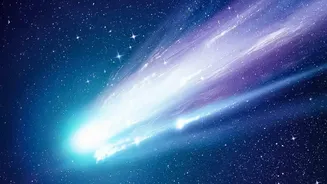
A Guest from Beyond
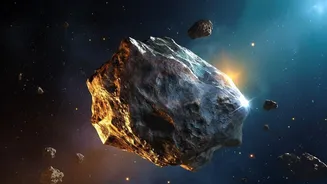
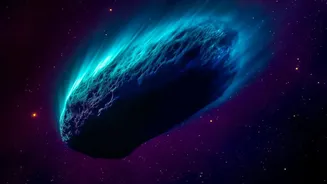
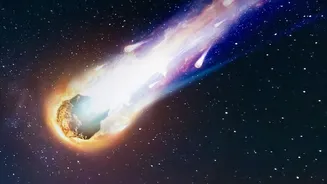
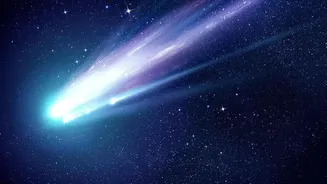
The visitor was named 3I/ATLAS. What makes it so special is right there in its name: the 'I' stands for interstellar. This means it didn't originate here. While our planets, asteroids, and local comets all orbit our Sun, 3I/ATLAS was just passing through.
It came from a completely different star system, making it a true alien object. It is only the third such interstellar visitor ever confirmed by scientists. Its discovery on July 1, 2025, by the Asteroid Terrestrial-impact Last Alert System (ATLAS) in Chile, set the astronomy world buzzing with excitement.
Meet the Cosmic Trio
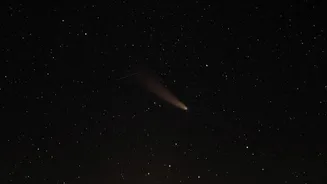
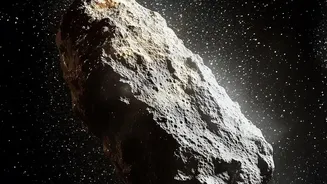
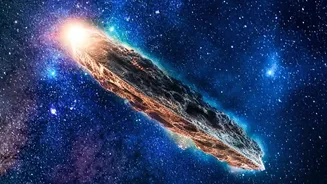
Before 3I/ATLAS, we had two other confirmed interstellar guests. The first, spotted in 2017, was named 'Oumuamua. It was a cosmic puzzle—long, thin, and rocky, showing no signs of a comet's typical dusty tail. Then in 2019 came 2I/Borisov, which looked and acted much more like the comets we're used to, complete with a fuzzy coma and tail. 3I/ATLAS, our third visitor, also behaved like a classic comet, giving scientists another precious chance to study an object born in a distant, unknown planetary system. Each visitor tells us something new about whether our solar system is unique or just one of many similar neighbourhoods in the galaxy.
The Telltale Signs of a Traveller
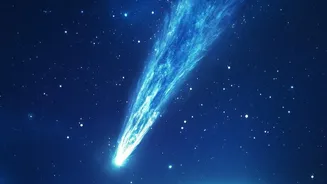
How did astronomers know for sure that 3I/ATLAS wasn't from around here? The two biggest clues were its speed and its path. The comet was moving incredibly fast—at its peak, it was travelling at speeds over 200,000 kilometres per hour. More importantly, its trajectory was what astronomers call 'hyperbolic'. Instead of a closed, elliptical orbit around the Sun like our planets, its path was an open curve. It swung in, looped around the Sun (coming closest in October 2025), and is now headed back out into deep space, never to return. Its extreme speed couldn't have come from a gravitational slingshot off Jupiter or any other planet; it had to have brought that velocity with it from interstellar space.
A Message in a Dusty Bottle
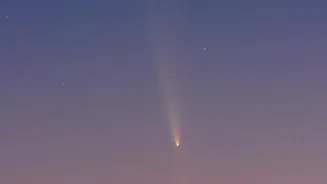
Because 3I/ATLAS is a comet, it’s like a time capsule from its home star. As it neared our Sun and warmed up, its ices began to turn into gas, creating a glowing halo, or coma, and a tail. By studying the light from this gas with powerful telescopes like the James Webb Space Telescope, scientists could figure out what it's made of. They found familiar ingredients like water and cyanide, but also an unusually high amount of carbon dioxide. This chemical fingerprint offers clues about the environment where the comet formed billions of years ago, around a star far, far away. It's like receiving a message in a bottle from across a vast cosmic ocean.
Could It Be an Ancient Relic?
Some of the most exciting analysis of 3I/ATLAS suggests it could be incredibly old. Based on the specific types of carbon detected in its coma, some researchers believe the comet may have formed 10 to 12 billion years ago. To put that in perspective, our entire solar system is only about 4.5 billion years old, and the universe itself is estimated to be 13.8 billion years old. If this is true, 3I/ATLAS could be one of the oldest objects ever observed up close, a relic from a time when the galaxy was much younger. It would have wandered the Milky Way for eons before its chance encounter with our Sun.
Your Turn to Watch the Skies
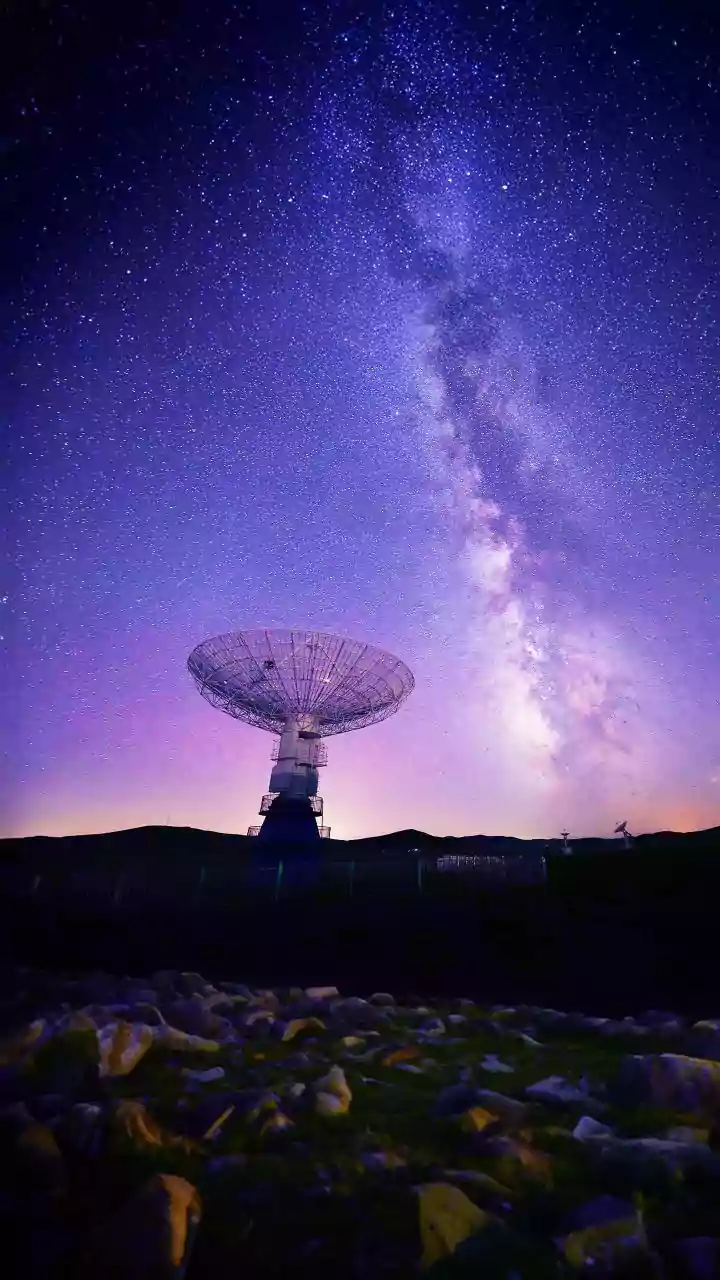
While Comet 3I/ATLAS itself is long gone and was never bright enough for the naked eye, its visit is a thrilling reminder of the dynamic universe we live in. And the good news is that with better telescopes scanning the sky, we can expect to find more of these interstellar interlopers in the coming years. For young stargazers in India, this is the perfect time to get curious. You can start by learning the constellations, using binoculars to spot Jupiter's moons, or joining a local astronomy club. Telescopes are more accessible than ever, and even a small one can reveal the craters on our Moon or the rings of Saturn. By learning to navigate the night sky, you'll be ready for the next surprise visitor our galaxy sends our way.