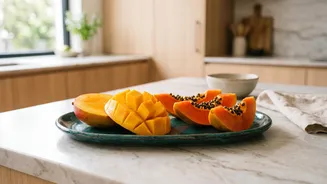




Mango and papaya are beloved breakfast staples across India. One is the king of fruits, the other a year-round digestive hero. But when it comes to your morning meal, which is the smarter choice, and does turning them into juice change the answer?
The Case for Mango: The Nutrient Powerhouse
The
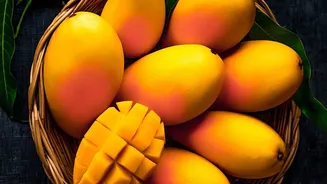
reputation of mango as the 'king of fruits' is well-deserved. Each serving is packed with essential nutrients. Mangoes are a fantastic source of Vitamin C, which is crucial for a strong immune system and healthy skin. They are also exceptionally rich in beta-carotene, which the body converts into Vitamin A, supporting good vision and eye health. Beyond vitamins, mangoes provide a decent amount of folate, a B vitamin vital for cell growth. They also contain a unique antioxidant called mangiferin, which early studies suggest may help reduce inflammation in the body. With its natural sweetness and impressive nutrient profile, a bowl of mango can be a delightful and beneficial way to start your day, especially when it's in season.
The Case for Papaya: The Digestive Champion
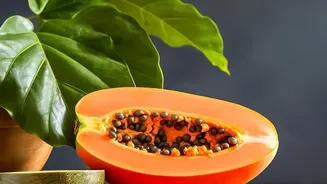
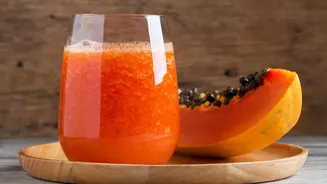
Papaya’s primary claim to fame is its digestive prowess. It contains a special enzyme called papain, which helps break down proteins, making it easier on your stomach and potentially reducing bloating and indigestion. This makes it an excellent choice for a first meal of the day, preparing your digestive system for what's to come. Papaya is also loaded with Vitamin C, often containing more per 100 grams than mango. It is naturally lower in calories and sugar compared to mango, making it a lighter option for those managing their weight or sugar intake. Rich in fibre and water, papaya promotes a feeling of fullness, helping to curb mid-morning snack cravings.
Nutritional Showdown: A Head-to-Head Look
When placed side-by-side, the differences become clearer. Per 100 grams, papaya is the lighter choice, with fewer calories (around 43 kcal vs. mango's 60 kcal) and significantly less sugar (about 7.8g vs. mango's 13.7g). Papaya also tends to have slightly more fibre and a higher concentration of Vitamin C. However, mango takes the lead in other areas. It boasts much more beta-carotene (the precursor to Vitamin A), Vitamin E, and is a standout source of folate. In terms of blood sugar impact, some sources indicate mango has a lower glycemic index (around 51-59) compared to papaya (around 56-60), meaning it may cause a slower rise in blood sugar, though both are in the low-to-medium range. Your choice depends on your goals: for lower sugar and calories, papaya wins; for a boost of Vitamin A and folate, mango has the edge.
The Real Battle: Whole Fruit Versus Juice
Perhaps a more important comparison is the form in which you consume the fruit. Eating a whole mango or papaya is fundamentally different from drinking its juice. The single biggest advantage of whole fruit is its fibre content. Fibre is the structural part of the fruit that gets largely removed during juicing. This fibre is crucial for several reasons: it slows down the absorption of sugar into your bloodstream, preventing sharp energy spikes and crashes. It also adds bulk to your meal, making you feel fuller for longer, which aids in appetite control. Chewing a whole fruit also sends satiety signals to your brain that you simply don't get from gulping down a glass of juice.
The Juice Trap: A Concentrated Dose of Sugar
When you juice a fruit, you strip away its most valuable player: fibre. What's left is a concentrated liquid of sugar and water, with some vitamins. It often takes several fruits to make a single glass of juice, meaning you consume the sugar of three or four oranges in minutes, something you'd be unlikely to do if you were eating them whole. This rapid intake of 'free sugars' can cause a much faster and higher spike in blood glucose levels. While 100% fruit juice isn't the same as a sugar-sweetened beverage and does contain nutrients, it is essentially a less healthy, less filling version of the original fruit. For a truly healthy breakfast, the whole fruit is the undisputed champion.