










The Managerial Chess Match
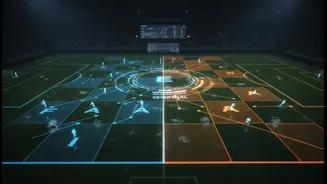
This semifinal pits two distinct philosophies against each other. For England, under the pragmatic guidance of Thomas Tuchel, the approach is built on structure, balance, and control. Tuchel often deploys a flexible 4-2-3-1, which can morph into a 3-2-5
during sustained attacks, emphasizing controlled possession and positional discipline. His priority is balance, ensuring that creative talents like Jude Bellingham and Harry Kane can flourish without exposing the team to counter-attacks. On the other side, Lionel Scaloni’s Argentina is a masterclass in adaptability and transition. While they can line up in a 4-3-3 or 4-4-2, their core identity is built on defensive solidity, midfield dominance, and lightning-fast counters. Scaloni has forged a ruthless winning machine that thrives on suffocating opponents and exploiting any space they concede.
Battle for the Midfield
The game will likely be won or lost in the center of the park. England’s midfield engine relies on Declan Rice as the anchor, whose job is to shield the defense and disrupt the opposition’s rhythm. He is supported by tireless runners who help control possession. However, they will face arguably the most formidable midfield in the tournament. Argentina's trio of Enzo Fernández, Alexis Mac Allister, and Rodrigo De Paul are experts at dictating tempo, pressing relentlessly, and playing through pressure with technical composure. Their primary task will be to win the ball and find Lionel Messi in dangerous pockets of space between England’s defensive lines. If England can’t handle Argentina's press, their structured game plan could quickly unravel.
England's Attack vs. Argentina's Defence
England possesses one of the most potent attacks in world football, with the elite finishing of Harry Kane complemented by the creativity and pace of players like Bukayo Saka and Phil Foden. Jude Bellingham's powerful runs from midfield add another dimension, making them a constant threat in the final third. However, they are up against an exceptionally disciplined Argentine defense. Under Scaloni, Argentina has become incredibly difficult to break down, conceding very few shots on average during their qualifying campaign. Their defensive setup is compact, aggressive, and built to frustrate possession-based teams. The key battle will be whether England’s patient, structured build-up can find a way to penetrate a backline that specializes in absorbing pressure before launching its own attacks.
The Counter-Attacking Threat
While England focuses on control, Argentina’s most dangerous weapon is the counter-attack. Upon winning possession, their first instinct is to play a vertical pass forward, looking to catch the opposition disorganized. With the pace of players like Julián Álvarez and the finishing of Lautaro Martínez, they can turn defense into a goal-scoring opportunity in seconds. This poses a significant threat to England's system, which often sees fullbacks push high up the pitch, leaving space in behind. England's ability to manage their defensive transitions and avoid losing the ball in dangerous areas will be critical. If they commit too many players forward, they risk being exposed by the rapid, incisive breaks that have become Argentina's trademark under Scaloni.