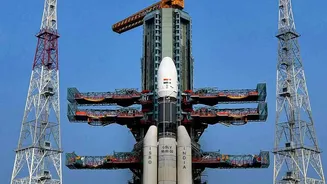







Understanding the Golden Opportunity
Becoming a scientist or engineer at ISRO is more than just a job; it's an opportunity to contribute to India's ambitious space missions and be part of a legacy of innovation. These roles place you at the forefront of space technology and research. The primary
entry point for engineering graduates is the Scientist/Engineer ‘SC’ position, with recruitment typically conducted by the ISRO Centralised Recruitment Board (ICRB). These recruitments attract top talent from across the nation, making the selection process highly competitive. Openings are generally announced for disciplines like Electronics, Mechanical, Computer Science, and Civil Engineering, among others. Success requires not just academic excellence, but a deep-seated passion for space science and a rigorous preparation strategy.
Checking Your Eligibility
Before you begin your preparation, the first step is to confirm your eligibility. For the Scientist/Engineer ‘SC’ post, candidates must typically hold a B.E./B.Tech degree in a relevant engineering discipline from a recognised university. The minimum academic requirement is usually a first-class degree with an aggregate of 65% marks or a CGPA of 6.84 on a 10-point scale. There is also an age limit, which is generally 28 or 35 years for general category candidates, with relaxations for OBC, SC/ST, and PwD candidates as per government norms. It is crucial to read the specific recruitment notification carefully, as eligibility details can vary for each drive. Some recruitments may also require a valid GATE score.
The Two-Stage Selection Process
The selection process for an ISRO scientist typically involves two main stages: a written examination followed by a personal interview. The written test serves as a screening mechanism to shortlist candidates. Based on performance in this test, candidates are called for an interview, often in a 1:5 ratio for each vacancy. For some recruitment drives, ISRO might shortlist candidates directly for an interview based on their GATE scores, bypassing the written test. The final selection is often based heavily, and sometimes entirely, on performance in the interview. This highlights the importance of being thoroughly prepared for both the objective written test and the in-depth technical interview.
Decoding the Written Exam
The written exam is an objective-type test designed to assess your core technical knowledge and aptitude. The paper usually consists of around 80-95 questions to be answered in 120 minutes. The syllabus is closely aligned with the GATE syllabus for the respective engineering discipline. A significant portion of the paper focuses on core technical subjects, with a smaller section dedicated to general aptitude, including numerical and logical reasoning. There is typically a negative marking scheme, where 1/3 of a mark is deducted for every incorrect answer, making accuracy as important as speed. To prepare effectively, focus on strengthening your fundamental concepts in all core subjects of your engineering branch.
Crafting a Winning Study Plan
A structured study plan is essential. Start by thoroughly understanding the syllabus and exam pattern. Since the technical syllabus mirrors the GATE exam, using GATE preparation materials and solving previous years' GATE question papers is a highly effective strategy. Additionally, religiously solve previous years' ISRO exam papers to understand the question patterns and identify recurring topics. Focus on building deep conceptual clarity rather than rote memorization, as ISRO's questions are known to test fundamental principles. Practice time management by taking mock tests under exam conditions to improve both speed and accuracy. For the general aptitude section, regular practice of reasoning and quantitative problems is key.
Acing the Technical Interview
The interview is arguably the most critical stage. The panel, usually comprising senior scientists, will evaluate the depth of your technical knowledge and your passion for the field. Be prepared to discuss your favorite subjects from your engineering course in great detail. The interview will be purely technical, so bluffing is not an option. You may be asked to derive formulas or solve problems on a whiteboard to demonstrate your understanding of first principles. It is also crucial to be well-versed with your final year project and be updated on ISRO's latest missions and technological advancements. Strong communication skills and the ability to explain complex concepts clearly are vital.