






The Sun Is A Major Blind Spot
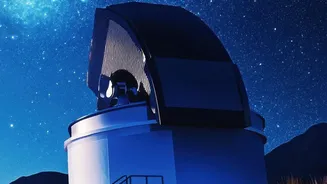
One of the biggest challenges for asteroid hunters is the Sun. Ground-based telescopes can only operate at night, looking out into the dark of space. They are effectively blind to anything approaching Earth from the direction of the daytime sky. The Sun's
intense glare completely washes out the faint light reflected by a space rock, making it invisible. The infamous Chelyabinsk meteor in 2013, which injured over 1,400 people in Russia, was a perfect example of this vulnerability. It came from the direction of the Sun and therefore arrived without any warning. This solar blind spot hides entire classes of asteroids whose orbits are mostly within Earth's, meaning they almost always appear on the planet's dayside.
Searching a Cosmic Haystack
The sheer scale of space is difficult to comprehend. While we have dedicated surveys like the Catalina Sky Survey, Pan-STARRS, and ATLAS, they are tasked with monitoring an immense volume. These surveys have made incredible progress, discovering thousands of near-Earth objects (NEOs). However, most efforts are focused on finding the large, "planet-killer" asteroids greater than a kilometer in diameter, and we believe we've found over 90% of those. The real challenge lies with smaller objects, from a few meters to 140 meters across. There are estimated to be hundreds of thousands, if not millions, of these, and most remain undiscovered. Finding a small, fast-moving, non-luminous object in the vastness of the solar system is a monumental task.
The Problem of Dark Asteroids
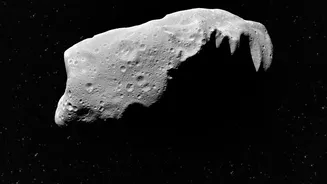
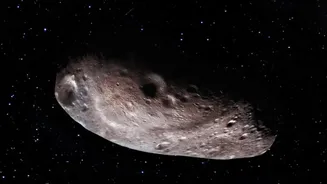
Not all space rocks are created equal. Many asteroids are made of carbonaceous materials, making them incredibly dark—some are as black as charcoal. These low-albedo objects reflect very little sunlight, making them extremely difficult for optical telescopes to spot against the black backdrop of space. An asteroid could be quite large, but if it is very dark, it might only be detected when it is dangerously close. This is because our ability to see an asteroid depends on its size, distance, and how much light it reflects. A large, dark asteroid can appear just as faint as a small, brighter one, complicating detection efforts.
Unpredictable Paths and Late Detections
Most asteroid surveys concentrate their searches along the ecliptic plane, the flat disc where most planets and asteroids orbit the Sun. However, some asteroids have highly eccentric or inclined orbits that take them far above or below this plane. These outliers can pop into the survey fields unexpectedly, reducing the warning time. Furthermore, many smaller asteroids are only detected when they are already very close to Earth. Recently, on September 6, 2026, a small asteroid designated 2026 RW1 was detected just seven hours before it entered the atmosphere over the Indian Ocean. While harmless, it demonstrates that our current systems are often more of a "last alert" network for small impactors rather than a long-range warning system.
Hope on the Horizon
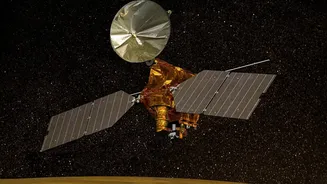
Recognizing these gaps, space agencies are developing new technologies to improve our planetary defense. The flagship mission is NASA's Near-Earth Object (NEO) Surveyor, a space-based infrared telescope scheduled to launch no earlier than 2027. By being positioned in space at the Sun-Earth L1 Lagrange point, it will be able to spot asteroids coming from the direction of the sun, closing our most dangerous blind spot. Furthermore, because it detects the heat (infrared radiation) emitted by asteroids rather than the visible light they reflect, NEO Surveyor will be much better at finding those elusive dark asteroids. The goal is for NEO Surveyor to find 90% of all potentially hazardous objects larger than 140 meters—the size that could devastate a city or small country.