




More Than Just White Paint
You might think this is just a simple coat of white paint, a modern version of the traditional lime wash (chuna) used on roofs for generations. While the principle is similar—light colours reflect heat—modern reflective paints are engineered for maximum
performance. These are high-tech coatings formulated with special pigments, often ceramic or metallic, designed to reflect a high percentage of the sun's radiation away from the surface. Unlike standard exterior paints that primarily offer colour and basic weather protection, these coatings are built specifically to combat solar heat gain. They create a barrier that not only reflects visible light but also the invisible infrared radiation that is responsible for most of the heat we feel.
The Science of Staying Cool
The effectiveness of these paints is based on two key properties: solar reflectance and thermal emittance. Think of it like wearing a white shirt versus a black shirt on a sunny day. The white shirt reflects more sunlight and keeps you cooler. Solar reflectance measures how much of the sun's energy a surface bounces back. High-quality reflective paints can reflect up to 90% of solar radiation. But that's only half the story. The other crucial factor is thermal emittance, which is the surface's ability to release any heat it has absorbed. A good coating quickly radiates absorbed heat back into the atmosphere instead of letting it seep into the building below. Together, these two properties are measured by a single metric: the Solar Reflectance Index (SRI). A higher SRI value means a cooler roof.
How Much Difference Does It Make?
The results are tangible and have been proven in studies across India. Applying a cool roof coating can reduce a terrace's surface temperature by a staggering amount, in some cases by up to 30°C compared to a conventional dark roof. This dramatic drop on the outside translates to a significant improvement on the inside. Homeowners typically report a reduction in indoor ambient temperature of 3°C to 5°C, and sometimes even more. For those living on the top floor of a building without air conditioning, this difference can be the deciding factor between a sweltering, sleepless night and a comfortable one. Projects in cities like Ahmedabad and Delhi have demonstrated these benefits, showing improved comfort and even better sleep for residents.
Savings and Environmental Benefits
A cooler home naturally requires less artificial cooling. This leads to one of the most compelling benefits: lower electricity bills. With less reliance on air conditioners and coolers, households can see energy savings of 15-20%. Over the course of a long, hot summer, these savings can be substantial, helping the paint pay for itself over time. Beyond your wallet, using less energy also reduces your carbon footprint. On a larger scale, the widespread adoption of cool roofs helps combat the 'urban heat island' effect, where cities are significantly hotter than surrounding rural areas due to heat-absorbing materials like asphalt and concrete. By reflecting sunlight, these painted terraces help lower the overall ambient temperature of a neighbourhood.
Application, Cost, and Durability
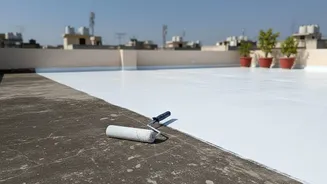
Applying reflective paint is a relatively straightforward process, similar to any other exterior painting job. The surface must be thoroughly cleaned of dust, debris, and any old, flaking paint to ensure proper adhesion. While it can be a DIY project for smaller terraces, hiring a professional is recommended for larger areas or to ensure a flawless finish. The cost varies by brand and quality, but it provides an affordable alternative to more expensive cooling solutions. A good quality reflective coating is also durable, designed to withstand harsh weather conditions and maintain its reflectivity for several years, though periodic re-application every 3 to 5 years might be needed to maintain peak performance. It also adds a protective waterproof layer, which can extend the life of the roof itself.