





Start With Your 'Why'
Before you download an app or set a timer, ask yourself a simple question: why do you want to start this practice? Are you looking for a way to manage stress and anxiety? Do you want to improve your focus at work, sleep better, or simply feel more present
in your daily life? The benefits of intentional breathing are well-documented, ranging from reducing stress hormones like cortisol to lowering blood pressure and enhancing emotional well-being. Identifying your personal motivation will be the anchor that keeps you committed when your initial enthusiasm wanes. Your 'why' doesn't have to be dramatic; it just has to be meaningful to you.
Choose a Simple Technique
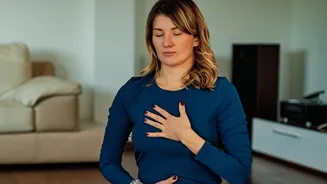
The world of breathwork is vast, but you don't need a complicated technique to begin. For habit-building, simplicity is key. Many beginners find success with one of these foundational exercises: 'Box Breathing': This is a simple and memorable technique. Inhale for four counts, hold your breath for four counts, exhale for four counts, and hold again for four counts. Its balanced rhythm is excellent for calming the nervous system and can be done almost anywhere. '4-7-8 Breathing': Inhale through your nose for four seconds, hold for seven, and exhale audibly through your mouth for eight. The extended exhale is particularly effective at triggering the body's relaxation response, making it ideal for winding down before sleep. 'Diaphragmatic Breathing': Lie down comfortably and place one hand on your stomach. As you inhale slowly through your nose, focus on feeling your stomach rise. Exhale slowly, feeling your stomach fall. This practice helps counter the shallow chest breathing many of us do when stressed.
Set a Realistic Schedule
One of the most common reasons new habits fail is overambition. You don't need to start with a 30-minute meditation. Consistency is far more important than duration. Begin with a goal that feels almost too easy, such as three to five minutes each day. You can 'habit stack' by linking your new breathing practice to an existing daily routine, like right after you brush your teeth or before you have your morning tea. Scheduling a specific time helps create a dedicated space for the practice in your day and your mind. As the practice becomes more comfortable and automatic, you can gradually increase the duration.
Check Your Posture and Space
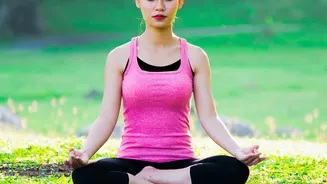
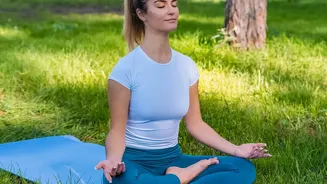
You don't need a special meditation cushion or a silent retreat, but your environment and posture do matter. Find a comfortable place where you are unlikely to be disturbed for a few minutes. Sit or lie down in a position that allows you to be relaxed but alert. Try to keep your back relatively straight and relax your shoulders. Poor posture, like slouching, can physically compress your chest and make deep breathing more difficult. Creating a dedicated and comfortable space signals to your brain that it's time to transition into your practice.
Avoid Common Beginner Mistakes
It's important to approach breathwork with gentle curiosity, not force. A common mistake is trying too hard by taking overly deep, aggressive breaths. This can sometimes lead to dizziness or lightheadedness. Your breath should be soft and easy. Another pitfall is unconsciously holding your breath, especially when your mind wanders. The goal is not to have an empty mind, but to gently guide your attention back to the breath whenever you notice it has drifted. Acknowledge thoughts without judgment and return to the simple sensation of the inhale and exhale.
Integrate Awareness into Daily Life
A formal practice is a great foundation, but the true benefit of breath-awareness comes when you take it off the mat and into your life. Use moments of transition—waiting in a queue, stopped at a traffic light, or before joining a video call—to check in with your breath. Notice if it's shallow and high in your chest, a common sign of stress. You don't need to do a formal exercise; simply taking one or two conscious, gentle breaths can help reset your nervous system and bring a moment of clarity to a hectic day. This turns breath-awareness from an 'exercise' into a continuous resource.