

A Welcome New Connection
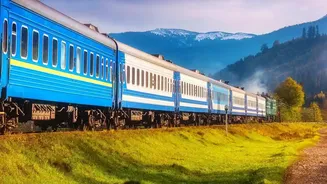
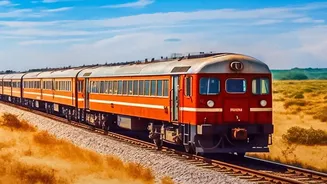
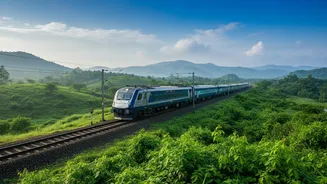
In a significant move for commuters and tourists, Indian Railways has approved a new daily express train service between Mumbai's Chhatrapati Shivaji Maharaj Terminus (CSMT) and Sawantwadi Road. This new service, operating as trains 15087 and 15088, will
traverse the 510-kilometre route daily, providing a crucial link between the Mumbai Metropolitan Region and the southern Konkan coast. With 22 commercial stops at key towns like Panvel, Roha, Chiplun, Ratnagiri, and Kankavli, the train is expected to be a boon for thousands travelling for work, education, and leisure. Officials state the service will boost tourism and support regional economic development by offering a reliable, direct rail option on a route with ever-growing demand.
One Step Forward, A Larger Journey Ahead
While the announcement has been widely welcomed, it has also reignited a broader public conversation. For years, passenger associations and daily commuters have campaigned for enhanced services, and this single new train is seen by many as just one piece of a much larger puzzle. The Konkan Railway Passenger Service Committee, for instance, has been vocal about the disparity between the region's needs and the services provided. They point out that despite significant passenger traffic growth over the years, the expansion of daily train services has not kept pace. The celebration around the new Mumbai-Sawantwadi Express is therefore tinged with a persistent question: when will the rest of the region get the daily connectivity it needs?
Mapping the Connectivity Gaps
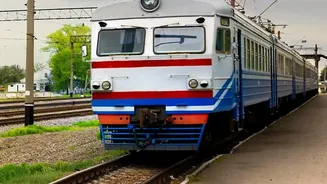
The public demand is not for a single route but for a network of reliable daily trains. A key demand from passenger groups is the conversion of other popular but less frequent services to a daily schedule. For example, there are persistent calls for a daily service on routes like Pune-Ratnagiri and for new intercity trains connecting major hubs like Mumbai and Ratnagiri. Commuters also face challenges with last-mile connectivity and insufficient local services, such as MEMU trains, to link smaller towns to main railway lines. These gaps particularly affect daily wage earners, students, and small business owners who depend on affordable and predictable public transport. The difficulty in securing confirmed tickets, especially during festival seasons like Ganpati, further underscores the capacity constraints.
The Challenges of Track and Terrain
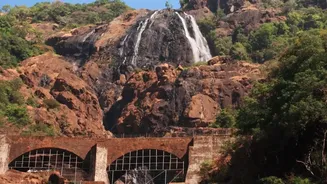
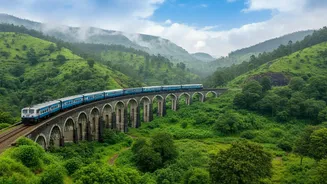
Increasing the frequency of trains along the Konkan route is not a simple task. The Konkan Railway, celebrated as an engineering marvel, runs through the difficult terrain of the Western Ghats. A significant portion of the 739-km line from Roha to Thokur is a single track, which severely limits the number of trains that can be run. This single line must accommodate both passenger and freight traffic, creating a constant juggling act for railway operators. Any plan to add more services must contend with this fundamental capacity bottleneck. The monsoon season introduces further complications, with a special timetable enforced at reduced speeds to prevent accidents caused by landslides, which historically has created an artificial shortage of trains.
The Long Road to a Solution
The long-term solution to the Konkan's rail woes is track doubling—laying a second track alongside the existing one to dramatically increase capacity. The Konkan Railway Corporation Ltd (KRCL) is preparing a Detailed Project Report (DPR) for doubling a significant 263 km portion of the network. However, this is a complex and capital-intensive process that requires substantial investment and coordination with shareholder states. In the interim, passenger associations continue to campaign for more immediate solutions. These include optimising existing timetables, introducing more MEMU services for short-distance travel, and developing key stations like Sawantwadi into full-fledged terminals to originate and terminate more trains. As a hunger strike planned by a passenger body on August 15 shows, public pressure remains high for both immediate relief and long-term investment.