

An Unexpected Full-Body Workout
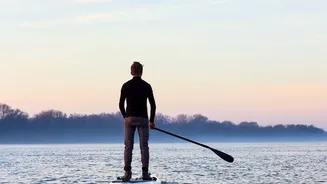
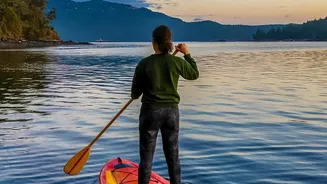
From the shore, paddleboarding looks tranquil and effortless. A person glides across the water, seemingly without much strain. But beneath that calm exterior is a sophisticated, low-impact workout that engages muscles from your feet to your shoulders.
Unlike high-impact exercises like running, paddleboarding is gentle on the joints, making it an accessible option for a wide range of fitness levels and a sustainable activity you can enjoy for hours. It combines balance, strength, and endurance in a way that few other activities can, offering a holistic fitness experience that feels more like an adventure than a chore.
Building a Stronger Core
The secret to paddleboarding's effectiveness lies in its unstable surface. Simply standing on the board requires constant, subtle adjustments from your stabilizer muscles to maintain balance. This process is a phenomenal workout for your core—including your abs, obliques, and lower back—which must remain engaged to keep you steady and upright. Every stroke you take with the paddle involves a rotational movement through your torso, further activating these core muscles. This isn't about doing crunches; it’s about building functional strength that improves your posture and stability in everyday life.
A Steady Burn for Your Heart
While it may feel relaxing, continuous paddling provides a steady cardiovascular workout. A leisurely session can elevate your heart rate to a moderate aerobic zone, similar to a brisk walk or a light cycle. This consistent effort improves circulation, boosts endurance, and contributes to overall heart health over time. Studies show that even recreational paddleboarding can significantly improve cardiovascular fitness. Depending on your pace and the conditions, a typical hour of paddling can burn anywhere from 300 to over 500 calories, making it a highly efficient and enjoyable way to manage weight.
More Than Just Core and Cardio
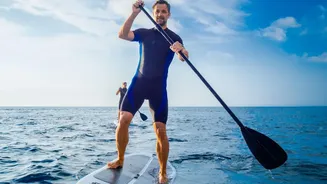
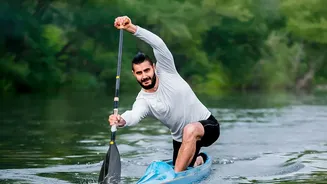
The benefits don't stop with your core and heart. Your legs, including your glutes, quads, and hamstrings, are constantly working to stabilize your body and absorb movement from the water. Meanwhile, your upper body gets a significant workout as well. While proper technique emphasizes using your back and core to power the stroke, your lats, shoulders, and arms are all engaged in the pulling motion. Even the small muscles in your feet and ankles are activated as they grip the board and make micro-adjustments, improving your overall balance and coordination.
Tips for Getting Started
For your first time, choose a day with calm, flat water and minimal wind. Many local parks and rental shops offer beginner lessons, which are a great way to learn proper form and safety. Start by kneeling on the board to get a feel for the balance before trying to stand up. Remember to keep your feet parallel, about hip_width apart, with your knees slightly bent and your gaze on the horizon, not down at your feet. Most importantly, relax and have fun. The combination of physical activity and being in nature is a powerful way to reduce stress and boost your mood.