






The New Rule Effective October 15
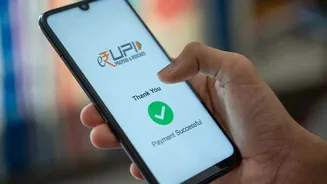
Starting October 15, 2026, a new framework introduces a Merchant Discount Rate (MDR) on certain UPI transactions. This isn't a blanket fee on all payments but a specific charge applied to eligible person-to-merchant (P2M) transactions. The standard rate
is set at 0.4% for payments exceeding ₹2,000. The primary goal of this move, according to the National Payments Corporation of India (NPCI), is to ensure the long-term sustainability of the digital payments ecosystem that handles billions of transactions monthly. It's important to stress that this change does not affect person-to-person (P2P) transfers, like sending money to friends or family, which remain completely free.
Will Your UPI Payments Cost More?
For the average consumer, the answer is a clear no. The new MDR is a charge levied on the merchant, not the customer making the payment. Official guidelines from the government and NPCI explicitly state that merchants are not permitted to pass this cost on to customers by adding a surcharge to their bill. So, if you are buying an item worth ₹3,000, you will only pay ₹3,000. The fee is deducted from the amount the merchant receives. All UPI payments made by customers remain free, and UPI apps are also barred from charging any hidden platform fees for these transactions.
Which Merchant Transactions Are Affected?
The 0.4% MDR applies specifically to person-to-merchant (P2M) payments of over ₹2,000. For very large transactions, the fee is capped at a maximum of ₹300 for any payment of ₹75,000 or more. However, a vast number of transactions will not be affected. All merchant payments at or below the ₹2,000 threshold are exempt from any charges. Furthermore, small merchants who receive up to ₹1 lakh per month via UPI QR payments are also exempt from the MDR framework, which means a large portion of local kirana stores and small vendors are not impacted. Estimates suggest these exemptions will cover around 96% of all merchant transactions.
Special Rates for Key Sectors
Not all industries will face the standard 0.4% rate. To ease the burden, certain key sectors have been assigned a lower, flat fee. Payments above ₹2,000 made for railways, telecom services, insurance, and fuel will attract a concessional flat MDR of just ₹5 per transaction, regardless of the total amount. This ensures that essential service payments remain highly affordable for merchants to process. Transactions related to mutual funds and the securities market will also see a much lower MDR of 0.02% of the transaction value. These varied rates are designed to balance the need for system sustainability with the economic realities of different industries.
The Bottom Line for Merchants
While customers can rest easy, merchants accepting large-value digital payments will need to account for this new cost. The MDR of 0.4% on transactions over ₹2,000 will be a new operational expense. For instance, on a sale of ₹10,000, a merchant would pay a fee of ₹40. On a larger sale of ₹50,000, the fee would be ₹200. This change is intended to provide revenue to the banks and payment service providers that maintain the UPI infrastructure, which had been operating on a zero-fee model for merchants for years with government subsidies. The shift signals a move towards a self-sustaining model for India's digital payment backbone.