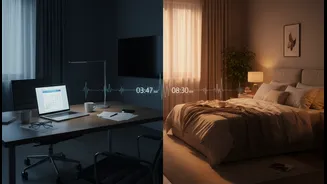








The Allure of Sleep 'Training'
In today's fast-paced work culture, sleep is often the first thing sacrificed for productivity. Many professionals see it as a necessary evil, a passive state that cuts into valuable work or personal time. This has given rise to the concept of 'bio-hacking'
sleep, with a tantalising proposition: what if we could train our bodies to need less sleep, or to sleep more efficiently? The headline's idea taps into this desire, framing sleep not as passive rest, but as an active 'training' process. The analogy is powerful—just as an athlete stresses their muscles to build strength, perhaps stressing our sleep cycle could lead to a more robust, efficient rest. This reframes sleep deprivation from a sign of exhaustion to a potential strategy for peak performance.
The Science: Sleep Restriction Therapy
The concept of using sleep loss as a tool isn't entirely unfounded, but it comes from a very specific clinical context: Sleep Restriction Therapy (SRT). This is a component of Cognitive Behavioural Therapy for Insomnia (CBT-I). It is not for the average busy professional looking for an edge; it's a prescribed treatment for people with chronic insomnia. The therapy works by strictly limiting the time a person is allowed to spend in bed to the actual number of hours they typically sleep. For instance, if someone spends eight hours in bed but only sleeps for five, their 'sleep window' is restricted to five hours. This creates mild sleep deprivation, which helps build a stronger drive to sleep, making it easier to fall asleep and stay asleep during that window. Over time, as sleep becomes more consolidated and efficient, the time in bed is gradually increased. The goal isn't to function on less sleep permanently, but to re-establish a healthy, efficient sleep pattern.
The Danger of 'DIY' Sleep Debt
Here is where the evidence really matters. The haphazard sleep loss most working adults experience is nothing like clinical SRT. It's not a controlled, therapeutic process; it's chronic sleep debt. This accumulated deficit has severe consequences. Research consistently shows that chronic sleep restriction—getting less than seven hours a night—leads to significant cognitive deficits. These include impaired judgement, reduced attention span, slowed reaction times, and poor decision-making. In fact, being awake for 17 hours can impair performance to a level equivalent to having a blood alcohol content of 0.05%. Over the long term, sleep debt is linked to serious health problems, including hypertension, heart disease, diabetes, and obesity. Unlike a financial debt, you cannot easily 'repay' a sleep debt by sleeping in on weekends. Studies show that cognitive performance does not fully recover even after several nights of 'catch-up' sleep.
Sleep as Recovery, Not a Workout
Rather than thinking of sleep as a workout to be optimised through stress, evidence suggests it’s better viewed as the critical recovery period. For professionals in demanding roles, consistent, high-quality sleep isn't a luxury; it's a non-negotiable part of their performance toolkit. Just as an athlete cannot perform without proper recovery, a professional cannot maintain high cognitive function without adequate rest. Sacrificing sleep for work creates a vicious cycle: tiredness reduces productivity, which then requires more working hours, further cutting into sleep. The real 'training' for better sleep involves building consistent habits, a practice known as good sleep hygiene.
What the Evidence Recommends
The overwhelming body of evidence points not towards strategic deprivation, but towards consistency and quality. For busy adults, the most effective 'training' involves establishing strong sleep hygiene. Key practices include maintaining a consistent sleep schedule, even on weekends, as this helps regulate your body's internal clock. Creating a relaxing pre-bedtime routine that signals to your body it's time to wind down is also crucial. This might involve reading, gentle stretching, or taking a warm bath, while avoiding screens and stimulating activities. Your sleep environment should be dark, quiet, and cool. Furthermore, avoiding stimulants like caffeine and nicotine in the hours before bed, and not eating large meals late at night, can significantly improve sleep quality. These evidence-backed strategies are the true path to optimising sleep for better daytime function and long-term health.