





An Introduction to the Delta Aquariids
The Southern Delta Aquariid meteor shower is an annual celestial event that graces our skies from mid-July to late August. In 2026, the shower is expected to peak around July 30. This meteor shower occurs when Earth passes through the debris trail left
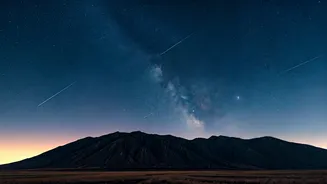
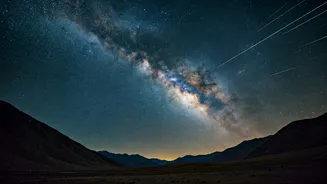
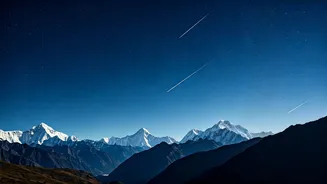
by Comet 96P/Machholz. These tiny particles of rock and dust burn up upon entering our atmosphere, creating the fleeting streaks of light we call shooting stars. The Delta Aquariids are known for being a steady, albeit not intensely active, shower, producing around 15 to 25 meteors per hour under ideal conditions. They often appear fainter than their more famous cousins, the Perseids, which peak a couple of weeks later. This is why a dark, clear sky is absolutely essential for a good viewing experience. The meteors will appear to radiate from the constellation Aquarius, but they can be seen across the entire sky.
The Science of Seeing Clearly
The reason high-altitude locations like the Himalayas are prized by astronomers is simple: there is less atmosphere to look through. Earth's atmosphere, while vital for life, acts as a barrier for stargazers. It contains air molecules, dust, and water vapour that distort and scatter light. At sea level, this blanket of air is at its thickest. As you go higher, the air thins out significantly. This has two major benefits for observation. First, less air means fewer particles to scatter artificial light from cities, resulting in a much darker sky. Second, it reduces what astronomers call 'seeing'—the blurring and twinkling of celestial objects caused by atmospheric turbulence and temperature variations. Water vapour is a particular nuisance, as it absorbs and scatters starlight, especially at certain wavelengths, making faint objects harder to see clearly. By getting above a large portion of the atmosphere, you get a crisper, more stable view of the cosmos.
The Unmatched Himalayan Advantage
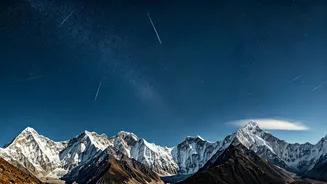
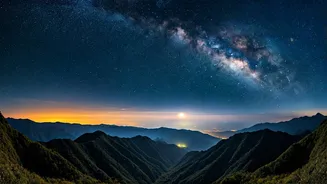
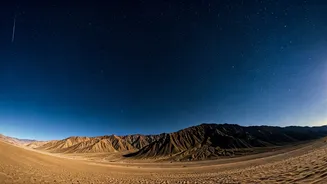
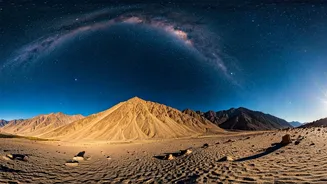
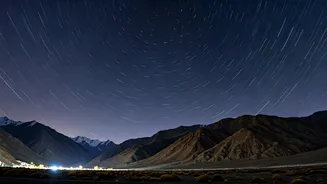
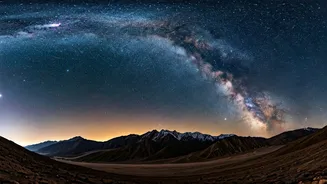
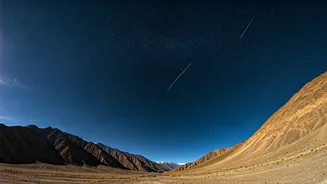
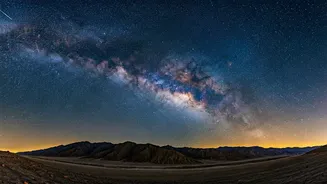
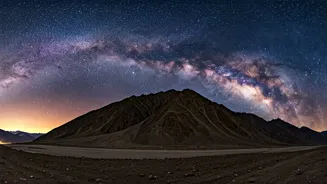
The Indian Himalayas, particularly in regions like Ladakh and the Spiti Valley, offer a perfect storm of ideal stargazing conditions. Places like Hanle in Ladakh, home to the Indian Astronomical Observatory, are situated at altitudes of around 4,500 metres. These high-altitude cold deserts have a dry climate with extremely low humidity, meaning there is very little water vapour in the air to obscure the view. Furthermore, these areas are sparsely populated, resulting in near-zero light pollution. Hanle has even been designated as India's first Dark Sky Reserve, a testament to its pristine skies. This combination of high altitude, dry air, and darkness means the sky is exceptionally transparent. The Milky Way can be so bright it is visible to the naked eye in stunning detail, and fainter meteor showers like the Delta Aquariids become far more prominent than they would be at lower elevations.
Your Simplified Viewing Guide
The phrase "simplified techniques" in the context of the Himalayas doesn't refer to a secret method; it refers to the fact that the location itself does most of the work. Because the atmospheric conditions are so perfect, you don't need expensive equipment. In fact, your best tools are your own eyes. Binoculars and telescopes have narrow fields of view, which are not ideal for catching the broad, sweeping motion of a meteor shower. The best technique is simply to find a comfortable spot, lie back on a blanket or a reclining chair, and look up, taking in as much of the sky as possible. Allow your eyes about 20-30 minutes to fully adapt to the darkness, and avoid looking at your phone or any other light source. The main preparation you need is not for observation, but for the environment. Himalayan nights are cold, even in summer, so packing warm layers, jackets, and a warm drink is crucial for a comfortable experience.