





The Financial Squeeze of Rising Prices
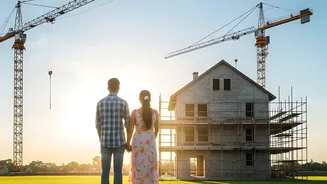
The most immediate impact of rising home prices is on affordability. In Pune, the average price for residential properties has seen steady appreciation, with reports in 2026 showing annual growth between 6-10%. This directly inflates the two biggest barriers
to homeownership: the down payment and the Equated Monthly Instalment (EMI). For a property valued at ₹75 lakh, a standard 20% down payment is a significant ₹15 lakh. As prices rise, this initial amount grows, putting ownership further out of reach for many. Consequently, the loan amount increases, leading to higher EMIs that can strain monthly budgets. For many, the monthly EMI for a purchased home is now significantly higher than the rent for a comparable property, making renting appear more affordable in the short term.
The Renter’s Advantage: Flexibility and Lower Upfront Costs
In a market with soaring property values, renting gains several strategic advantages. The primary benefit is financial flexibility. Renting does not require a massive upfront investment, freeing up capital that can be used for other investments, such as mutual funds, which might offer higher returns. For the large population of IT professionals and students in Pune, who may not have long-term plans to stay in one location, renting offers the freedom to move easily for new job opportunities or lifestyle changes. Furthermore, renters are shielded from the ancillary costs of ownership, which include property taxes, society maintenance fees, and major repair expenses—costs that are often overlooked in the initial excitement of buying a home.
The Buyer’s Game: Building Equity and Long-Term Wealth
Despite the high entry costs, buying a home in Pune remains a powerful tool for wealth creation. Historically, property in key Pune localities has appreciated by 6-8% annually, and in some cases, even more. While rent is a recurring expense, each EMI payment contributes to building equity, gradually increasing your ownership of a tangible asset. Over a long-term horizon of 7-10 years, the financial benefits of appreciation often outweigh the initial high costs. Moreover, rising property prices mean that your asset is growing in value, acting as a hedge against inflation. Homeowners also benefit from tax deductions on both the principal and interest components of their home loan, which can significantly reduce their overall tax liability.
Lifestyle and Stability: Beyond the Numbers
The decision is not purely financial. Homeownership offers a sense of stability and emotional security that renting cannot match. It provides the freedom to customize your living space to your exact tastes and needs without seeking a landlord's permission. This is particularly important for families looking to set down roots in a community. Recent trends show a shift towards buyers in Pune seeking larger, premium homes with more amenities, reflecting a desire for a better quality of life. Renting, while flexible, comes with the uncertainty of annual lease renewals and potential rent hikes. Your choice ultimately depends on whether you prioritise the long-term stability of owning a home or the short-term flexibility that renting affords.
Making Your Choice: A Framework
There is no single right answer, but you can make an informed decision by evaluating your personal circumstances. First, assess your financial readiness. Do you have enough savings for a down payment and other associated costs without depleting your emergency fund? Second, consider your time horizon. If you plan to stay in Pune for more than seven years, buying is often the more financially sound option. Third, analyze your career and lifestyle. If your job requires mobility or you are unsure of your long-term plans, renting offers valuable flexibility. Finally, look beyond the core IT hubs like Hinjewadi and Kharadi to emerging corridors along the Ring Road, such as Wagholi and Kiwale, where property prices may be more accessible with strong potential for future growth.