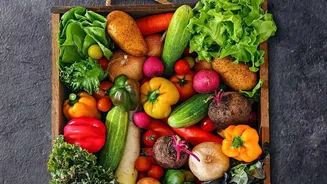






Leafy Greens: Look for Life, Not Limpness
Leafy greens like spinach (palak), coriander (dhania), and fenugreek (methi) are the first to show signs of distress in humid weather. They are highly susceptible to moisture damage. When shopping, avoid bunches that look dark, wilted, or have yellowing
leaves, which are signs of decay. Pay close attention to the stems; they should be firm and crisp, not slimy or soft. A fresh, earthy smell is a good sign, whereas a sour or musty aroma indicates the greens are past their prime. If you see any black spots or a slimy coating, it's best to leave them. These vegetables should ideally be bought in smaller quantities and consumed quickly during the monsoon.
Root Vegetables: Stay Firm and Dry
Onions, potatoes, ginger, and garlic are pantry staples, but humidity is their enemy. Excess moisture encourages them to sprout, which is a sign they are old and have converted their starches to sugar. When picking potatoes, look for firm, smooth skin with no green patches or sprouts. For onions and garlic, they should feel heavy for their size and have dry, papery outer skins. Avoid any that feel soft, have damp spots, or show signs of black mould, which can hide under the outer layers. Because these vegetables absorb moisture from the air, it's especially important to select ones that are completely dry to the touch to ensure they store well at home.
Cruciferous Choices: Cauliflower, Cabbage, and Broccoli
Vegetables like cauliflower, cabbage, and broccoli have many hidden crevices where moisture and mould can thrive. When picking a cauliflower or broccoli, look for heads that are compact and firm. Spread the florets slightly to check for any black or brown spotting, which indicates fungal growth. The leaves should be green and fresh, not yellow or wilted. For cabbage, the head should feel dense and heavy. Avoid any that have soft outer leaves or visible cracks, as these can be entry points for rot. Excess water can cause these vegetables to become engorged and lose their flavour, so firmness is key.
Gourds and Other Favourites: Check the Skin
Common monsoon vegetables like bottle gourd (lauki), ridge gourd (turai), and okra (bhindi) are plentiful, but quality can vary. Your best tool is touch. These vegetables should feel firm and not spongy. For okra, pick smaller pods that snap easily; larger, tougher ones are often fibrous and old. For gourds, the skin should be smooth, tender, and free from blemishes, soft spots, or bruises. These are all signs of water damage or decay. Tomatoes are particularly vulnerable; avoid any with wrinkled skin or soft, mushy spots, as high humidity accelerates their decomposition.
From Market to Kitchen: Smart Storage Is Crucial
Your job doesn't end at the market. Proper storage is essential to combat the effects of a humid climate. As soon as you get home, dry any residual moisture from your vegetables with a clean cloth or paper towel. For leafy greens, you can wrap them in paper towels before placing them in a breathable bag in the refrigerator. This absorbs excess moisture and prevents them from becoming slimy. Store potatoes and onions in a cool, dark, and dry place with good air circulation, never in a sealed plastic bag. Avoid buying in bulk during the monsoon; purchasing smaller amounts more frequently ensures you're always cooking with the freshest possible produce.