




The Allure of the Unpolluted Sky
For many young urban Indians, a sky brimming with stars is a sight confined to movies and textbooks. Crippling light and air pollution in major cities have all but erased the nightly cosmic spectacle, with star visibility reportedly dropping significantly
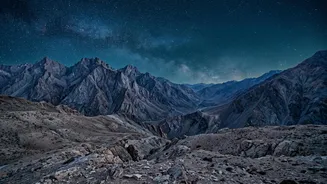
over the past few decades. This has ignited a powerful travel trend: astro-tourism. Young travellers are increasingly seeking authentic, low-impact experiences, and swapping city breaks for the profound silence and celestial grandeur of high-altitude regions. Destinations in the Himalayas, with their thin, dry air and minimal atmospheric interference, offer some of the best stargazing conditions in the world.
Hanle: India's Dark Sky Pioneer
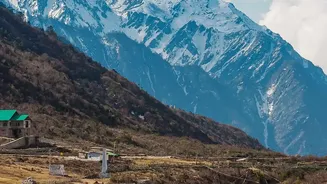
At the forefront of this movement is Hanle, a remote village in Ladakh’s Changthang plateau, situated at a dizzying 4,500 metres. In 2022, a region around Hanle was officially designated as India's first Dark Sky Reserve, a collaboration between the local administration and the Indian Institute of Astrophysics, which operates a major observatory there. This designation is more than a title; it involves a commitment from the community to preserve the darkness. Local homestays have adapted with special curtains and warm-toned lights to minimise light pollution, ensuring the sky remains pristine for both scientific research and tourism. The transformation has been dramatic, with tourist numbers jumping from a few thousand a year to over 30,000.
A New Economy Under the Stars
This transformation is a powerful engine for sustainable development. In places like Hanle and other emerging astro-villages, the model empowers the local community directly. Instead of large hotel chains, the focus is on homestays, where travellers get an authentic cultural experience alongside their stargazing. Community members, many of them young men and women, are trained to become 'Astronomy Ambassadors'. Equipped with telescopes and knowledge of the cosmos, they guide visitors through constellations, planets, and distant galaxies, creating a new, skilled livelihood that was previously unimaginable. This approach generates direct income, fosters entrepreneurship, and creates a sense of pride, helping to stem the tide of youth migration to cities.
Uttarakhand's 'Astro-Villages'
Following Ladakh's lead, other states are embracing the stars. Uttarakhand, in particular, is developing a network of 'Astro-Villages'. Benital, a quiet hamlet in the Chamoli district at an altitude of 2,600 metres, has been designated as the state's first such hub. The government, in partnership with private initiatives like Starscapes, is creating an entire ecosystem with observatories, large telescopes, and trained local guides. Events like 'Nakshatra Sabha' bring together astronomers and tourists for immersive celestial events, blending stargazing with local folklore and cuisine. These initiatives are not just about looking through a telescope; they are about creating a holistic experience that connects travellers to the place and its culture.
The Road Ahead for India's Starry Sanctuaries
The rise of astro-tourism presents a win-win scenario: it offers a sustainable economic model for remote communities while satisfying a growing demand from young, eco-conscious travellers for meaningful escapes. However, the path forward requires careful management. The primary challenge is to manage the influx of tourists without succumbing to the very light pollution the reserves were created to escape. Success hinges on maintaining a delicate balance: promoting these unique destinations while enforcing strict lighting protocols and ensuring that the economic benefits are distributed equitably among the local population. If managed well, these dark sky hubs are more than just tourist spots; they are guardians of a precious, vanishing resource.