







Choose Your Fabrics Wisely
The single most effective change you can make during the monsoon is to prioritise fabrics that are lightweight, breathable, and quick to dry. When the air is saturated with moisture, heavy materials become your worst enemy. Opt for natural fibres known
for their airflow and comfort in humid conditions. Lightweight cottons, especially in open weaves like voile and muslin, are excellent choices. They are breathable and absorb moisture, keeping you comfortable. Rayon is another stellar option; it’s light, dries quickly, and has a smooth texture that feels pleasant against the skin in sticky weather. Cotton blends, which mix cotton with synthetics like polyester, can also be a practical choice, offering the breathability of cotton with a faster drying time. These fabrics won't hold onto water, reducing the chance of mildew and that dreaded damp smell.
Fabrics to Temporarily Retire
Just as important as knowing what to wear is knowing what to avoid. Heavy fabrics are the primary culprits for monsoon laundry woes. Denim, thick corduroy, wool, and heavy knits absorb a significant amount of water and can take days to dry in a humid environment. This prolonged dampness creates a perfect breeding ground for mould and bacteria, which is what causes that persistent musty smell. While you don't need to banish them entirely, it's wise to keep your use of these materials to a minimum until drier days return. Sticking to lighter alternatives will not only keep you more comfortable outdoors but also dramatically simplify your laundry routine.
Rethink Your Washing Strategy
During the monsoon, letting laundry pile up is a recipe for disaster. The longer damp, worn clothes sit in a hamper, the more likely they are to develop stubborn odours before they even see the washing machine. The key is to wash smaller loads more frequently. This approach has two main benefits: smaller batches have more room to agitate in the wash for a better clean, and they are significantly easier to dry indoors where space is often limited. Also, don't let a finished wash sit in the machine; transfer clothes to the line or dryer immediately to prevent mustiness from setting in. For an extra anti-odour boost, consider adding about half a cup of white vinegar to your rinse cycle. It acts as a natural deodoriser and fabric softener without leaving a scent.
Master the Art of Indoor Drying
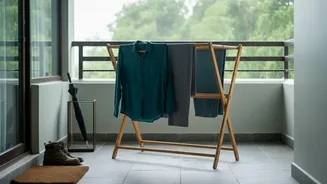
When drying outside isn't an option, you need to optimise your indoor setup. First, use your washing machine's highest spin cycle to remove as much excess water as possible before hanging. When you hang the clothes, give each item a good shake to straighten out fibres and then space them out generously on the drying rack. Overcrowding traps moisture and slows down drying significantly. Position your rack in a well-ventilated area, ideally near a window you can open on less rainy days or directly under a ceiling fan. Constant air circulation is crucial for evaporation. Running a fan or a dehumidifier in the room where clothes are drying can dramatically speed up the process by lowering the ambient humidity.
Banish Musty Odours for Good
Even with the best practices, musty smells can sometimes creep in. The first line of defence is ensuring clothes are bone dry before they are put away. Feel the seams, collars, and waistbands, as these areas hold onto moisture the longest. If a garment still feels slightly damp, a quick press with a hot iron can eliminate the last traces of moisture and kill any lingering mildew spores. For your wardrobe, prevent dampness from settling in by using moisture absorbers like silica gel packets or even a small cup of baking soda. Keeping your closet doors slightly ajar for a few hours can also help circulate air and prevent the enclosed space from becoming stale and humid.