




The Silent AI Revolution in Your Pocket
Artificial Intelligence is no longer a concept confined to research labs; it is rapidly becoming part of our daily routines. In India, a country with 22 official languages and thousands of dialects, this shift is most noticeable in the rise of multilingual
AI. You have likely already interacted with it. It’s the chatbot on your banking app that can understand Hindi, the voice assistant on a delivery app that speaks Marathi, or the UPI platform that allows transactions in Tamil. These services are powered by AI systems trained to understand, process, and respond in multiple Indian languages, moving beyond the long-dominant English-only digital landscape. For businesses, multilingual AI represents a massive opportunity to connect with the 90% of Indians who are not fluent in English. For citizens, it offers the promise of a digital world that finally speaks their language.
The Promise: AI as a Tool for True Digital Inclusion
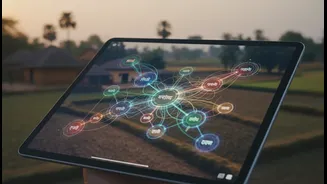
The potential upside of this technological shift is enormous. For years, language has been a significant barrier to digital and financial inclusion. Multilingual AI promises to dismantle these barriers. Imagine a farmer in a remote village accessing crop advisories and weather alerts through a voice command in their native dialect, or a small business owner securing a loan without struggling with English paperwork. This is the future that AI-powered financial inclusion aims to create, using technology to enhance access to credit, digital payments, and other services for underserved groups. Initiatives like the government's Digital India campaign have laid the groundwork with digital identification and payment systems. AI can build on this foundation, making services not just available, but truly accessible to millions by lowering costs, improving risk assessment, and offering personalized support in a user's own language. The goal is to empower every citizen, from healthcare aides to carpenters, by integrating them into the formal digital economy.
Mind the Gap: A New Digital Divide?
However, the path to an equitable AI-powered future is filled with challenges. The primary hurdle is the massive scarcity of high-quality digital data for most Indian languages. While English has billions of texts and datasets for training AI, many of India’s languages, especially those with fewer speakers or rich oral traditions, are underrepresented online. This creates a risk of a new digital divide, where AI works perfectly in Hindi or Bengali but fails in Odia or Santali. Furthermore, AI models can inherit and amplify existing societal biases present in their training data. Another significant challenge is the complexity of Indian languages themselves, which often feature different scripts, complex grammar, and the common practice of 'code-switching'—mixing languages like Hindi and English in a single sentence. Without careful and culturally nuanced development, AI tools can feel robotic, produce flawed translations, and fail to understand the user's true intent, eroding trust.
Building for Bharat: The Push for Homegrown Solutions
Recognising these challenges, India has launched ambitious initiatives to build a more inclusive AI ecosystem. The cornerstone of this effort is Bhashini, the National Language Technology Mission. Launched in 2022, Bhashini aims to create open-source AI models, tools, and datasets for all 22 scheduled Indian languages, treating language access as a form of digital public infrastructure. The platform has already developed over 350 AI models and is being used to power multilingual chatbots for public services and translate educational courses. Alongside the government, a vibrant ecosystem of startups and research institutions like AI4Bharat are developing foundational models trained specifically on Indian languages and contexts. These homegrown efforts are crucial for ensuring that the AI being deployed across the country is not just a translated version of a global model, but one that truly understands the linguistic and cultural nuances of India.