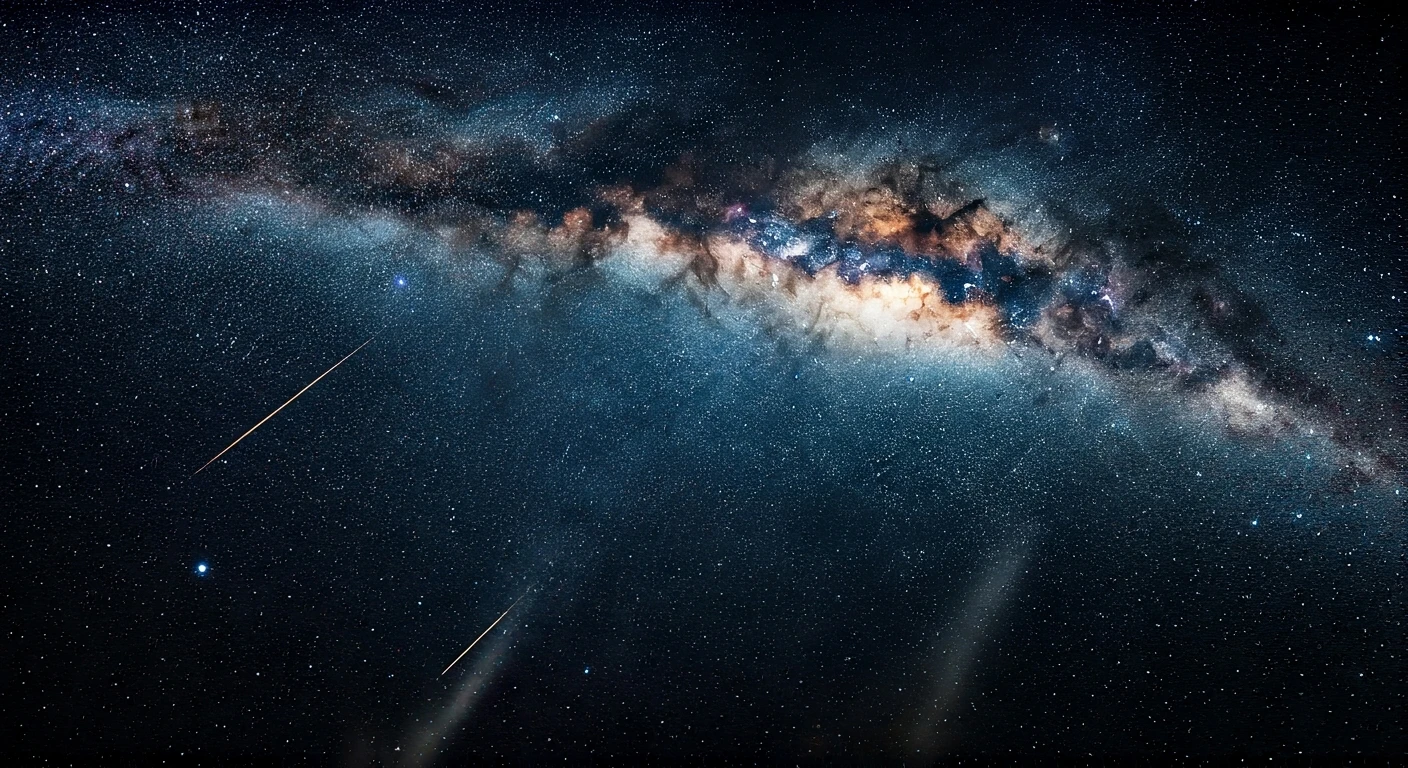



It All Starts with Speed
The secret to this cosmic time travel lies in a simple, universal speed limit: the speed of light. Light, as fast as it is—zipping through the vacuum of space at nearly 300,000 kilometres per second—is not instantaneous. For anything we see, the light from
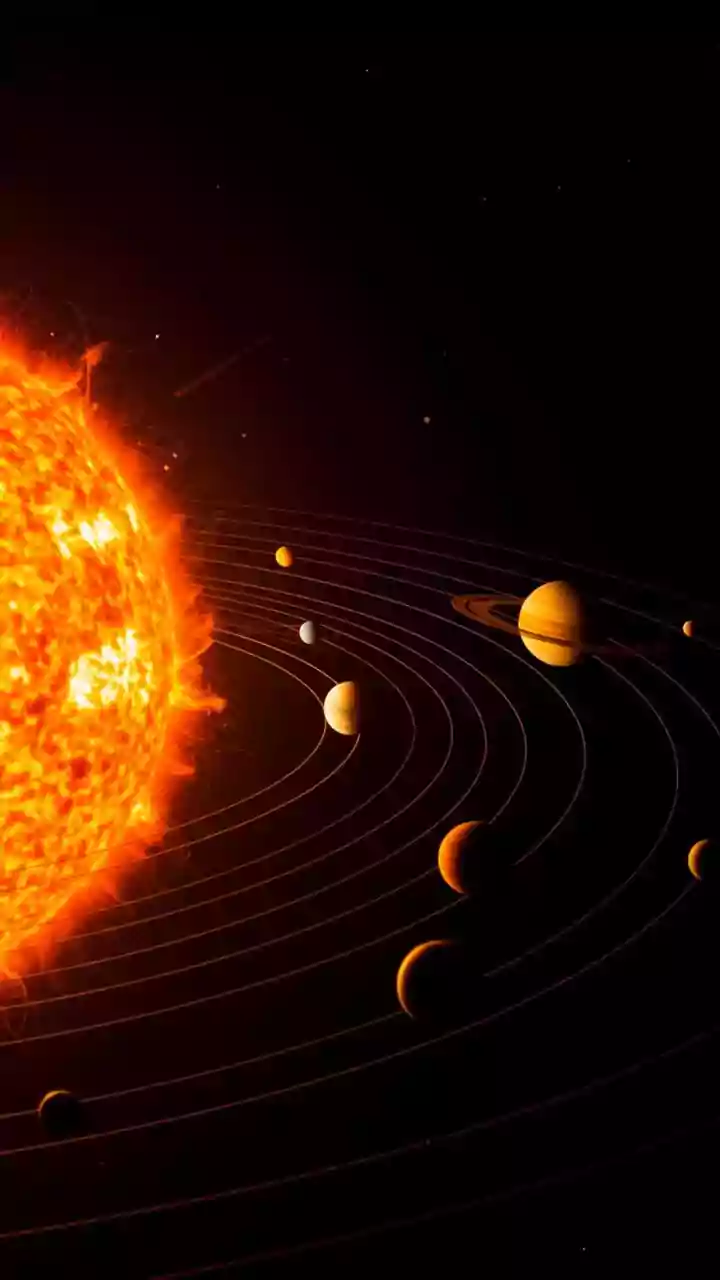
that object must travel from it to our eyes. This takes time. For objects in the room with you, this delay is so infinitesimally small it’s irrelevant. But in the colossal emptiness of space, those travel times become significant. The most familiar example is our very own Sun. It is, on average, about 150 million kilometres away. The light from its fiery surface takes approximately 8 minutes and 20 seconds to reach Earth. This means if the Sun were to suddenly vanish, we wouldn’t know about it for over eight minutes. When you look at the Sun (safely, of course!), you are seeing it as it was eight minutes ago.
Our Nearest Neighbours
This effect gets much more dramatic when we look beyond our solar system. The stars in our night sky are suns in their own right, but they are incredibly far away. The closest star system to us is Alpha Centauri, which includes Proxima Centauri, our nearest individual stellar neighbour. It sits about 4.24 light-years away. A 'light-year' isn't a measure of time, but of distance—it’s the distance light travels in one year, which is a staggering 9.46 trillion kilometres. So, when we look at Proxima Centauri through a telescope, the light entering our eyes began its journey over four years ago. You are seeing the star not as it is today, but as it was when the last FIFA World Cup was underway or when your favourite web series was just releasing its previous season. Every star in the sky tells a similar story, each a postcard from its own past.
Gazing at the Age of Empires
Let’s go deeper. Consider Polaris, the North Star, a celestial landmark for navigators for centuries. Polaris is much farther away than Proxima Centauri, estimated to be around 433 light-years from Earth. This means the faint, steady light we see from Polaris tonight started its journey around the year 1591. While that light was travelling through space, the Mughal Empire was flourishing under Emperor Akbar in India, Shakespeare was writing his first plays in England, and the world had no idea about gravity, electricity, or the internet. The star you see is a snapshot from a completely different era of human history.
The Ghost of a Galaxy
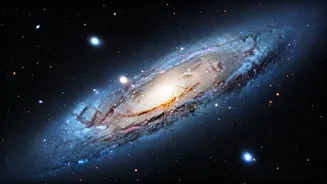
Now, for the truly mind-bending part. On a very dark night, far from city lights, you might be able to spot a faint, fuzzy patch in the sky. This is the Andromeda Galaxy, the closest major galaxy to our own Milky Way. It is the most distant object the average human can see with the naked eye. And it is 2.5 million light-years away. The light from Andromeda that reaches your retina tonight began its journey when our planet was a very different place. There were no humans, no cities, no empires. Our distant ancestors, like *Homo habilis*, were just beginning to use stone tools on the African plains. The light from Andromeda is a true relic of ancient, prehistoric Earth. You are literally looking at 2.5-million-year-old history.
The Astronomer’s Time Machine
While this cosmic delay means we can never see the universe in 'real time,' astronomers have turned this 'problem' into their most powerful tool. By looking at objects that are billions of light-years away, they are able to see the universe as it was billions of years ago. Telescopes like the James Webb Space Telescope are, in essence, time machines. They peer back towards the dawn of time, capturing images of the very first galaxies forming after the Big Bang. Every distant galaxy is a fossil, allowing us to piece together the life story of the cosmos itself.