





The Finisher Supreme
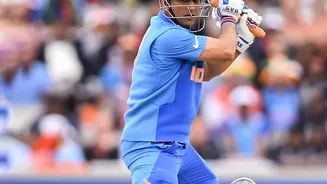
More than the runs he scored, it was when he scored them. Dhoni was the master of the chase, a player who seemed to have ice in his veins when the pressure was at its peak. His mantra was simple: take the game deep. While others panicked, he calculated.
He turned impossible equations into foregone conclusions, often with a theatrical six in the final over. The 2011 World Cup final is the most famous example, where his unbeaten 91 remains etched in public memory. He had an almost supernatural ability to control the tempo of a run-chase, absorbing pressure before launching a clinical assault. This combination of a calm mind and explosive power made him the most feared finisher of his generation.
A Leader Unlike Any Other
As a captain, Dhoni broke the mould. 'Captain Cool', as he was known, was a leader who trusted his gut instincts over conventional wisdom. His on-field decisions often seemed bizarre in the moment—like giving the final over of the 2007 T20 World Cup final to the inexperienced Joginder Sharma—but they were backed by an uncanny reading of the game. Under his leadership, India won every major ICC trophy: the T20 World Cup (2007), the ODI World Cup (2011), and the Champions Trophy (2013), a feat no other captain in history has achieved. He instilled a quiet confidence in the team, nurturing young talent and building a winning mentality without overt aggression.
The Three-in-One Cricketer
Dhoni wasn't just a captain or a batsman; he was a complete package. His wicketkeeping was lightning-fast and unorthodox, resulting in stumpings that changed the course of matches. He was a world-class keeper, a destructive lower-order batsman, and a master tactician all rolled into one. This triple-threat capability is what makes him so difficult to replace. A team doesn't just need to find a new keeper-batsman; it needs to find a player who can manage the game, finish under pressure, and contribute with flawless glovework. It is this combination of distinct, high-level skills that made him one of the most impactful players in ODI history.
The Heirs in Waiting
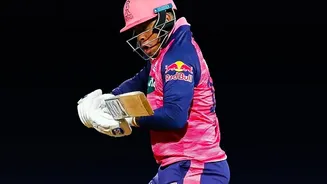
The conversation around 'the next Dhoni' inevitably turns to the current crop of talented wicketkeeper-batsmen. Rishabh Pant, with his aggressive left-handed batting, comes closest to Dhoni's ability to change a game in a few overs. His heroic comeback after injury and success in Test cricket are well-documented. Then there is Sanju Samson, a player praised for his elegant stroke play and calm demeanor, though questions about his consistency at the international level have persisted. More recently, the explosive batting of Ishan Kishan, who has had a stellar 2026 T20 World Cup, has brought him firmly into the conversation. Youngsters from the domestic circuit like Kartik Sharma and Tushar Raheja also show promise. However, while each possesses elements of Dhoni's game—Pant's power, Samson's temperament, Kishan's aggression—none have yet combined all his attributes into one complete package.
The Shadow of a Legend
Perhaps the biggest challenge is the question itself. The constant search for 'another Dhoni' places an immense and unfair burden on any player stepping into the wicketkeeper's role. It creates an impossible benchmark and prevents players from developing their own unique identity. The goal shouldn't be to find a clone of Dhoni, but for the next generation to forge their own path. India doesn't need another MS Dhoni; it needs the first Rishabh Pant or the first Sanju Samson to reach their full potential, creating a new legacy rather than trying to fill the shoes of an old one. The focus should be on building a team where different players can collectively fulfill the roles that Dhoni once managed single-handedly.