





The Shift from Conventional to Green
For several years, India's judiciary and government have been steering celebrations towards a more eco-friendly path. The Supreme Court has repeatedly clarified its stance: there is no blanket ban on all firecrackers, but a nationwide prohibition on conventional,
highly polluting ones remains firmly in place. This directive, which applies to all states and not just the Delhi-NCR region, is a response to the severe spike in air pollution recorded during the festive season. The regulations are an attempt to balance the traditions of Diwali with the constitutional right to a clean and healthy environment. The solution put forward is the regulated use of 'green crackers'.
What Exactly Are Green Crackers?
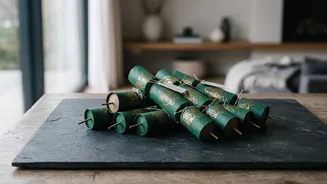
Green crackers are not just a marketing term; they are a specific category of fireworks developed by the Council of Scientific and Industrial Research-National Environmental Engineering Research Institute (CSIR-NEERI). Their formulation is different from traditional crackers, designed to reduce particulate matter emissions by at least 30-40%. These crackers do not contain harmful chemicals like barium nitrate, arsenic, lithium, and lead, which are responsible for much of the toxic smoke and environmental damage. CSIR-NEERI has developed several types, such as SWAS (Safe Water Releaser), which releases water vapour to suppress dust, and STAR (Safe Thermite Cracker), which has reduced aluminium content. They still produce light and sound but are significantly less polluting than their conventional counterparts.
How to Identify Genuine Green Crackers
With the market often flooded with counterfeits, identifying authentic green crackers is crucial. There are two key features to look for on the packaging. First, check for the official CSIR-NEERI logo, which is a distinct green circle. Second, and most importantly, is a scannable QR code. When you scan this code with your smartphone, it should lead to a page that verifies the product's details and confirms that it was manufactured by a licensed producer. If a box is missing the logo, lacks a functional QR code, or is sold loosely without original packaging, it is likely not a genuine green cracker and is illegal to use.
Rules, Timings, and State Variations
The Supreme Court generally permits a two-hour window for bursting firecrackers on Diwali, typically from 8 PM to 10 PM. However, these rules are not uniform across the country. State governments and even district administrations have the authority to issue their own specific guidelines, which can include different timings or stricter bans depending on local air quality levels. For instance, the Kangra district administration in Himachal Pradesh has set the 8 PM to 10 PM window for Diwali but has different timings for other festivals like Gurpurb and Christmas. Similarly, the Bombay High Court has reinforced a ban on bursting firecrackers on public streets in Maharashtra throughout the year for all festivals. It is essential for citizens to check the latest notifications from their local authorities, as these local rules take precedence.
Penalties for Violations
Authorities are taking the enforcement of these regulations seriously. The penalties for flouting the rules can be quite strict. Under the Explosives Act, the production, storage, and sale of banned firecrackers can lead to imprisonment for up to three years and a fine of up to ₹5,000. For individuals, the penalties vary by region. In Delhi, for example, bursting non-green crackers can result in a fine of ₹200 and a jail term of up to six months under the Indian Penal Code. Some states have implemented on-the-spot fines; Goa, for instance, has a penalty of ₹1,000 for bursting crackers outside the permitted time limit. Special teams are often deployed during the festive season to monitor for violations and take action against offenders.