


Peeking into Alien Skies
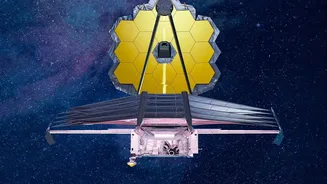
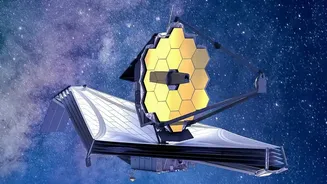
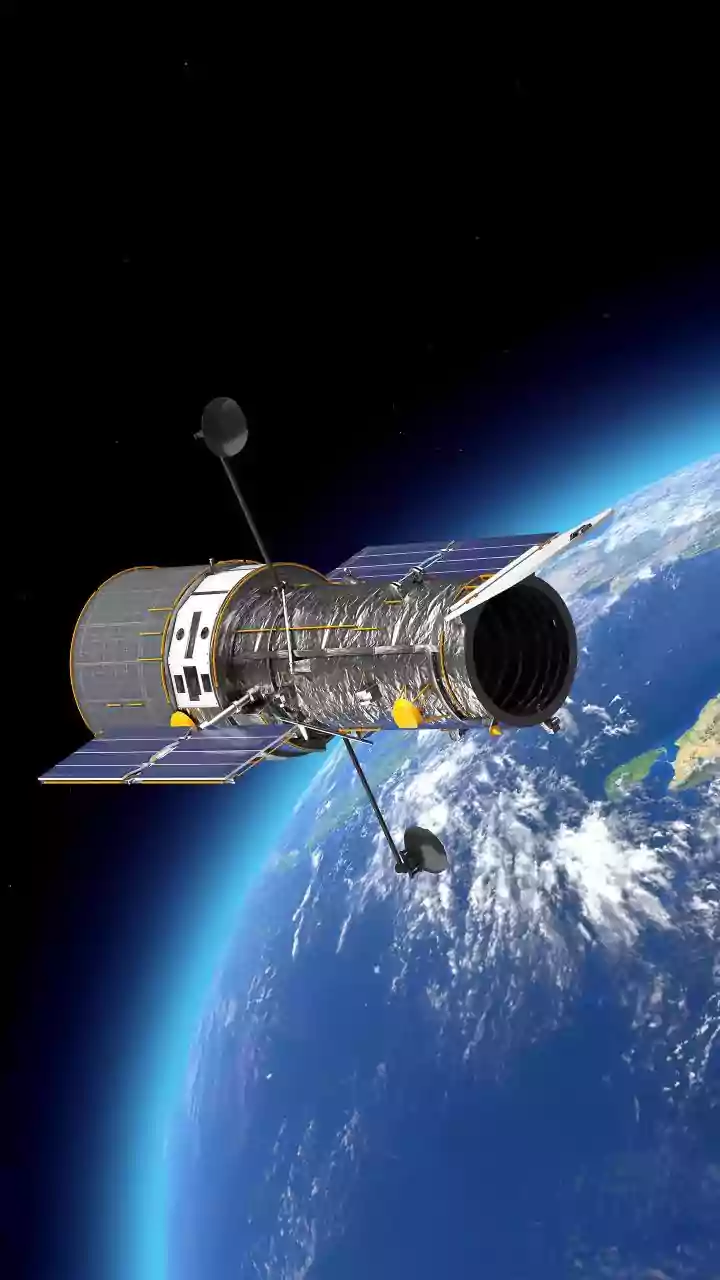
For centuries, planets outside our solar system, or exoplanets, were purely theoretical. Now, we've confirmed thousands, and powerful instruments like the James Webb Space Telescope (JWST) are doing something incredible: they are analysing the light that
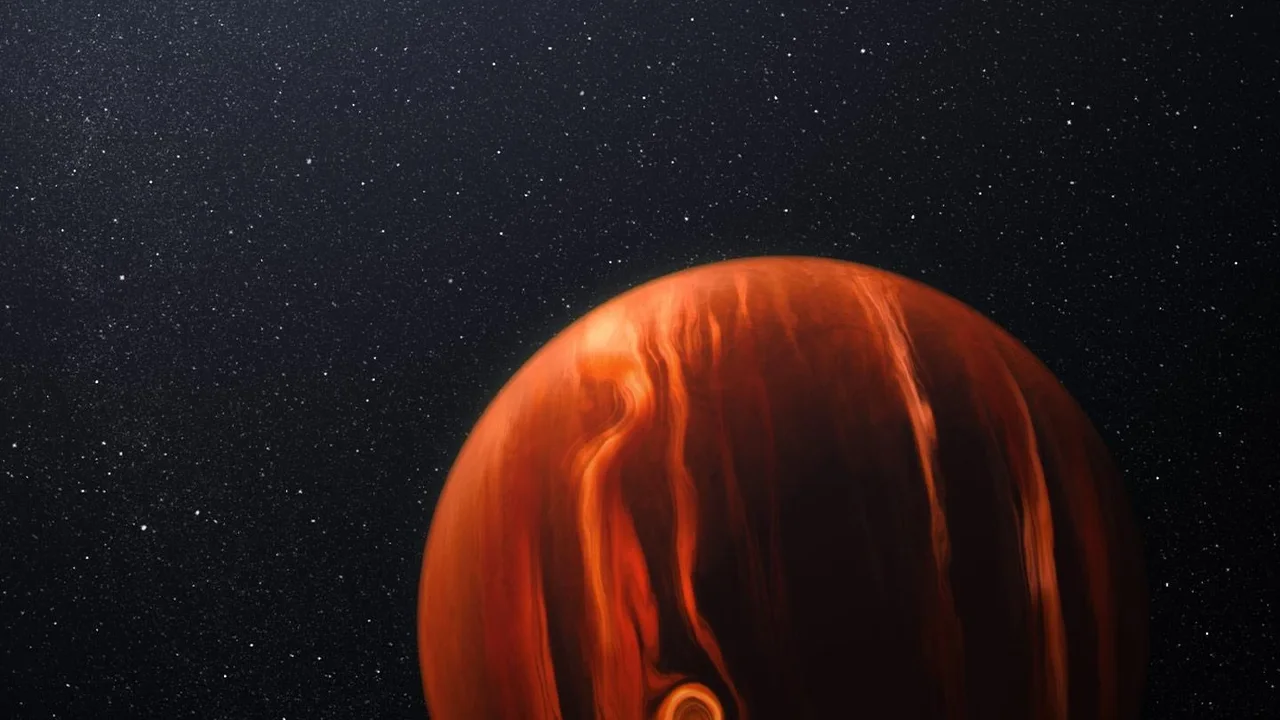
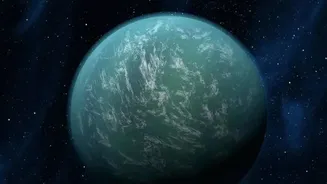
passes through their atmospheres. By seeing which colours of light are absorbed, scientists can create a chemical fingerprint of a distant world's air. This technique, called spectroscopy, allows us to identify gases like water vapour, carbon dioxide, and methane from light-years away. Recently, JWST detected both carbon dioxide and methane in the atmosphere of a planet called K2-18 b, located 120 light-years from Earth. This discovery has turned a theoretical discussion into a very real and exciting possibility.
The Unstable Combination
Finding carbon dioxide (CO2) or methane (CH4) alone isn't necessarily groundbreaking. These gases can be produced by various geological processes, like volcanic activity. What makes the combination so significant is their chemical relationship. Methane is an unstable molecule in an atmosphere; it gets broken down by sunlight through photochemical reactions. To have a lot of methane, something must be constantly replenishing it. At the same time, CO2 and CH4 are not a stable pair. They are in a state of 'chemical disequilibrium', meaning they shouldn't really exist together in large quantities without a dynamic process driving them. On Earth, that dynamic process is life.
Life's Chemical Imbalance
Think of Earth's atmosphere. It's filled with oxygen, a highly reactive gas. But it also has methane. These two gases would normally react and cancel each other out. The reason they coexist is because life is constantly producing them. Photosynthesis from plants and plankton pumps out oxygen, while microbes produce methane. This creates a planetary-scale chemical imbalance that would not exist on a dead world. Scientists theorise that a similar principle applies to the combination of methane and carbon dioxide. The abundant presence of both suggests a constant source is churning them out, and one of the most efficient sources we know of is biology.
Ruling Out the False Positives
Before we can claim 'aliens', scientists must be rigorous. The key is not just detecting methane and CO2, but also looking for what isn't there. Many non-biological processes that could produce methane, such as massive volcanic outgassing, would also release large amounts of carbon monoxide (CO). However, many forms of microbial life actually consume carbon monoxide. Therefore, a potential biosignature becomes much stronger if an atmosphere is rich in methane and carbon dioxide but has very little carbon monoxide. This specific combination makes a geological explanation less likely and a biological one more plausible.
What Happens Next?
The detection of these gases on planets like K2-18 b is a monumental first step, not a final confirmation. Researchers must now perform follow-up observations to refine the data and rule out any other possibilities. They will look more closely at the ratios of these gases and search for other molecules that could strengthen the case for life, like dimethyl sulfide, a substance that on Earth is only produced by marine organisms. Every new piece of data helps build a more complete picture of these distant worlds. The goal is to move from simply finding potentially habitable planets to identifying truly inhabited ones.