



A Fever in the Ocean
The greatest threat to coral reefs is a phenomenon called coral bleaching. Corals have a vital partnership with tiny algae called zooxanthellae, which live inside their tissues, provide up to 90% of their food through photosynthesis, and give them their brilliant
colours. But this relationship is fragile. When ocean temperatures rise, even by just one degree Celsius for a few weeks, the algae become toxic to the coral. In a desperate act of survival, the coral expels the algae. Without its food source and colourful tenants, the coral's white skeleton shows through its transparent tissue, appearing 'bleached'. A bleached coral is not dead, but it is starving and highly vulnerable to disease and mortality if conditions don't improve. These thermal shifts, driven by climate change, are causing mass bleaching events more frequently and severely across the globe.
The Hope of 'Super Corals'
In the face of this widespread crisis, scientists have observed something remarkable: not all corals bleach. Even in areas devastated by marine heatwaves, some individual corals remain healthy and vibrant. These resilient organisms, often dubbed 'super corals', are naturally more tolerant of heat. This toughness isn't magic; it's written in their genes. Some corals have simply adapted over time to live in warmer or more variable temperature environments, such as shallow lagoons that heat up quickly at low tide. Their genetic makeup allows them to withstand conditions that would cause others to bleach. Identifying these heat-tolerant corals is now a cornerstone of modern reef conservation, offering a glimmer of hope that we can actively help reefs adapt to a warming world.
The Global Search for Survivors
Finding these super corals is a complex scientific detective story. Researchers employ a range of methods to locate and verify heat-resilient specimens. One common technique is to survey reefs after a bleaching event to see which corals survived. Another approach involves controlled laboratory experiments. Scientists collect small coral fragments and expose them to gradually increasing water temperatures in what is known as a 'rapid heat stress test'. By observing which ones resist bleaching, they can identify the strongest candidates. Advanced genetic sequencing then allows them to pinpoint the specific genes responsible for this tolerance. This genetic roadmap is crucial, as it helps scientists understand not just which corals are resilient, but why, paving the way for targeted restoration efforts.
More Than Just a Pretty Reef
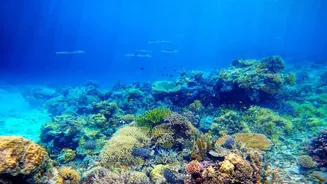
The effort to save corals goes far beyond preserving their beauty. Coral reefs are essential infrastructure for coastal communities, especially in a country like India with its extensive coastline and numerous islands like Lakshadweep and the Andamans. Healthy reefs act as natural, living breakwaters, absorbing and dissipating up to 97% of wave energy from storms and tsunamis. This protects coastlines from erosion, flooding, and property damage, saving billions of rupees in infrastructure and safeguarding lives. When reefs degrade, this natural barrier is lost, leaving coastal populations exposed. Furthermore, reefs support up to 25% of all marine life, providing critical habitats for fish that form the basis of local economies and food security for millions.
From Lab to Living Reef
Identifying thermally tolerant corals is only the first step. The ultimate goal is to use this knowledge to build more resilient reefs. This practice, often called 'assisted evolution', involves cultivating the identified super corals in underwater nurseries. Once they have grown, these resilient corals can be 'outplanted' onto degraded reefs. The idea is that these tougher corals will not only survive future heatwaves but will also reproduce, passing their heat-tolerant genes to the next generation and helping the entire reef ecosystem adapt more quickly. This is not a silver bullet to stop climate change, but it is a critical, proactive strategy. By focusing on the corals best equipped to handle thermal shifts, we can make restoration efforts more durable and give these vital ecosystems a fighting chance to survive the coming decades.