


Saturn Puts on Its Best Show
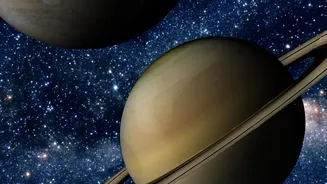
October kicks off with a magnificent view of the ringed planet, Saturn. On October 4, it reaches opposition, an event where Earth passes directly between Saturn and the Sun. This alignment means the planet will be at its closest and brightest for the year.
You'll be able to spot it from sunset to sunrise, appearing as a brilliant, steady point of light. While Saturn itself will be visible to the naked eye, you'll need a small telescope to get a glimpse of its iconic rings. It will be visible for most of the night throughout October, making it a reliable target for your evening sky-watching.
An Evening of Shooting Stars: The Draconids
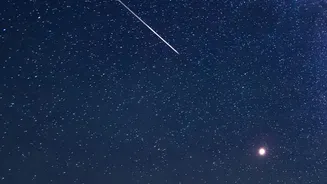
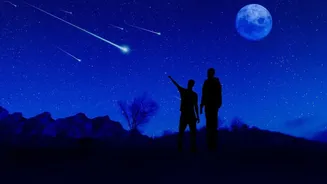
The first of two meteor showers this month, the Draconids, is expected to peak on the evening of October 8-9. Unlike many other showers that are best viewed in the pre-dawn hours, the Draconids are an evening event, best seen just after nightfall. This shower is typically a modest one, producing around 5 to 10 meteors per hour. However, the viewing conditions in 2026 are excellent, as the peak occurs just before the New Moon, meaning the sky will be dark and free of moonlight, making it easier to spot the shooting stars. They are named after the constellation Draco, from which they appear to radiate.
A Glimpse of Mercury
Catching the elusive planet Mercury is a rewarding challenge for any sky-watcher. Around October 12, Mercury reaches its greatest eastern elongation, meaning it will be at its farthest point from the Sun in our evening sky. This is the best opportunity to spot the small planet. Look for it low on the western horizon just after sunset. It will appear as a bright star, but its proximity to the horizon means you'll need a clear and unobstructed view to catch it before it disappears for the night.
Halley's Comet Debris: The Orionid Meteor Shower
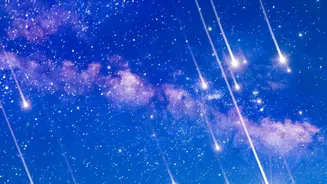
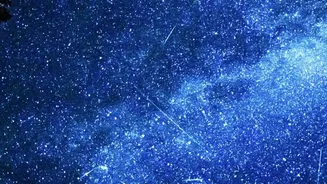
The famous Orionid meteor shower is set to peak on the night of October 21-22. This celestial event is caused by dust and debris left behind by the famous Halley's Comet. Under ideal conditions, you could see up to 20 meteors per hour. These are known for being fast and bright, sometimes leaving persistent trails. The best time for viewing will be after midnight, once the constellation Orion is high in the sky. This year, a bright waxing gibbous Moon will be present in the early evening, but it is expected to set around 3 a.m. local time, leaving the hours before dawn dark for a better show.
The Hunter's Moon and Sharad Purnima
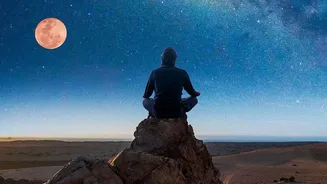
The full moon on October 26 is known as the Hunter's Moon. This name comes from traditions where its bright light was used for hunting in preparation for winter. In India, this full moon holds special cultural significance as it coincides with Sharad Purnima, a harvest festival celebrated in many parts of the country. Devotees often fast and make offerings under the bright moonlight. This particular full moon rises early in the evening, appearing large and colourful near the horizon as it climbs into the night sky.