




A Panoramic Window on the Cosmos
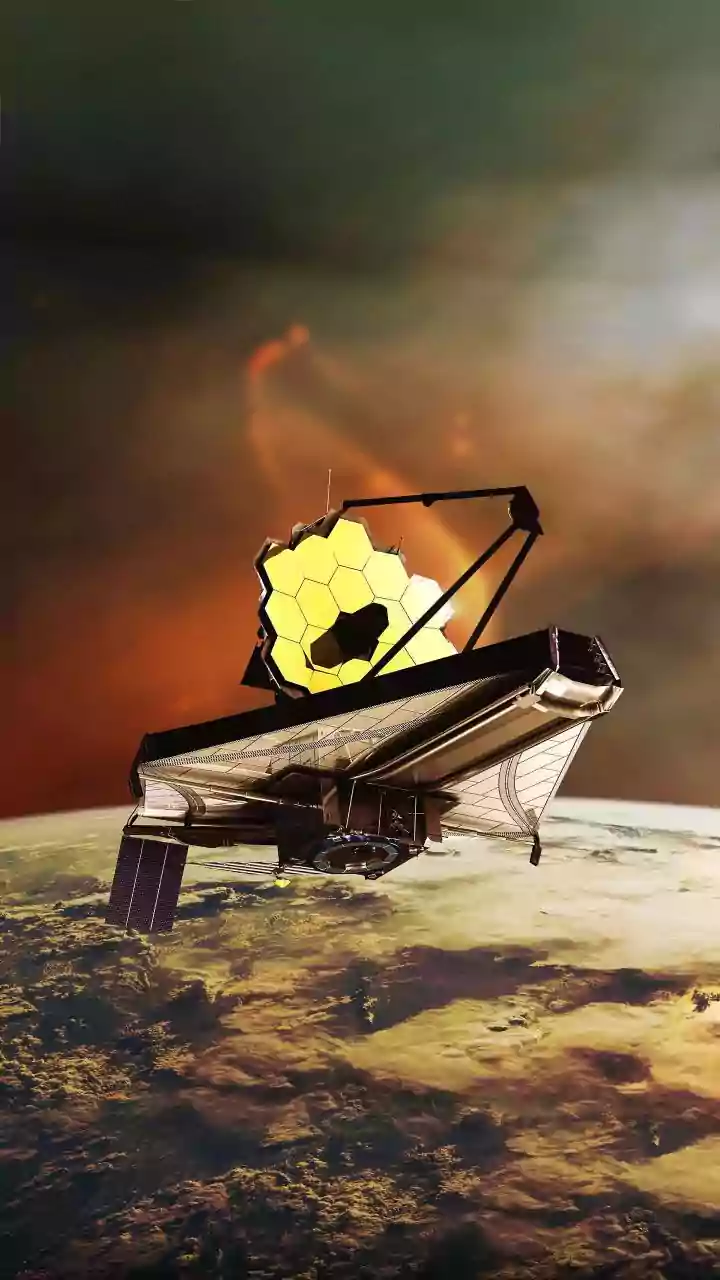
When we think of space telescopes, we often picture the stunning, detailed images from the Hubble or James Webb telescopes—portraits of individual galaxies or nebulae. NASA's Nancy Grace Roman Space Telescope offers a fundamentally different approach.
While its primary mirror is the same 2.4-meter size as Hubble's, its power lies in its extraordinary field of view. The Roman Telescope's Wide Field Instrument (WFI) can capture an area of the sky 100 to 200 times larger than Hubble's infrared camera in a single shot. This means that where Hubble would need hundreds of individual images to create a mosaic of a large celestial object like the Andromeda galaxy, Roman could do it in just two. This isn't about sacrificing quality for quantity; Roman is designed to deliver images with the same stunning sharpness and resolution that made Hubble famous, but across a vastly wider canvas. It's the astronomical equivalent of seeing both the forest and the trees at the same time, in perfect focus.
The Technology Behind the Vision
Achieving this combination of scale and sharpness requires incredible technology. The magic happens in the Wide Field Instrument, which is essentially a 300-megapixel camera for the cosmos. Instead of a single sensor, it uses a powerful array of 18 advanced detectors, all working together to create one massive, high-resolution image. This array allows the telescope to survey huge swathes of the sky efficiently, gathering an unprecedented amount of data. Over its primary five-year mission, Roman is expected to collect more data than all of NASA's previous astrophysics missions combined. This firehose of information will provide astronomers with wide-field maps of the universe at a level of detail that has never been possible before. In addition to the WFI, Roman is testing a technology called a Coronagraph Instrument, designed to block the overwhelming glare from a star to directly image the faint planets orbiting it.
Hunting for Dark Energy and New Worlds
This wide-angle, high-resolution view is perfectly suited for tackling two of the biggest mysteries in modern astronomy: dark energy and exoplanets. Dark energy is the enigmatic force believed to be causing the expansion of the universe to accelerate. To study it, scientists need to map the positions and distances of millions of galaxies and supernovae over vast cosmic distances. Roman is designed to do exactly that, conducting large-scale surveys to measure the history of cosmic expansion with incredible precision. At the same time, Roman will revolutionize the hunt for planets outside our solar system. It will use a technique called gravitational microlensing, where the gravity of a star and its planets acts like a lens, briefly magnifying the light of a more distant star. This method is sensitive enough to find planets with a wide range of masses, including those that don't orbit a star at all, known as rogue planets. These surveys will provide a massive new census of planetary systems, helping scientists understand how common systems like our own are in the galaxy.
A New Era of Cosmic Discovery
Scheduled to launch by late 2026 or early 2027, the Nancy Grace Roman Space Telescope is not a replacement for Hubble or Webb, but a powerful new partner. While Webb excels at deep, targeted dives into the infrared universe to study the first stars and galaxies, Roman's strength is its sweeping survey capability. It will act as a powerful discovery engine, identifying countless new targets—from intriguing exoplanets to distant galaxy clusters—for other telescopes to study in more detail. By combining Hubble's sharpness with the survey power of a ground-based observatory, Roman will create vast, detailed maps of the cosmos that will be a treasure trove for astronomers for decades to come. Its ability to capture the universe at a grand scale without losing the fine details will open a new window on the cosmos, revealing not just new objects, but the very structure and evolution of the universe itself.