





Monitor the Weather and Official Alerts
Before and during your trip, make the India Meteorological Department (IMD) website your best friend. As of early July 2026, the monsoon is active across the state, with heavy rain warnings for districts like Kangra, Mandi, Shimla, and Sirmaur. Authorities
have issued orange and yellow alerts, which signal the potential for hazardous conditions. Avoid travelling during these alerts. The Himachal Pradesh State Disaster Management Authority (HPSDMA) also provides crucial updates and has activated 24/7 helplines (1070 for state, 1077 for district) for emergencies like landslides or flash floods.
Choose Your Destination Wisely
Not all of Himachal is equally affected by the monsoon. The high-altitude deserts of Lahaul and Spiti Valley lie in a rain-shadow region, receiving significantly less rainfall and offering clearer skies, making them a prime destination during this season. The route via Shimla and Kinnaur is generally considered more stable for reaching Spiti. For those seeking a classic misty hill station experience, places like Kasauli, Chail, and well-maintained parts of Manali and Dharamshala can be relatively safer choices. However, it's crucial to avoid landslide-prone areas, especially along major highways like the Mandi-Kullu stretch (NH-3), the Kalka-Shimla highway (NH-5), and the Chamba and Kinnaur regions.
Road Safety is Non-Negotiable
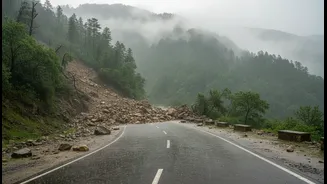
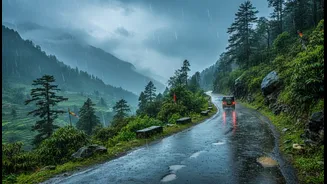
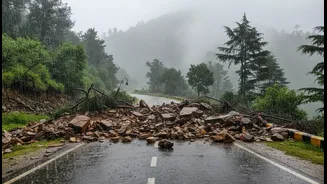
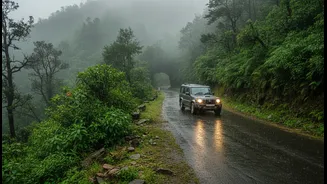
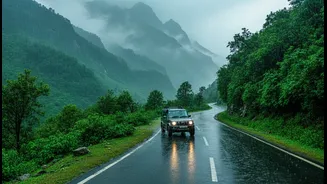
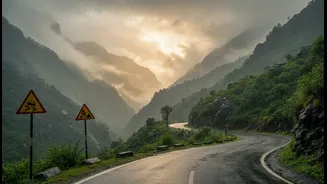
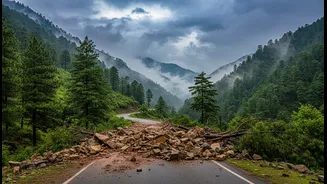
Driving in the hills during monsoon requires extreme caution. Roads become slippery, and the risk of landslides and flash floods is high. Authorities strongly advise against driving at night due to poor visibility. Before you start, ensure your vehicle is in top condition, especially the brakes, tyres, and wipers. Always check with local authorities or police for real-time road status. It’s a good practice to build buffer days into your itinerary for unexpected road blockages. Never attempt to cross flooded roads or park near rivers and streams, as water levels can rise without warning.
Pack for Rain, Not for Fashion
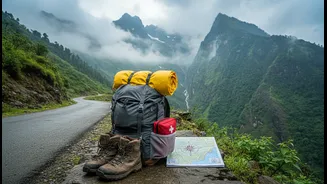
Practicality is key when packing for a monsoon trip to Himachal. Ditch the heavy jeans and cottons that take ages to dry. Instead, opt for quick-dry clothing that you can layer. A reliable waterproof jacket or poncho is a must, as umbrellas are often useless against strong winds. Sturdy, non-slip waterproof footwear is essential for navigating wet and muddy paths. Also, pack a waterproof cover for your backpack and consider keeping electronics in zip-lock bags. A basic first-aid kit, personal medications, a torch, and a power bank are non-negotiable essentials.
Embrace a Slower Pace of Travel
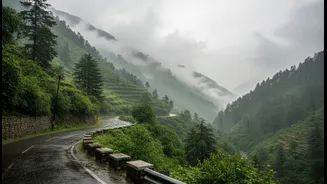
The monsoon is not the time for a rushed, packed itinerary. This season is best enjoyed with a flexible schedule that allows for lazy days spent in a cafe, exploring local monasteries, or simply enjoying the rain-washed scenery from your window. Activities like paragliding and river rafting are generally prohibited for safety reasons. Instead, consider gentler pursuits like bird watching or short, safe-to-access waterfall visits. Many travellers find that staying in one place for a few days rather than hopping between towns daily leads to a more relaxing and safer experience.
Stay Informed and Connected
While mobile networks can be unreliable in remote valleys, it's crucial to stay as informed as possible. Before you lose connectivity, download offline maps and save important emergency contacts. Following the social media handles of the Himachal Pradesh Police and disaster management authorities can provide timely updates on road conditions. In case of an emergency, do not panic. Move to higher ground if you encounter a flash flood and immediately contact the disaster helplines (1070/1077).