
Robotics and Autonomous Systems
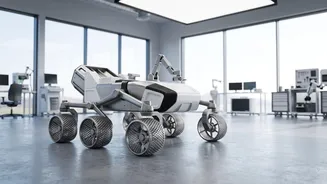
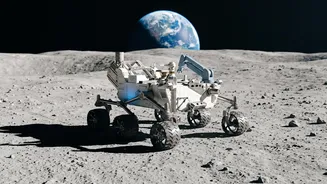
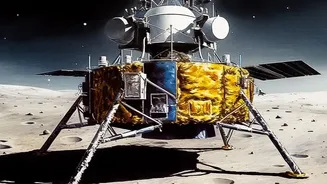
A future lunar base will be built and maintained by a fleet of robots. These machines will handle everything from constructing habitats and scouting for resources to performing repairs in the harsh lunar environment. Students with skills in robotics,
artificial intelligence, and mechatronics will be essential. This involves designing robots that can operate with a high degree of autonomy, navigate difficult terrain, and manipulate objects with precision. The growing Indian startup ecosystem is already creating roles in this sector, bridging the gap between university labs and real-world space applications.
In-Situ Resource Utilisation (ISRU)
The key to a sustainable lunar presence is living off the land. ISRU is the science of turning lunar materials into usable resources. This means extracting water ice from polar craters, converting lunar soil (regolith) into building materials, and producing breathable air and rocket propellant. This field requires a blend of geology, chemical engineering, and materials science. Experts will be needed to identify resource deposits, design extraction machinery, and develop the chemical processes to transform raw materials into mission-critical supplies, reducing the immense cost of launching everything from Earth.
Closed-Loop Life Support Systems
On the Moon, nothing can go to waste. A lunar habitat will depend on advanced closed-loop systems that endlessly recycle air, water, and waste. This is a complex challenge at the intersection of environmental engineering, biology, and chemistry. Specialists will design and manage systems that scrub carbon dioxide, purify every drop of water, and potentially use bioregenerative techniques—like algae or plants—to produce oxygen and food. Mastery in this area is critical for the long-term survival of astronauts hundreds of thousands of kilometres from home.
Advanced Materials and Manufacturing
Habitats, vehicles, and tools on the Moon must withstand extreme temperature swings, constant radiation, and the threat of micrometeoroid impacts. This requires new classes of advanced materials. Materials scientists and manufacturing engineers will be tasked with developing and testing composites and alloys that are both lightweight and incredibly durable. Furthermore, skills in additive manufacturing (3D printing) will be crucial for creating spare parts and tools on-demand, a vital capability for a remote outpost.
Data Science and Satellite Analytics
Modern space exploration runs on data. A lunar base will generate enormous volumes of information from scientific experiments, life support systems, robotic operations, and Earth observation. Professionals skilled in data science, AI, and machine learning will be in high demand to process this information, predict system failures, and turn raw data into actionable insights. Whether it's analysing the composition of a newly drilled ice core or optimising the habitat's power usage, data experts will be the digital backbone of the lunar community.
Space Medicine and Psychology
Keeping humans healthy—physically and mentally—in an isolated and extreme environment is a monumental task. Space medicine goes beyond general practice, focusing on the effects of low gravity on the human body, radiation exposure, and emergency medical care far from a hospital. Just as important is psychology. Experts in human factors and psychology will be needed to select resilient crews, design habitats that promote mental well-being, and provide support for astronauts facing prolonged isolation.