








Beyond Automation to Augmentation
The rise of AI is less about replacing humans and more about augmenting their abilities. As AI agents and tools automate repetitive digital and administrative tasks, they free up human workers for more complex and creative work. This is not a distant
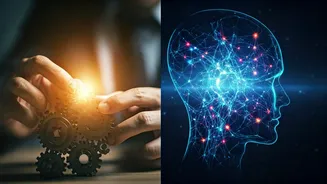
future; it's happening now. A recent McKinsey report notes that up to 30 percent of work hours could be automated by existing technologies, shifting human roles toward supervision, validation, and handling exceptions. Instead of simply executing tasks, the valuable employee is one who can partner with AI. The future workforce is increasingly seen as a triad of people, AI agents, and robots working together. This collaboration requires a fundamental redesign of workflows, moving from bolting AI onto old processes to creating new, integrated systems where humans and machines each play to their strengths. The greatest value is unlocked not just by automating tasks, but by reimagining how work gets done.
Curiosity as a Core Competency
In an environment where AI can provide answers, the ability to ask the right questions becomes a superpower. Curiosity is the engine that drives effective interaction with AI. It fuels better prompts, deeper analysis of AI-generated insights, and the discovery of novel applications for the technology. Employers increasingly recognize this; one report shows 50% of employers consider curiosity a core workforce skill. It's the curious mindset that pushes beyond the obvious, challenging the assumptions embedded in AI outputs and exploring what-if scenarios to uncover hidden opportunities. This innate desire to explore and understand is what separates leaders from followers in the AI era. While AI can process vast amounts of data, it lacks the genuine inquisitiveness to understand the 'why' behind the 'what'—a uniquely human trait that is now a crucial career skill.
The Art of Creative Problem-Solving
AI excels at pattern recognition within large datasets, but human skills become essential in ambiguous situations with limited data or a need for nuanced judgment. This is the domain of creative problem-solving. While AI can analyze data and even suggest novel combinations of ideas, humans remain responsible for framing the problem, applying context, and navigating the complex, often irrational, dynamics of human systems. Creativity isn't just for artists; in a business context, it's about reframing challenges to unlock new solutions and empathizing with stakeholders. AI can act as a powerful collaborator in this process, generating ideas or analyzing possibilities, but the final judgment and strategic insight remain deeply human. The most effective professionals will be those who can blend AI's computational power with their own creativity and critical thinking.
Cultivating an AI-Ready Mindset
Thriving in the age of AI requires more than just technical literacy; it requires a new mindset. For individuals, this means embracing continuous learning and seeing AI not as a threat, but as a tool for personal and professional growth. For organizations, it means fostering a culture that encourages experimentation, psychological safety, and invests in meaningful upskilling. Leaders must do more than just implement AI tools; they need to model effective AI use and embed it into the business strategy. The skills that are gaining prominence—communication, adaptability, empathy, and critical thinking—are all components of this new 'human-centric' approach. According to Harvard Business School, as AI proficiency grows, it's these distinctly human skills that become the real differentiators, strengthening a person's value in an AI-enabled workplace.