


More Than Just a Test Flight
While the primary goal of Artemis II was to test the Orion spacecraft and its life support systems with a crew for the first time, it was also a dedicated science mission. For about 10 days, the four-person crew ventured farther from Earth than any human
since the Apollo era, looping around the Moon and returning with invaluable data. Beyond validating the hardware for future lunar landings, the mission leveraged a unique asset that no robot can replicate: the trained eyes and interpretive power of human observers. The crew was tasked with a series of scientific and exploration objectives, turning their flyby into a crucial reconnaissance run for the future of lunar exploration.
The Geologist's Eye View
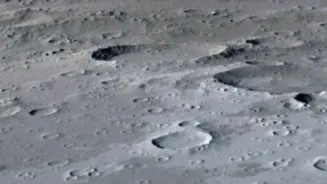
One of the key science missions involved detailed observation of the lunar surface. The astronauts were trained to spot and document subtle variations in color and texture (albedo) that could indicate different geological compositions. This is something human vision excels at compared to automated sensors. Their observations will help scientists refine our understanding of the Moon's volcanic history and the composition of its surface materials. Remarkably, the crew also witnessed and recorded five faint 'pinprick' flashes on the Moon's far side—the tell-tale sign of small meteoroids hitting the surface. These sightings, made possible by the near-perfect darkness of a lunar eclipse, provide rare data on the frequency of small impacts, a crucial factor for the safety of future lunar outposts.
Earth, from an Unprecedented Distance
Artemis II didn't just look toward the Moon; it also turned its cameras and eyes back on our own planet. The crew captured stunning imagery of the entire Earth, providing a perspective not seen by human eyes in more than five decades. These observations are more than just beautiful pictures. Scientists are studying the data to see how Earth's features, from weather systems to the greens of vegetation and blues of the ocean, appear from deep space. The astronauts noted how our planet has visibly changed since the Apollo missions, with a larger and more global human footprint. This unique vantage point helps inform climate science and provides a powerful, updated 'Earthrise' moment for a new generation.
The Human Body as a Laboratory
Perhaps the most critical science took place inside the Orion capsule itself, with the astronauts serving as research subjects. For the first time since 1972, scientists could study the effects of the deep space environment on the human body, beyond the protection of Earth's magnetic field. The mission collected extensive data on how deep space radiation, microgravity, isolation, and confinement affect everything from immune function and stress levels to sleep patterns and cognitive performance. Using wearable sensors and by collecting biological samples, researchers are building a comprehensive picture of how the body responds to the harsh conditions of deep space, which is essential for planning long-duration missions to the Moon and eventually Mars.