


The Co-Pilot Is a Fully Qualified Captain
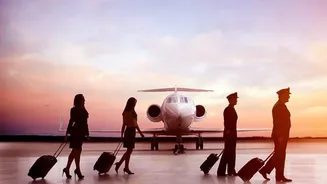
The first and most important layer of safety is sitting in the right-hand seat. The term 'co-pilot' is misleading; the correct title is First Officer, and they are a fully qualified and certified pilot. Both the Captain and the First Officer are capable
of flying the aircraft alone from takeoff to landing. They typically share flying duties, with one acting as 'pilot flying' and the other as 'pilot monitoring' on alternating flight legs. The Captain has ultimate authority, but the First Officer has nearly identical training. This means if one pilot becomes incapacitated, the other is completely prepared to take full command of the aircraft.
The Immediate Incapacitation Drill
If a pilot becomes unresponsive, the other pilot immediately takes decisive action. The first step is to loudly and clearly state, "I have control," to establish command. The immediate priority is to ensure the safe operation of the aircraft. The conscious pilot will engage the autopilot to manage the flight path, altitude, and speed, which frees them up to handle the emergency. The next step is to secure the incapacitated crew member. Their seat will be moved back and locked to prevent them from slumping forward and interfering with the controls, and their shoulder harness will be secured.
Calling for Help: Crew and Air Traffic Control
Once the aircraft is stable and the immediate cockpit situation is managed, the pilot communicates with the wider team. They will call the senior cabin crew member, often the purser, to the flight deck for assistance. The cabin crew is trained to provide first aid, administer oxygen, and seek out any medical professionals among the passengers. Simultaneously, the pilot will make a radio call to Air Traffic Control (ATC). This is typically a "Pan-Pan" call, repeated three times. This signal indicates an urgent situation that is not immediately life-threatening, such as a medical issue, and gives the flight priority handling. ATC will then clear airspace, provide vectors for the most suitable nearby airport, and coordinate with emergency services on the ground.
Technology as a Powerful Safety Net
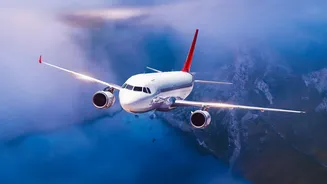
Modern aircraft are equipped with sophisticated technology that provides another crucial layer of safety. The autopilot system is a key ally, reducing the workload on the single pilot by maintaining the plane's course and altitude. In more recent years, some aircraft have been equipped with 'autoland' systems. These systems can fully automate the landing procedure, which is particularly useful in low visibility conditions. Even more advanced is the 'Emergency Autoland' function, developed by companies like Garmin. This system can be activated by a passenger with a single button press and is designed to take complete control of the aircraft, select a suitable airport, and land the plane without any pilot input in the event of total incapacitation.
A Rare but Rigorously Rehearsed Event
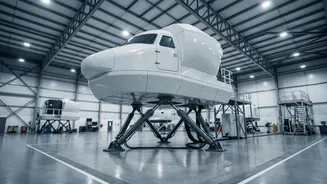
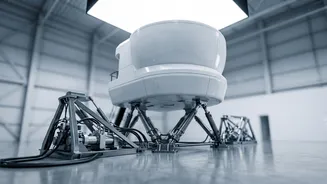
While dramatic, a pilot incapacitation event is extremely rare. Pilots undergo regular and rigorous medical examinations to ensure they are fit to fly. Furthermore, to prevent foodborne illness from affecting both pilots, regulations often require that the Captain and First Officer eat different meals. Despite its rarity, the scenario is a standard part of recurrent pilot training. Both pilots practice incapacitation drills repeatedly in full-flight simulators, ensuring their response is disciplined and methodical, not panicked. This constant training and preparation are the bedrock of aviation safety, turning a potentially catastrophic event into a manageable one.