




The Engine Room: Cardiovascular and Muscular Output
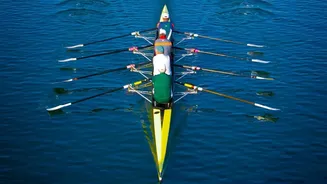
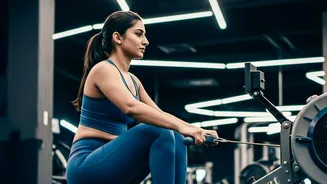
Rowing is renowned as a powerhouse of full-body exercise. It’s a low-impact, high-efficiency workout that engages around 85% of your body's muscles in a single, fluid motion. Each stroke is a coordinated sequence: a powerful leg drive, a stable core transfer,
and an upper-body pull, making it a formidable tool for building cardiovascular endurance and functional strength. The motion is cyclical and predictable, allowing you to maintain a steady, high-intensity output that torches calories. Dance, in contrast, offers a more variable cardiovascular experience. Instead of a steady rhythm, it’s often an interval-based workout with bursts of high-energy movement followed by moments of slower, technical correction. While some high-intensity dance styles can burn more calories than steady-state running or cycling, the muscular engagement is different. Dance strengthens large muscle groups but also targets smaller, stabilising muscles around the joints as it moves the body through multiple planes of motion—side-to-side, rotational, and diagonal—unlike rowing, which largely operates in a single forward-and-back plane.
The Brain's Workout: Coordination and Cognitive Gains
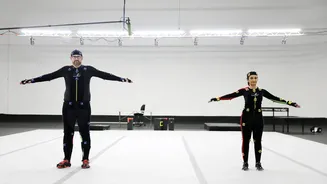
This is where the 'movement patterns' of the headline become critical. Rowing, with its repetitive and symmetrical motion, builds strong neural pathways for coordination and enhances the mind-body connection through rhythmic feedback. It requires significant coordination, especially on dynamic rowers, which challenge your ability to maintain balance and control while in motion. However, dance offers a different, and arguably more complex, cognitive challenge. It forces the brain to constantly learn, adapt, and recall new sequences of steps, often in time with music and in coordination with others. This process enhances neuroplasticity—the brain’s ability to form new connections. Studies have shown that the cognitive demands of learning choreography can lead to volume increases in brain regions related to memory, attention, and spatial awareness. While repetitive exercise like rowing automates movement, dance demands constant, conscious mental engagement, improving skills like multitasking and decision-making under physical exertion.
Proprioception and Balance: Sensing Your Place in Space
Proprioception is your body's 'sixth sense'—the awareness of its position and movement in space without needing to look. Both activities enhance it, but in different ways. Rowing develops proprioception through a controlled, repetitive feedback loop between your muscles and brain, refining your sense of alignment and balance in a stable, seated position. Dance, however, trains proprioception in a far more chaotic and dynamic environment. It involves constant changes in direction, level, and speed, forcing your nervous system to make rapid adjustments to maintain balance. This multidirectional movement improves the stability of joints like the ankles and hips, which is crucial for preventing falls and injuries in daily life. Studies on dancers have shown they possess exceptional proprioception and balance, a direct result of training that demands constant spatial awareness and movement precision.
Flexibility, Mobility, and The Joy Factor
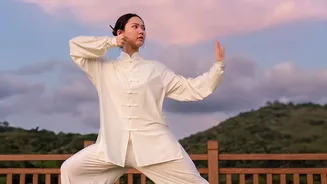
Rowing involves a set range of motion. While excellent for building power within that range, it doesn't naturally promote extensive flexibility. Dance, on the other hand, is built on a foundation of mobility, encouraging joints to move through their full range. Styles from ballet to contemporary focus on flexibility, posture, and graceful control, which can lead to better overall movement quality and reduced risk of back pain. Beyond the physical, there's the emotional and social component. The expressive nature of dance, combined with music and often a social setting, can trigger the release of endorphins and other 'feel-good' hormones like dopamine and serotonin. This can make it feel less like a chore and more like a form of play, which is a powerful motivator for long-term consistency. While rowing can be meditative in its rhythm, dance offers an outlet for emotional expression and social connection that many find more sustainable and enjoyable.