



Vehicle Health: Your First Line of Defence
Before you even think of hitting the ghats, a thorough vehicle check-up is non-negotiable. Mountain roads put immense strain on a car's components. Start with the tyres. Ensure they have adequate tread depth, ideally at least 3-4mm, for good grip on unpredictable
surfaces. Check and correct the tyre pressure, including the spare. Remember that changes in altitude can affect tyre pressure. Next, focus on your brakes. On steep descents, you'll be relying on them heavily. Make sure the brake pads are not worn out and the brake fluid is at the correct level. A pre-trip inspection by a trusted mechanic is always a wise investment. Also, have your car's suspension checked. A healthy suspension absorbs the shocks from rough patches, providing better control and comfort. Finally, inspect all fluids, including engine oil and coolant, as uphill climbs can cause the engine to work harder and heat up.
Defensive Driving on Difficult Terrain
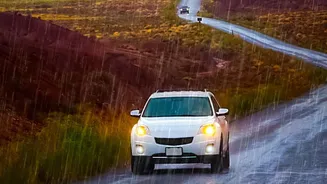
Once on the road, your driving style needs to adapt. Speed is the biggest enemy on battered roads. Driving slowly gives you more time to spot and react to hazards. Maintain a safe distance from the vehicle in front of you. Tailgating not only obscures your view of upcoming potholes but also puts you at risk from debris kicked up by the car ahead. Pay special attention to puddles, especially during and after monsoons. A seemingly shallow puddle can conceal a deep, tyre-damaging crater. If you cannot avoid a puddle, slow down significantly before entering it. When navigating uphill, use lower gears to avoid straining the engine. Use the same principle for descents; shifting to a lower gear allows for engine braking, which reduces wear on your brakes. Always stay focused, keeping your gaze far ahead to anticipate changes in the road surface.
Spotting Hazards Before They Become a Problem
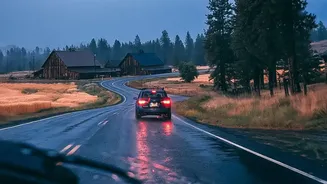
Experienced hill drivers learn to 'read' the road. Look for signs of potential trouble. For instance, areas with recent rainfall are prone to landslides and falling rocks. Be extra cautious on blind curves and hairpin bends, where debris can accumulate unexpectedly. If you see small rocks on the road, it could be an indicator of a larger rockfall ahead. Driving during the day is always safer as visibility is better. If you must drive at night, use your low-beam headlights to avoid blinding oncoming traffic, and only use high beams on completely empty stretches. Keep your windshield and mirrors clean for a clear view. Knowing the route beforehand can also be a major advantage. Check for road condition updates or closures, especially during adverse weather seasons like the monsoon.
Your Essential Hill Road Emergency Kit
Being prepared for the unexpected is crucial. A well-stocked emergency kit can be a lifesaver in remote areas where help may be far away. Your kit should include: a properly inflated spare tyre and the tools to change it (jack, lug wrench), a portable tyre inflator, and a puncture repair kit. Also, pack a basic tool kit with screwdrivers, pliers, and an adjustable wrench. A powerful LED torch or flashlight with extra batteries is essential for nighttime breakdowns. Jumper cables are another must-have for dead batteries. For safety, include a first-aid kit with bandages, antiseptics, and basic medicines. Reflective warning triangles are important to alert other drivers if you break down. Lastly, always carry extra drinking water and some non-perishable snacks.
After the Impact: Handling a Pothole Hit
Sometimes, despite all precautions, hitting a pothole is unavoidable. If you hit one hard, don't panic. Pull over to a safe location as soon as possible and inspect your vehicle. Look for any visible damage to the tyres, such as bulges or cuts on the sidewall, which indicate internal damage and mean the tyre needs immediate replacement. Check the wheel rims for any bends or cracks. Even if the tyre looks fine, pay attention to how your car feels when you resume driving. Does the steering pull to one side? Do you feel any new vibrations? These could be signs of a bent rim or misaligned wheels, which can cause uneven tyre wear and affect handling. If you notice any of these signs, it's best to drive slowly to the nearest mechanic and get it checked professionally.