




An Ocean of Vapor, Not Waves
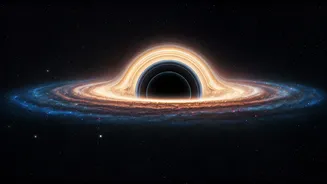
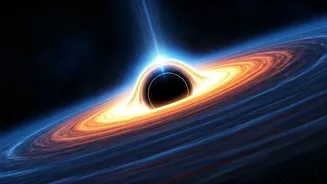
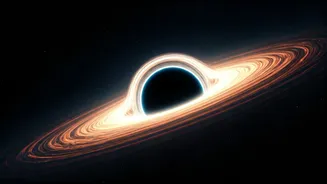
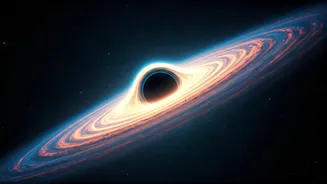
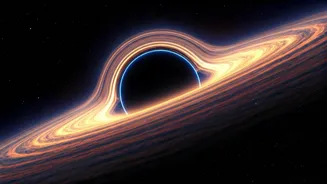
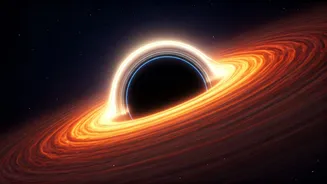
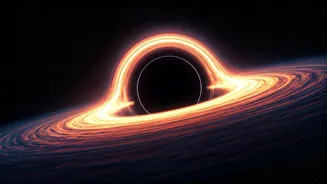
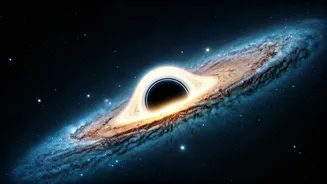
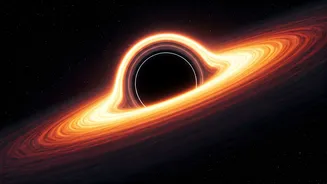
First, let's be clear: this isn't an ocean you could sail a boat on. The incredible discovery is actually a colossal cloud of water vapor surrounding a supermassive black hole, known as a quasar. This quasar, designated APM 08279+5255, is located more
than 12 billion light-years from Earth. So, while the headline conjures images of a literal 'flying ocean,' the reality is a gigantic gaseous reservoir. This cloud contains an amount of water equivalent to 140 trillion times all the water in the world's oceans, making it the largest and most distant reservoir of water ever detected in the universe.
A Glimpse into the Ancient Universe
Because APM 08279+5255 is so far away, its light has taken over 12 billion years to reach us. This means astronomers are essentially looking back in time, seeing the quasar as it was when the universe was only about 1.6 billion years old. Discovering such a massive amount of water so early in cosmic history is a landmark finding. It confirms that water, a crucial ingredient for life as we know it, has been pervasive throughout the universe from very early on. Previously, water had not been detected this far back in time.
The Cosmic Detectives Behind the Find
Two independent teams of astronomers made this groundbreaking discovery. They used powerful ground-based telescopes to study the specific quasar. One team, using an instrument in the French Alps, serendipitously detected a single spectral signature of water. Another team, using observatories in California and Hawaii, was able to detect multiple water signatures, which allowed them to calculate the enormous mass of the vapor cloud. These instruments don't see water directly; instead, they detect the specific frequencies of light that water molecules emit as they are energized by the quasar.
Why Does This 'Space Ocean' Matter?
This discovery is more than just a cosmic curiosity. The water vapor acts as a crucial tool for scientists, revealing information about the quasar itself. Its presence indicates that the gas surrounding the black hole is unusually warm and dense by astronomical standards, bathed in X-rays and infrared radiation from the quasar. Though the gas is a chilly -53 degrees Celsius and far less dense than our atmosphere, it's still hotter and denser than what's typical in galaxies like our own Milky Way. Studying this environment gives scientists vital clues about how supermassive black holes grow and how the first galaxies formed during the universe's infancy. It shows the very conditions that dominated the cosmos billions of years ago.