



More Than a Warm-Up
Surya Namaskar is a complete practice in itself. While many use it to prepare for a longer yoga session, performing several rounds can serve as a comprehensive workout that engages nearly every major muscle group. The sequence is a dynamic blend of strength,
flexibility, and cardiovascular exercise, linking movement with breath to improve circulation and build stamina. Studies have shown that its regular practice contributes to significant improvements in muscle strength and endurance, tones the body, and can aid in weight management by boosting metabolism.
The Sequence of Strength
The magic of Surya Namaskar lies in its flow, where poses transition smoothly from one to the next. The 12 steps form a cycle, with the second half mirroring the first. One full round consists of two complete sequences, one leading with the right leg and the other with the left, ensuring balanced development. Here's a breakdown of the key poses and the muscles they activate.
Poses 1 & 12: Pranamasana (Prayer Pose)
This is the starting and ending pose, a moment of centered stillness. While primarily a grounding posture, it gently engages the muscles of the back and neck to maintain an upright stance, preparing the body and mind for the movements to come.
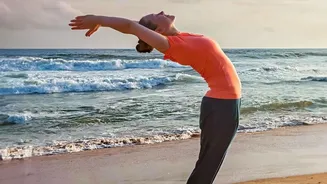
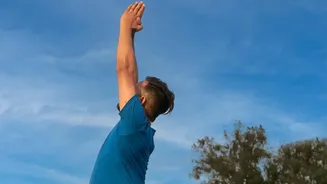
Poses 2 & 11: Hasta Uttanasana (Raised Arms Pose)
From Prayer Pose, you inhale and sweep your arms up and back into a gentle arch. This movement stretches the entire front of the body, including the abdominal muscles and chest. It also begins to engage the shoulders, arms, and spinal muscles as they support the backbend.
Poses 3 & 10: Padahastasana (Hand to Foot Pose)
Exhaling, you fold forward from the hips, bringing your hands towards your feet. This deep forward bend is a fantastic stretch for the hamstrings, calves, and glutes. It also engages the back muscles (erector spinae) and core as you control the movement. Research has identified this pose as one that elicits high muscle activation in the back.
Poses 4 & 9: Ashwa Sanchalanasana (Equestrian Pose)
In this low lunge, one leg steps back while the other remains bent, creating a deep stretch in the hips and quadriceps of the back leg. It strengthens the quadriceps and glutes of the front leg and engages the spine as you look forward, opening the chest. This pose is particularly effective for activating the gluteus maximus and vastus lateralis (a quad muscle).
Pose 5 & 8: Parvatasana (Mountain Pose/Downward-Facing Dog)
Often called Adho Mukha Svanasana, this inverted 'V' shape is a full-body pose. It powerfully strengthens the arms, shoulders, and back while deeply stretching the hamstrings, calves, and spine. Your core is engaged to maintain the shape, and it builds stability in the shoulder joints. The latissimus dorsi, a large back muscle, is significantly activated here.
Pose 6: Ashtanga Namaskara (Eight-Limbed Pose)
From Downward-Facing Dog, you lower your knees, chest, and chin to the floor. This unique pose strengthens the chest, arms (triceps), and shoulders as they support your body weight. It's a key preparatory pose for building the upper body strength required for more advanced postures.
Pose 7: Bhujangasana (Cobra Pose)
Inhaling, you glide forward and lift your chest off the floor. Cobra Pose is a powerful backbend that strengthens the entire back, especially the erector spinae muscles that run along the spine. It also works the arms and shoulders as they press into the floor and opens up the chest and abdominal muscles.